


What’s Worth Planning for Your Property This Fall?
By fall, homeowners usually have a pretty good idea of what is and isn’t working in their yard.
Maybe water has been collecting beside the patio every time it rains. A slope has become difficult to maintain. The existing patio is too small when people come over. Or you have several ideas for the backyard but aren’t sure which project should come first.
Those are all good reasons to start planning now.
Fall gives you an opportunity to look at the property as a whole, address problems that became obvious during spring and summer, and decide what should be completed now versus planned for the following year.
That matters around St. Louis because drainage, grade, and soil conditions often influence what can be built. Missouri clay soils can drain slowly and contribute to surface runoff, making water movement an important part of planning patios, retaining walls, and landscaping.
Here are five projects worth looking at this fall.
1) Build or Expand a Paver Patio
Sometimes the problem with a backyard paver patio isn’t that it’s old. It’s that it no longer has enough room for what you want to put there.
A small patio may have worked for a table and a few chairs, but adding a grill, larger dining table, fire pit, or separate seating area can quickly make the space feel crowded.
Before choosing pavers, think about what needs to fit on the patio and how people will move through it. A dining area needs room for chairs to pull out. A fire feature needs comfortable circulation around the seating. If the patio connects several doors or areas of the yard, those walking paths need to remain open.
For an existing patio, that may mean an expansion rather than starting over. For a new one, laying out furniture and features before determining the final dimensions can prevent a patio that looks large on paper but feels cramped once furnished.
Drainage should be considered at the same time. The finished surface needs to work with the property’s grade and direct water appropriately rather than creating another low area near the house.
A patio can solve the need for usable space on relatively level ground. When the yard itself is working against that goal, however, the grade may need to be addressed first.
2) Use a Retaining Wall to Make a Sloped Yard More Usable
A retaining wall becomes worth considering when the slope itself is causing the problem.
That might mean soil washing downhill, an old wall beginning to separate, or simply having a section of the backyard that is too steep to use comfortably.
We see homeowners approach these projects from both directions. Some are trying to correct erosion or replace a failing wall. Others want to create enough level ground for a paver patio, landscaping, steps, or another usable part of the yard.
In either case, the wall shouldn’t be planned separately from the water around it.
Water accumulating behind a retaining wall increases pressure on the structure, and clay soils can make drainage particularly important because they move water slowly. Freeze-thaw conditions add another reason to keep saturated soil and water from remaining where they can affect the wall and surrounding hardscape.
If a patio will eventually sit above or below the wall, plan the two together. Wall location and elevation can determine how much usable space the patio ultimately has.
3) Correct Drainage Problems Before They Affect More of the Yard
Fall is an especially useful time to think back over what happened during heavy rain.
Where did water collect? Did a downspout empty into a problem area? Did runoff cross the patio? Was there standing water beside the foundation, pavilion, or retaining wall?
Those observations help determine the solution.
A catch basin or drain box can collect surface water at a low point. Buried downspouts can move roof runoff away from the house instead of releasing it beside the foundation. French drains can intercept subsurface water, while grading can change the way surface runoff moves across the property.
Often, the answer is a combination.
One recent Excel Landscaping project, for example, involved a St. Louis backyard where runoff repeatedly collected along the low side and carried soil away. The solution combined a retaining wall, rebuilt grade, drain box, and underground piping rather than treating the erosion and drainage as separate problems.
That’s an important distinction when planning any hardscape. If you’re already replacing a patio or rebuilding a retaining wall, it’s usually better to determine how water will move through the finished space before construction begins.
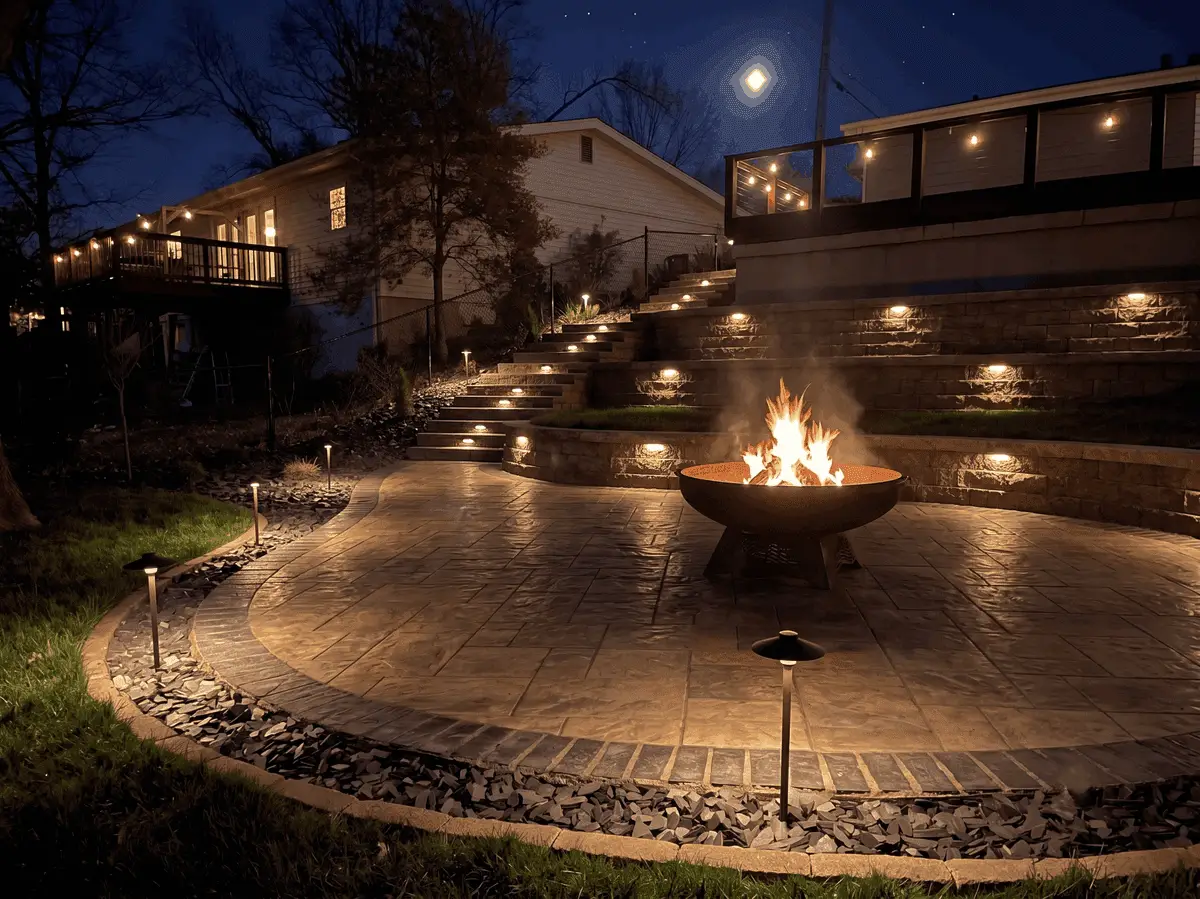
4) Create a Patio Around a Fire Pit or Gathering Area
A fire pit is a relatively small feature that can change how the surrounding patio area needs to be designed.
Rather than finding an empty spot for one after the patio is built, start with the gathering area.
Consider how many people you would typically like to seat, whether the seating will be permanent or movable, and how people will enter and leave the space without squeezing between chairs.
A built-in fire pit can become the center of a dedicated seating area. In a larger patio, the fire area can sit apart from dining and cooking so the backyard has several distinct places to use.
This is one reason these projects make sense to think about during fall. Cooler evenings make it easier to notice where you’d actually want to sit, how exposed that part of the yard feels, and whether the current patio gives everyone enough room.
If you’re already considering a patio expansion, planning the fire feature at the same time also helps establish the right dimensions and circulation from the beginning. Explore fire pits and outdoor gathering spaces
5) Design the Landscape and Hardscape Together
You don’t have to build the entire backyard at once.
You do want the pieces you build first to make sense with what could come later.
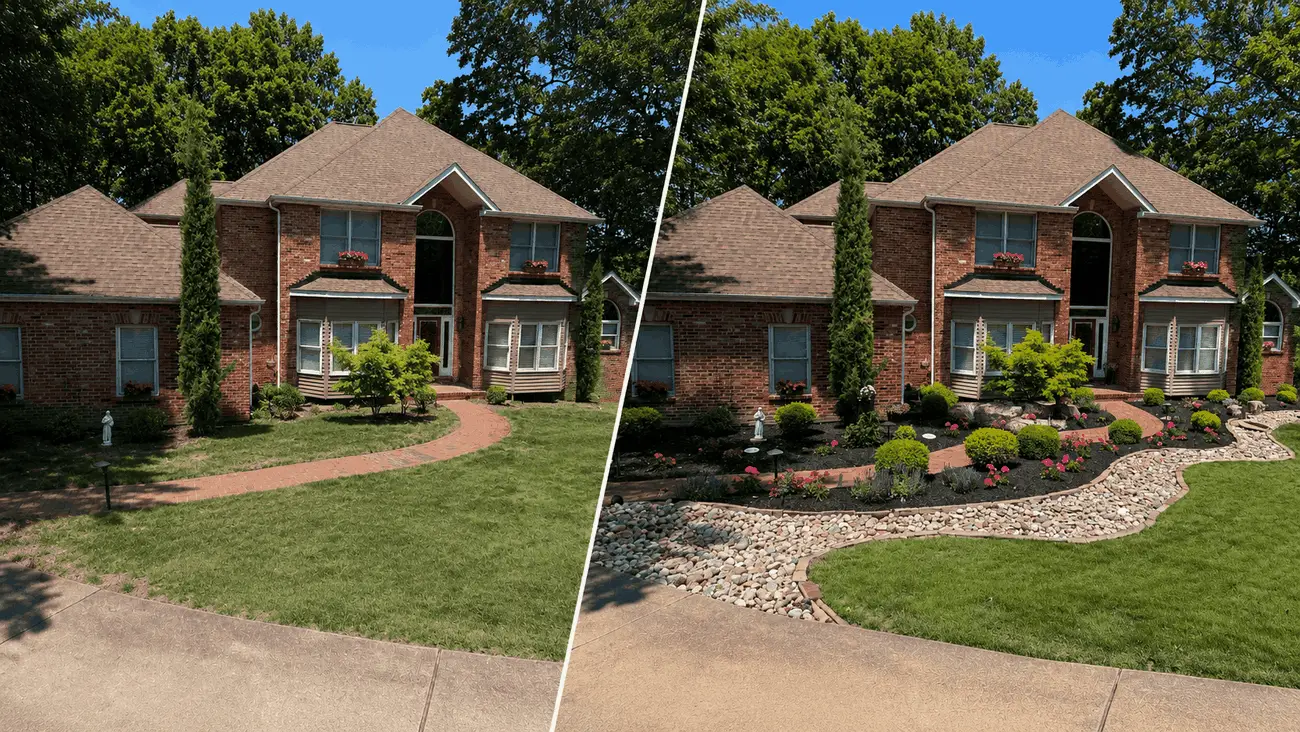
Suppose the immediate priority is replacing a patio, but you eventually want an outdoor kitchen, landscape lighting, new planting beds, or a retaining wall. The patio’s dimensions, elevations, drainage, and connections to the rest of the yard can all affect those future additions.
The same applies when the first priority is solving a problem. A homeowner may begin by wanting drainage corrected but also know that landscaping and a gathering area will eventually follow.
Planning the property first allows the work to be divided into sensible phases.
Missouri Extension similarly recommends evaluating drainage, runoff, low areas, and steep slopes during site analysis and setting priorities so improvements can be developed as time and budget allow. (https://extension.missouri.edu/publications/g6902) Last Revision: March 2026
That might mean completing drainage and grading first, building the patio next, and adding planting, lighting, or other outdoor features later. The individual phases can change without losing sight of where the property is ultimately going.
Which Hardscaping Project Should Come First?
If you have several improvements in mind, start with the issue that affects everything else:
- Start with drainage. Address runoff, standing water, or downspout issues before installing new hardscape.
- Correct the grade. Steep or eroding areas may need grading or a retaining wall before creating usable space.
- Plan the usable areas. Determine where patios, walkways, seating areas, and other hardscape features should go.
- Add the finishing elements. Once the layout is established, plan plantings, lighting, fire features, and other details around it.
For St. Louis properties in particular, assessing the yard’s grade, soil conditions, and exact drainage requirements, such as French drains, catch basins, or structural regrading, is essential. By looking at how these water management systems connect with your hardscapes early in the process, we can accurately determine what needs to be built first and what can wait for a later phase