
Retaining Wall Landscaping With Belgard Block in Oakville
This retaining wall replacement at a two-story brick home in Oakville started with a failing wall beside the front entrance. We tore out the old wall and the dated beds, built a capped Belgard block wall on a compacted gravel base, edged new rock beds in natural stone, buried the downspouts, and reseeded the lawn in 2 working days.
A Failing Retaining Wall at the Front Entrance
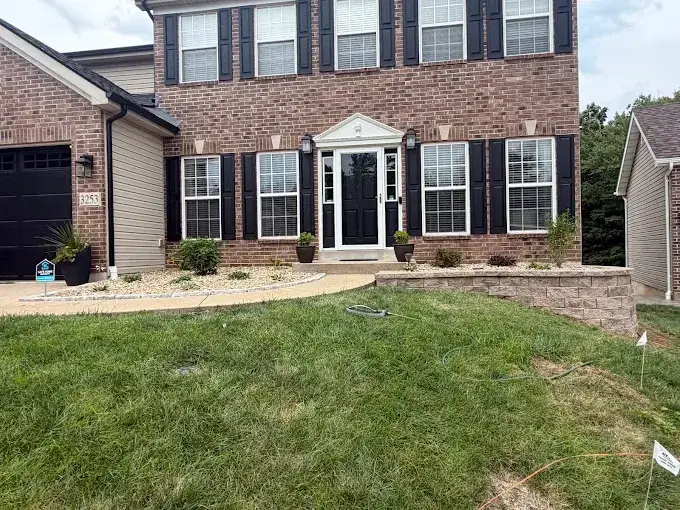
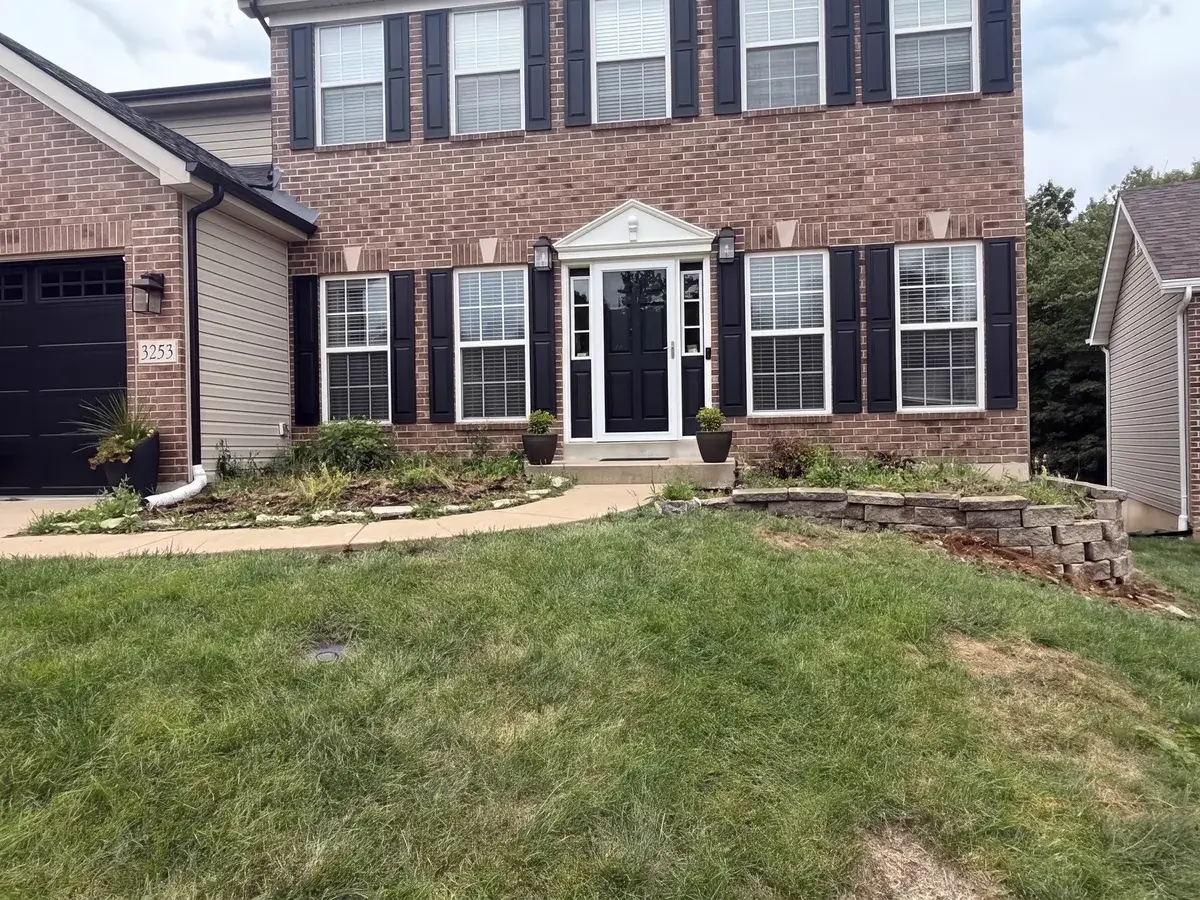
The retaining wall on the right side of this Oakville front stoop was failing and had to be replaced. The landscaping around it had aged along with it. The beds looked dated, and the front of the house didn’t read as one design from the garage, across the walkway, to the front door.
Replacing the wall by itself would have left the tired beds around it. So the homeowners took on the whole front entrance at once: a new wall, new beds, new plantings, and a better plan for the roof water coming off the house. The wall replacement became a full front yard redo.
Roof Water Draining Beside the Foundation and the Wall
Downspout water was the second problem at the front of this Oakville house. The downspouts let roof water out right beside the house and the front walkway. Water dumped at the base of a house soaks the ground along the foundation, and that’s the same ground a front retaining wall has to hold back.
A new wall in the same conditions would be fighting the same water. That’s why burying the downspouts became part of the replacement. Getting the roof water out into the yard, away from the foundation and the walk, mattered as much for the new wall as it did for the house.
How We Built the Belgard Retaining Wall and Rock Beds
We started by tearing out the failing wall and the old beds. The new wall is Belgard segmental block, a concrete block that stacks and locks course by course without mortar, set on a compacted gravel base. Drainage stone went in behind the block, as it does on every retaining wall installation in St. Louis we take on, and caps finish the top.
For the beds, we set natural stone edging along the bed lines and the sidewalk, then laid landscape fabric and covered it with Iowa rainbow rock, a rounded river rock in mixed tan, brown and gray. The fabric keeps weeds down under the rock. We planted low-maintenance shrubs chosen for Missouri’s hot summers and cold winters.
The downspouts went underground. We buried the lines, ran them beneath the sidewalk, and brought the roof water out into the front yard, away from the foundation. It’s the same downspout drainage setup we put in on other St. Louis homes. Last, we regraded the torn-up lawn and put down grass seed.
The completed project included:
- Removal of the failing retaining wall and the old front beds
- A Belgard block retaining wall on a compacted gravel base, with drainage stone behind it and caps on top
- Natural stone edging along the beds and the front sidewalk
- Iowa rainbow rock over landscape fabric in the new beds
- Low-maintenance shrubs suited to Missouri’s climate
- Buried downspout lines routed under the sidewalk to discharge in the yard
- Regrading and grass seed across the disturbed lawn
A Low-Maintenance Front Yard Built Around the New Wall
The front yard at this Oakville home now takes less upkeep and reads as one design. The capped Belgard wall holds a raised bed under the right-hand windows, the stone-edged rock bed on the left follows the curve of the walkway, and the same Iowa rainbow rock and shrubs tie both sides of the front door together.
Rock over landscape fabric means less weeding than the old beds needed, and the shrubs were picked for low upkeep. The work you can’t see changed too. Roof water now leaves through buried lines and comes out in the lawn, not at the foundation and the walk.
When a Retaining Wall Needs Replacing, Not Repair
A retaining wall that leans toward the lawn, has blocks or timbers pushed out of line, or is losing soil at its base is usually past a simple repair. Check where your downspouts empty too, since that water ends up behind the wall. For landscaping and retaining walls in Oakville, we look at both.