
Installing an EZ-Drain French Drain System in Brentwood
This yard drainage project in Brentwood took one day. The yard sits at the low point of the neighborhood, so water from the properties around it collected there and stayed. We designed a drainage system to catch it at the low spots, installed an EZ-Drain French drain with drain boxes, and carried the water out to the street.
A Yard at the Low Point of the Neighborhood
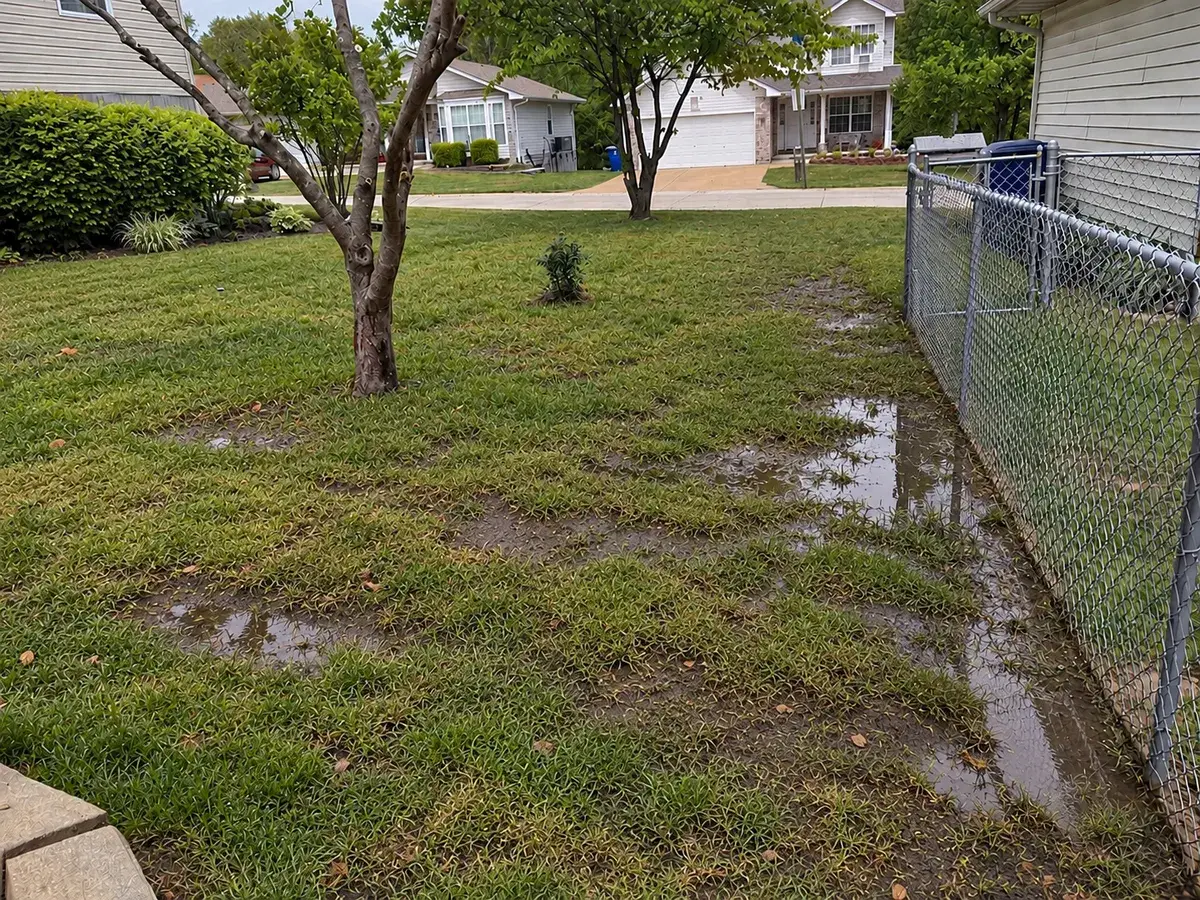
When it rained, the water from the surrounding properties ran downhill into this Brentwood yard and had nowhere to go. It sat in the lawn along the fence and in patches across the grass, leaving the yard wet and unusable. The homeowner’s dog couldn’t run in it, and the lawn stayed soggy.
Planning Where the Water Should Go
Every one of our yard drainage solutions starts with where the water collects and where it can leave. Here, the low spots were along the fence and out in the yard, and the nearest place the water could go was the street. So the plan was simple: catch the water at the low points and carry it to the street.
Trenching With a Compact Track Loader
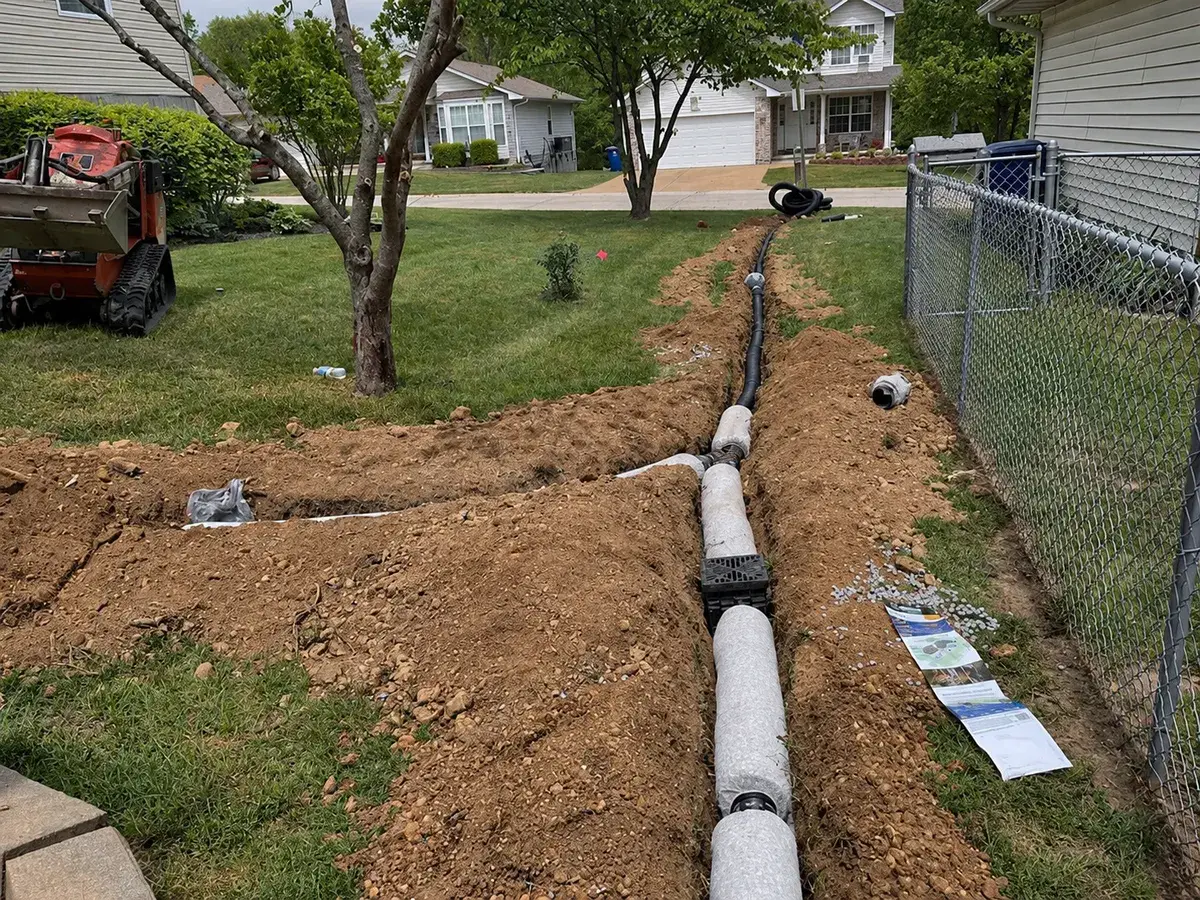
We dug the trenches with a compact track loader. It’s small enough to work in a residential yard, and its tracks spread the weight out, so it does far less damage to the lawn than bigger equipment. The main line runs along the fence toward the street, and a branch line picks up water from the side of the yard.
Gravel-Free French Drain Pipe and Drain Boxes
Instead of a gravel-filled French drain, we installed an EZ-Drain system. It’s a perforated pipe wrapped in gravel-free drain bundles, so it collects groundwater along the full length of the run. At the low points, we set drain boxes, also called catch basins, to grab surface water as it pools and send it into the line.
Carrying the Water Out to the Street
The lines are pitched so the water always flows downhill toward the street. Past the yard, they switch to solid pipe, which carries the water off the property without letting it soak back into the ground on the way.
When the pipe was in, we backfilled the trenches, regraded the yard, and restored the lawn.
The completed project included:
- A drainage plan to collect water at the low spots and carry it to the street
- Trenching with a compact track loader to keep lawn damage to a minimum
- An EZ-Drain French drain: perforated pipe in gravel-free drain bundles along the full run
- Drain boxes (catch basins) at the low points for surface water
- A branch line to pick up water from the side of the yard
- Lines pitched for positive flow, switching to solid pipe out to the street
- Backfill, regrading and lawn restoration
A Dry Yard the Dog Can Use Again
The yard isn’t wet anymore. Water still comes downhill from the neighbors’ yards, but now it drops into the drain boxes and the French drain and leaves the property instead of sitting in the lawn. The homeowner’s dog can run in the yard again, and the lawn and the foundation aren’t sitting next to standing water.
Every drainage job starts from where the water comes from. In Des Peres, we used a French drain and channel drain to move storm water away from a house, a different problem with the same goal: get the water off the property.
Why Is Water Standing in Your Yard?
If your yard is the lowest point on the street, the neighbors’ water ends up in it. Look for puddles that stay a day or more after rain, soggy grass along a fence line, or bare, muddy patches. For homes in Brentwood and the St. Louis County communities we work in, we’ll walk the yard with you and find where the water goes.