
Being a Keystone Authorized Contractor gives homeowners added confidence that the retaining wall is being built with the right product and installation knowledge. That includes base preparation, drainage, reinforcement where needed, and planning the wall around the grade.
What that means when you hire Excel Landscaping:
- 25+ years of combined hands-on experience
- Retaining wall work across St. Louis County, including Chesterfield, Kirkwood, Town & Country, Oakville, and Wildwood
- Experience with slopes, tiered walls, drainage, and aging wall replacement
- 3-year workmanship warranty
- Keystone and Unilock contractor credentials
- It’s one credential, not a guarantee. Below is what it covers, what it doesn’t, and how to check any contractor’s work before you hire them. We follow Keystone’s guide on every Keystone wall in our retaining wall installation in St. Louis, and we hold a Unilock authorization for the paver side of the work.
Key Takeaways
- The authorization means the crew is trained on Keystone’s installation methods [CONFIRM: wording].
- It doesn’t replace a site visit, a written quote or a look at finished walls.
- Ask any wall contractor which of their walls used Keystone block, and whether you can go see one.
- Excel is also a Unilock Authorized Contractor for the paver side of the work.
What Does Being a Keystone Authorized Contractor Mean?
A Keystone Authorized Contractor knows Keystone’s block and the way Keystone says to install it. Most of that knowledge lives in the Keystone Construction Manual, the field guide for the Compac and Standard block lines. It covers what goes under the first course, what goes behind the wall and how a taller wall ties back into the hill.
Knowing the manual is the starting point. The property decides how it gets applied: the existing slope, how long the clay stays wet after a storm, what sits above the wall, and where water can drain out. Two walls built from the same Keystone block can need very different bases and drains, which is why we look at each yard at a free on-site assessment before recommending a block.
What Keystone’s Construction Manual Calls For
These are the main build steps in the Keystone Construction Manual for its Compac and Standard units, with what each step does for a wall in St. Louis clay. They are Keystone’s numbers, not a fixed Excel spec. An engineered wall or a different Keystone product can call for more.
| Part of the wall | What Keystone’s manual says | Why it matters on a St. Louis lot |
|---|---|---|
| Leveling pad (base) | 6 inches of compacted angular granular fill; no pea gravel or sand | Angular stone locks together under the block; rounded stone can shift |
| First course | Buried at least 6 inches on small gravity walls | Keeps the bottom of the wall from sliding out |
| Drainage stone | 1/2 to 3/4 inch crushed stone, reaching at least 24 inches back from the wall face | Gives water a path down instead of soaking the clay against the block |
| Drain pipe | Sloped to daylight, with outlets at low points every 30 to 50 feet and at wall ends where it fits | Water collected behind the wall needs a way out of the yard |
| Backfill | Placed in lifts of 8 inches or less and compacted; only hand-operated compactors within 3 feet of the wall face | Loose fill settles and pushes; heavy machines close to the face can knock block out of line |
| Geogrid | Depth, spacing and strength set by the wall’s engineered design | Taller walls need the grid to tie the block back into the hill |
Height is where those steps change most. Keystone’s FAQ says a gravity wall about 3 feet tall can typically be built without geogrid, and that the safe height depends on the unit type, the soil, the batter and the load on top of the wall. Batter is the slight lean back into the hill that each course of block builds in. A 4-foot wall under a driveway and a 4-foot wall under a flower bed are two different designs.
What Keystone Authorization Doesn’t Tell You
Keystone authorization tells you a contractor knows Keystone’s products. It doesn’t tell you how that crew handles your yard, how they communicate during the job, or how their finished walls have held up. Knowing the 6-inch base rule and building it on every job are two different things, and only finished walls show the second.
The credential also stops at Keystone block. If a quote uses another brand’s block, Keystone’s manual doesn’t apply to it, and Keystone authorization doesn’t cover the patio, the downspouts or the grading around the wall. Those parts often decide whether a wall in St. Louis clay stays straight.
So ask about your property, not the logo. Ask for a written quote that lists the base depth, the drainage stone and the drain pipe, and where that pipe will empty. Then ask to see a Keystone wall the contractor built a few winters ago, because a wall that has been through several freeze-thaw seasons tells you more than a new one.
Why Broader Outdoor Experience Matters to the Homeowner
Broader experience matters because most yard problems overlap. A retaining wall, the water around it and the patio above it usually have to be planned together. Homeowners rarely call about one neat category: water collecting beside a patio, a slope that’s hard to use, a rotting retaining wall and a settling older patio often show up in the same yard.
Our crews have worked through these overlaps across the St. Louis area. In Kirkwood, a new patio had to account for how water moved across the lawn. In Ballwin, a settled patio needed work below the visible pavers. In Wildwood, a walkway and a retaining wall had to follow the same slope.
Keystone authorization adds the wall side of that knowledge, and Unilock authorization covers the paver side. Experience with drainage, grading and planting is what ties them together. It’s how a new wall gets built without sending water toward the patio you put in last year.
How That Experience Applies Across Outdoor Services
Experience across services decides what gets built first. Keystone authorization covers retaining walls; we also build patios, drainage and landscape design. On many St. Louis properties the order of the work matters as much as the materials:
- A retaining wall may need drainage behind it before the yard above is regraded.
- A patio may need the slope corrected first, or it will settle toward the low side.
- A walkway beside a slope may need a short wall to hold the soil next to it.
- Planting beds can wait until the wall and walkway are set, so the crew doesn’t dig them up twice.
Getting the order wrong usually means paying for some of the work twice. A new patio laid before the drainage is fixed can sink at one corner after a few heavy storms, and the pavers have to come up to fix it. At the on-site assessment we walk the whole yard first, then lay out which piece goes in first and why.
What 25+ Years of Combined Experience Changes on the Job Site
Combined experience helps a crew spot problems before the block goes in. Excel’s 25+ years of combined hands-on crew experience comes from jobs like a settled patio that needed work below the pavers, roof runoff that needed a route away from the house, and a retaining wall that needed drainage behind it.
The number alone doesn’t build a better wall. What it gives you is a crew that notices a downspout emptying at the top of the slope, or soft fill where the base should go, and tells you before the finished block is set. On a Keystone wall, that’s the difference between copying the manual and fitting it to a yard where water pools at the base after every storm.
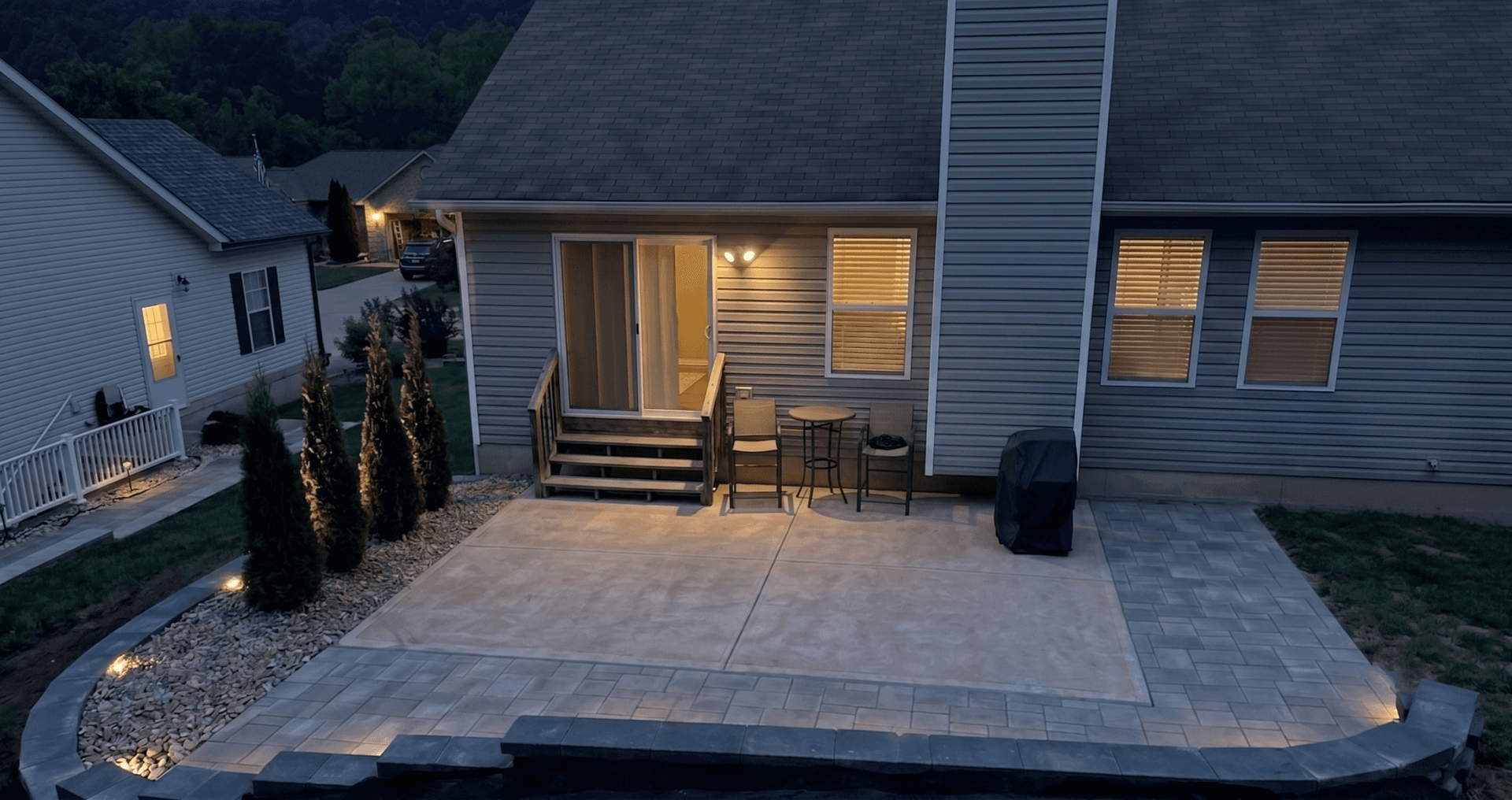
Recent Retaining Wall Project in Town & Country

Contractor Credentials Should Be Backed by Completed Work
A credential tells you what a contractor knows, and completed work tells you how they use it. Keystone authorization points to wall knowledge and Unilock authorization to the paver side. Neither one shows how a crew handles a steep slope, keeps you updated during the job, or responds when the dig turns up soft fill or an old buried tie.
Ask whether the work is backed after the crew leaves. Excel Landscaping pairs its Keystone and Unilock credentials with a 3-year workmanship warranty and a record of finished walls and patios across the St. Louis area. If a contractor can’t name the warranty term, get it in writing before work starts.
Then look for finished projects that match yours, like a steep slope, a rotting tie wall or standing water at the bottom of a hill. Ask what the crew found when they dug and what they built because of it. For the full list of questions to ask before hiring, see how to choose a hardscape contractor in St. Louis.
A 5-Star Google Rating Adds the Homeowner Perspective
A 5-star Google rating shows how homeowners felt about the parts a credential can’t measure: communication, timing, cleanup and whether the finished job matched the plan. Excel Landscaping is 5-star rated on Google, with reviews covering retaining walls, patios, drainage and planting.
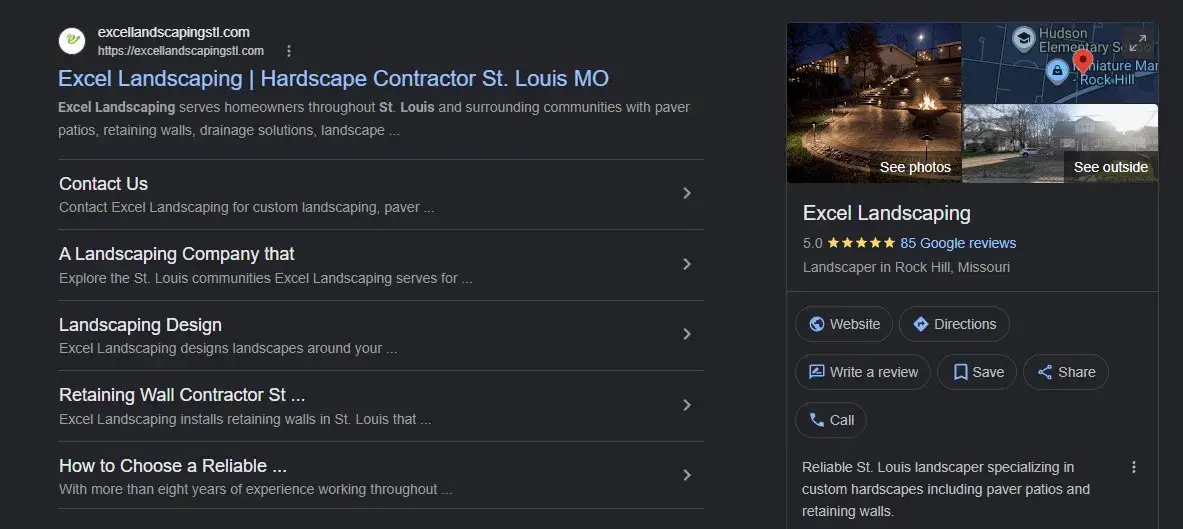
A recent retaining-wall customer pointed to clear communication, a timely finish, reasonable pricing and the finished workmanship. A landscaping customer wrote that Joe helped develop the plan and the crew finished the installation in one day. When you read reviews for any contractor, look for jobs like yours, since a wall review tells you more about a wall builder than a mulch review does.
What Being Keystone Authorized Means at Excel Landscaping
At Excel Landscaping, Keystone authorization means the Keystone manual is the starting point for every Keystone wall we build, and the yard decides the rest. At the free on-site assessment, Joe checks the slope, how tall the wall needs to be, what will sit on top of it and where water can drain out before recommending a block.
Keystone isn’t the only block we install, and it isn’t the right pick for every wall. A low front-yard wall might suit natural stone, like the walls we built in University City. A wall next to a new Unilock patio might use matching Unilock block. We’ll tell you which one fits your yard and why at the assessment, along with a fixed project price.