We went to Hardscape North America 2026 to get better at the work you’d hire us for. As a hardscape contractor in St. Louis, we spent three days in Louisville on the parts of a patio or retaining wall you never see once it’s finished, because that’s where most problems start.
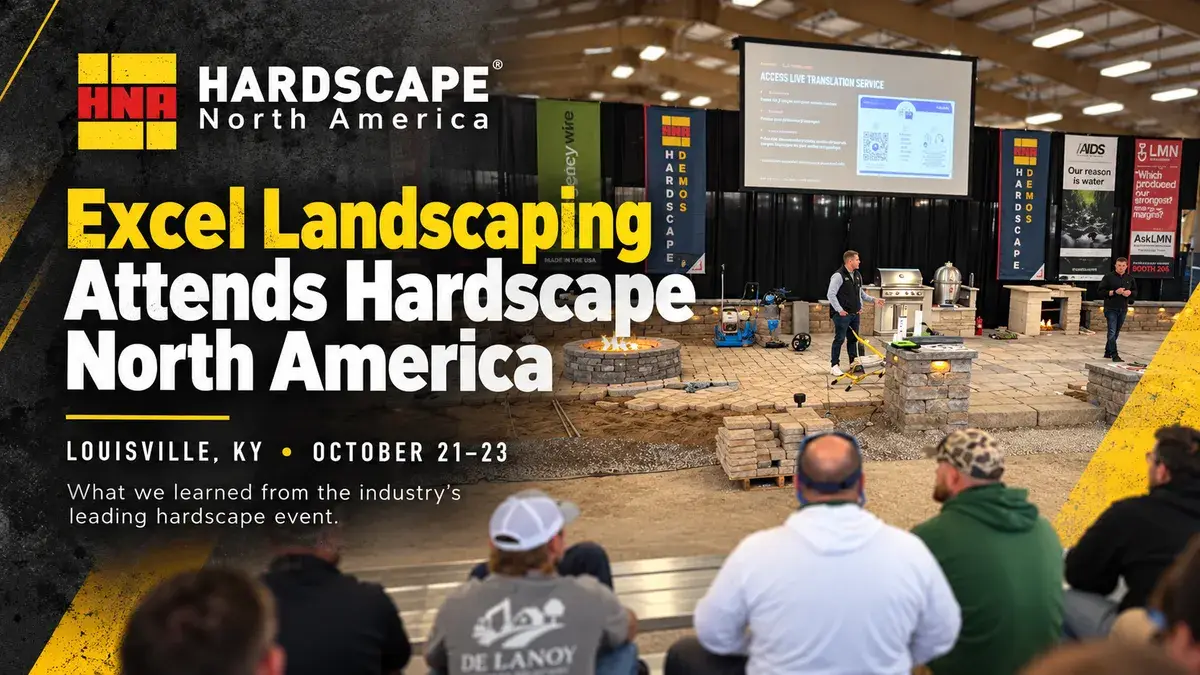
HNA is the hardscape industry’s yearly trade show, run by the Concrete Masonry & Hardscapes Association (CMHA). It ran October 21 to 23 at the Kentucky Exposition Center, with classroom sessions and a live demo stage where contractors build walls, patios, fire features and outdoor kitchens in front of the crowd. Here’s what we learned and what it changes on your project.
Key Takeaways
- Most of our time went to base prep and retaining wall drainage, the buried work that decides whether a wall or patio lasts.
- We’re adding more natural stone, gas fire features and landscape lighting to what we build.
- Permeable pavers drain well only when they’re kept clean, and we’ll tell you what that takes before you choose them.
- You’ll still get a fixed price, now with an estimate that breaks out the base, drainage and finish work.
Walls and Patios Last When the Base and Drainage Are Right
Most patio and wall failures start underground. A patio sinks because the soil under it wasn’t compacted, and a retaining wall leans because water builds up behind it with nowhere to go. That’s why we spent most of our time in the base prep and wall sessions, including Renee Redding’s class on sub-grade and aggregate prep and Ryan Miller’s on retaining wall design and construction.
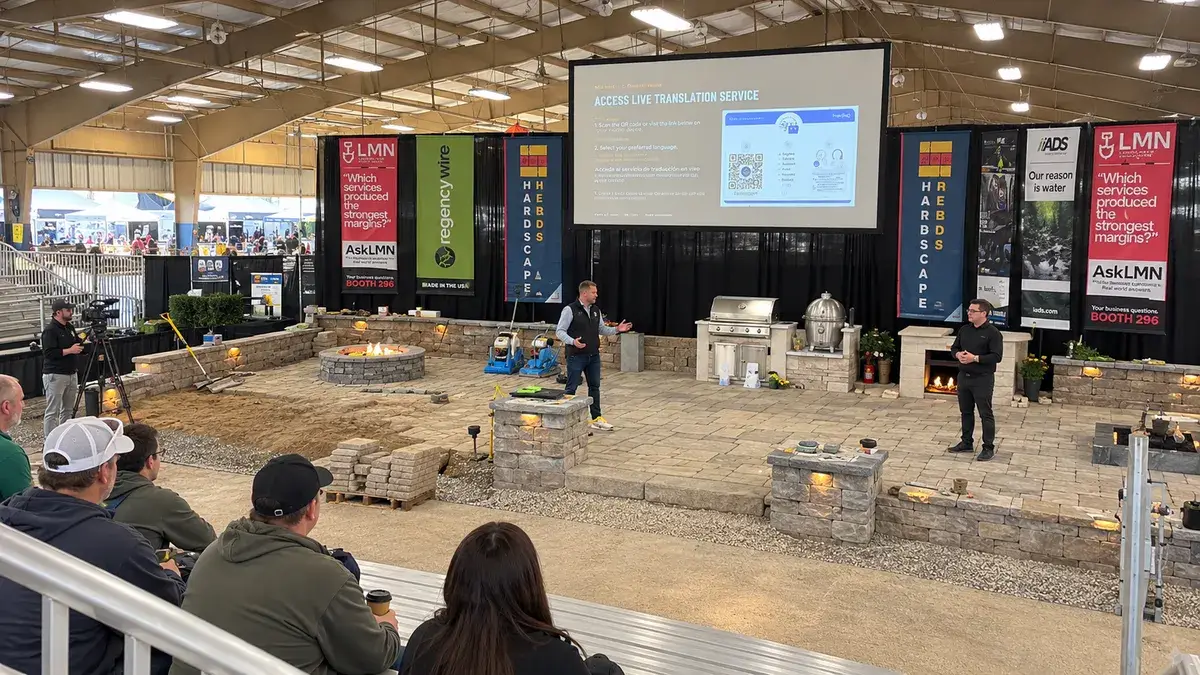
Both came back to the same three steps. Compact the sub-grade tightly before any stone goes down. Use the right aggregate for the job, not the cheapest one. Then give the water behind a wall a way out, with clean rock backfill and a perforated pipe that carries it off, so pressure never builds against the block. On the demo stage, Patrick Murray and Kenneth Deemer of Local Roots Landscaping built a wall from base to cap and showed each of those steps in order.
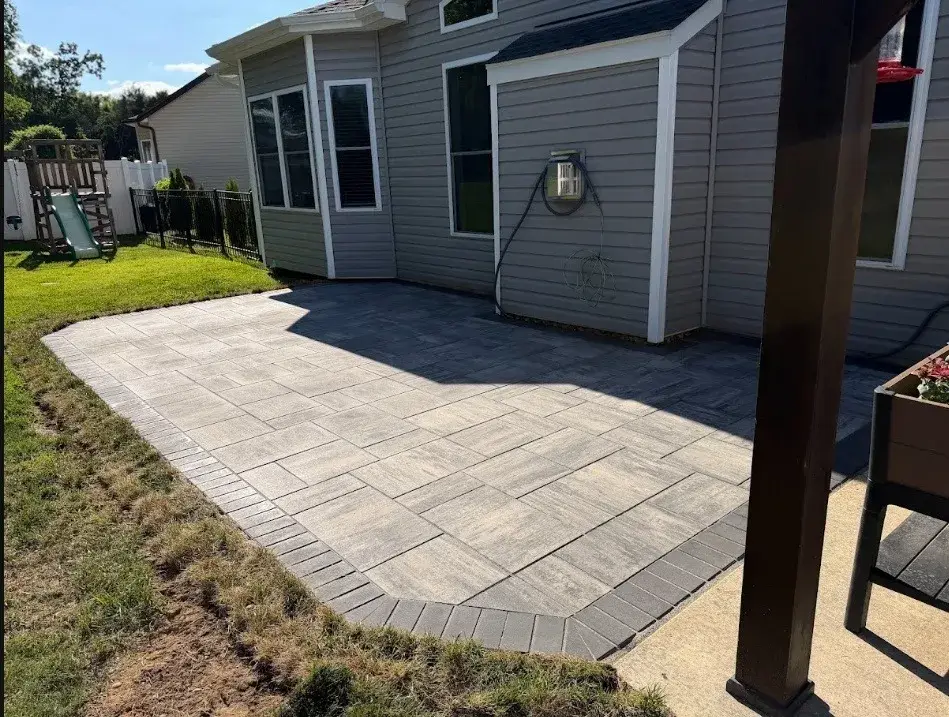
On St. Louis clay, which holds water and swells, that last step decides whether a wall stands or leans. It’s how we handle every retaining wall installation in St. Louis. We check your soil, slope and wall height at the free on-site assessment and size the base and drainage to fit, because no single spec works for every yard. The same goes for the base under the paver patios we build across St. Louis, since a patio is only as flat as the ground under it.
More Options for Natural Stone, Fire Features and Lighting
The sessions and demos on natural stone, gas fire features, lighting and outdoor kitchens all made the same point. On these projects, small install details decide how the finished job holds up. Natural stone varies in thickness, so each piece has to be set by hand. A gas fire feature has to be piped and built right, or it won’t stay lit. An outdoor kitchen needs a base that won’t shift, or the counter cracks.
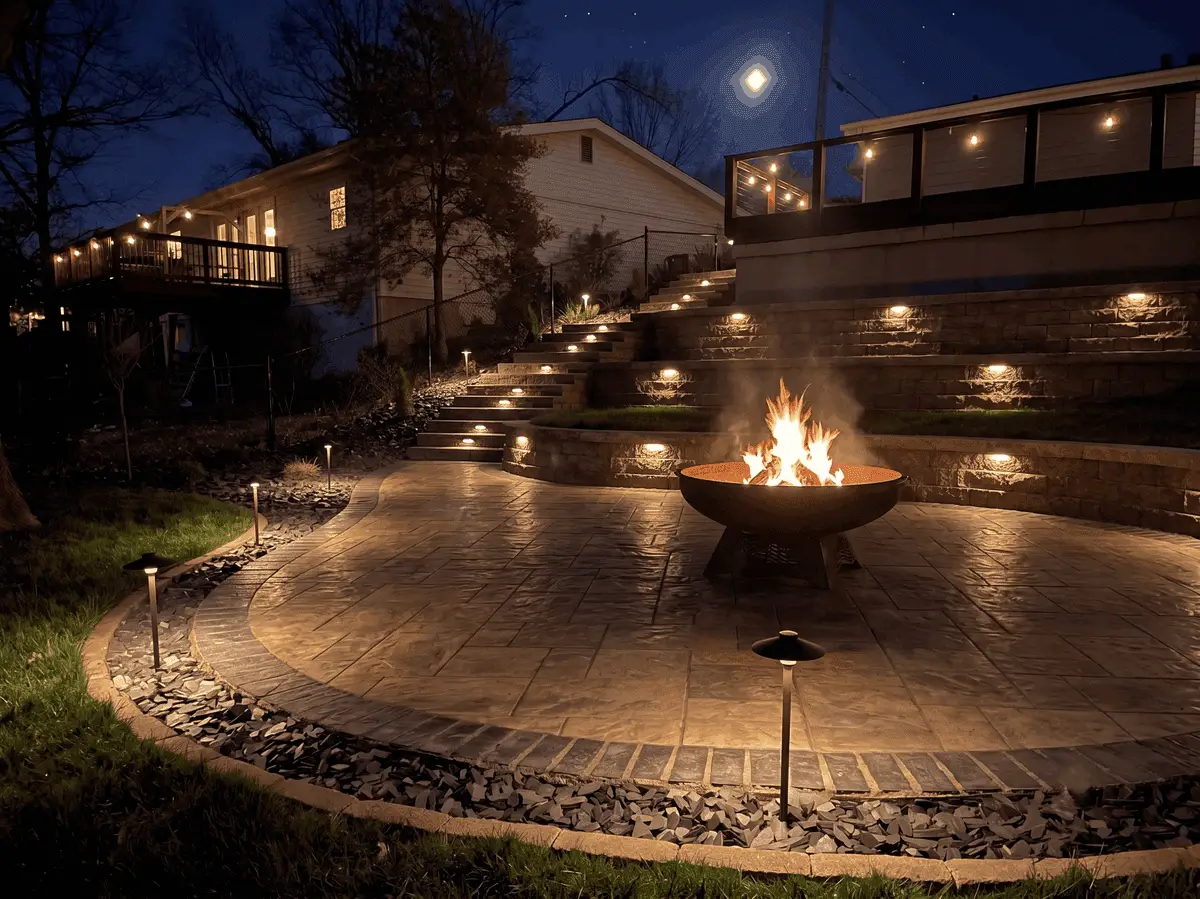
That’s why we’re adding more natural stone patios and veneer, gas fire features built into patios and walls, and landscape lighting to what we build. You can plan the stone, the fire and the light as one project instead of three. Our own crew runs the gas line on every fire feature job, with 25+ years of combined experience behind it, so one crew is responsible from the base to the flame.
Natural stone costs more than concrete pavers and isn’t the right fit for every budget, so we’ll walk you through the trade-offs before you choose. You can see more on our fire pit installation and outdoor kitchen installation pages.
Permeable Pavers Help With Water Only if They’re Kept Clean
One session covered how to keep permeable pavers working, and it matters if you have a patio or driveway that puddles. Permeable pavers have wider joints filled with small stone, so rain soaks down into a stone base instead of running across the yard. Over time those joints fill with dirt and leaves, and once they clog, the water stops soaking in.
So we’ll only recommend permeable pavers when soaking the water in is the right fix for your yard, and we’ll tell you up front what keeping them clean involves. When the real problem is water running toward the house, a drain system often fixes it for less. Our yard drainage installation page covers those options.
Clearer Estimates and Easier Booking
Comparing quotes is hard when every contractor lists different things. George Urvari’s Estimating Mastery session was about fixing that, and we’re reworking our proposals because of it. You’ll still get a fixed price after a free on-site assessment, but the base, drainage and finish work will be broken out so you can see what you’re paying for and compare it fairly.
We also came home with better tools for booking. Setting up your on-site assessment and hearing from us while your job is underway should both get simpler.
What This Means When You Hire a Hardscape Contractor in St. Louis
Going to HNA doesn’t change who builds your project. It’s the same crew, with 25+ years of combined experience, and our workmanship warranty still covers 3 years. What changes is that the crew is building with current methods and products instead of the way it was done years ago. For you, that means a base and drainage built for St. Louis clay, more choices in stone, fire and lighting, and an estimate you can read line by line.
Sources
- HNA 2026 sessions and speakers: https://www.hardscapena.com/education/sessions/ and https://www.hardscapena.com/schedule/speakers/
- HNA 2026 demos: https://www.hardscapena.com/education/demos/
- VIP Pass contents: https://www.hardscapena.com/education/vip-pass/
- Show size (1,000+ exhibits, Hardscape House, 35+ acre demo area): https://www.cmha.org/events/hardscape-north-america/
- 2026 HNA Awards (135 entries, winners): https://www.hardscapena.com/2026-hna-awards-celebrate-excellence-in-hardscaping-winners-and-honorable-mentions-announced
- New Product Spotlight: https://www.hardscapena.com/new-product-spotlight/