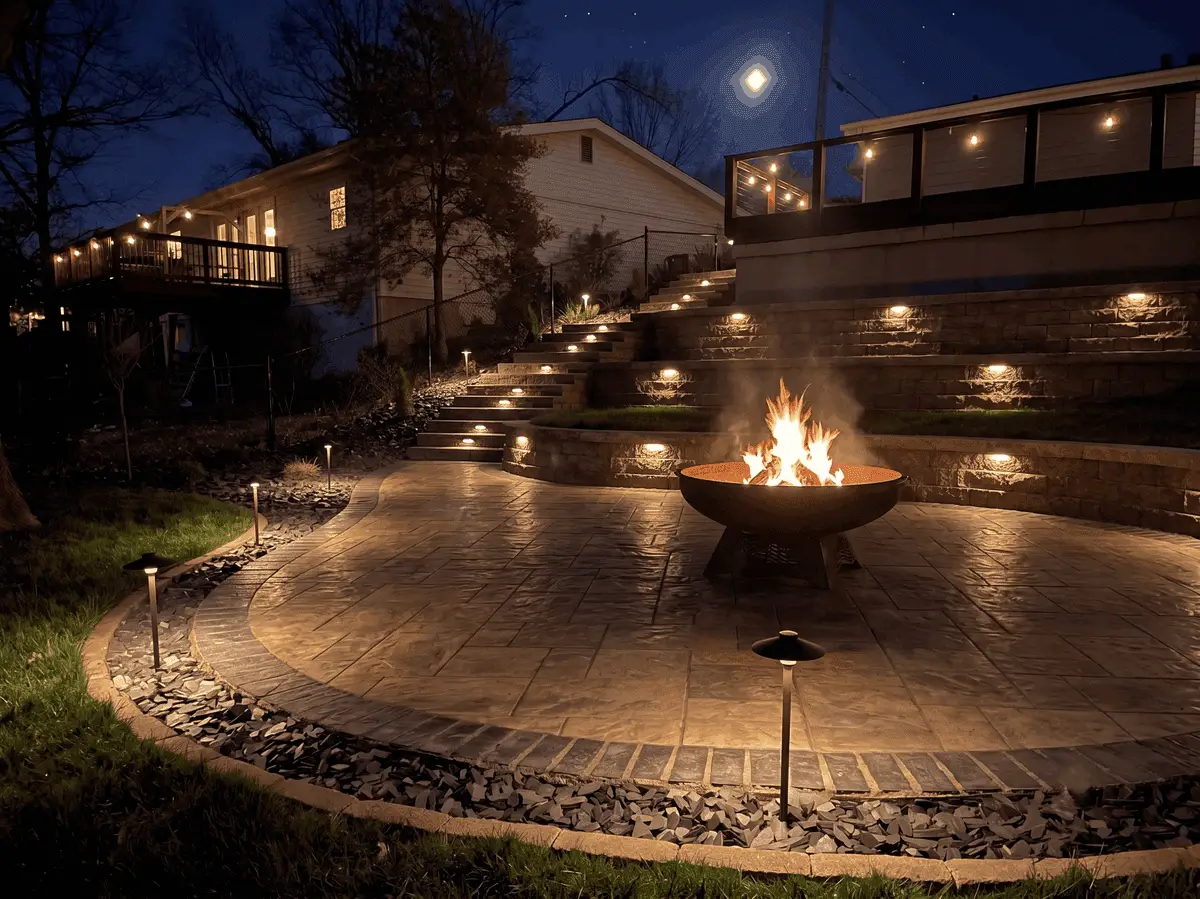
The yard problems worth fixing before winter in St. Louis are the ones water causes, plus the ones you’ll notice most with a house full of people. Downspout drains that back up, a muddy low spot by the deck, a patio that holds water or fits four chairs when twelve people are coming. All five below can still be fixed this fall, as long as the ground isn’t frozen.
Each one is a real request or job from the past two falls, with names and addresses left out. Three of the five are water problems, and fixing them is the kind of yard drainage installation that’s easiest to get done before the ground freezes. For each one you’ll see what the homeowner noticed, what was actually causing it, and what the fix took.
Key Takeaways
- If your downspout drain backs up again right after a cleaning, the outlet is the problem, not a clog.
- A yard low spot needs a drain box and a pipe to somewhere lower. Regrading alone won’t move the water off your lot.
- Fix water on your patio before December, when a puddle on stone becomes a sheet of ice.
- A patio extension of about 125 square feet adds room for a second seating group without replacing the patio you have.
- Book before early November if you want the work finished by Thanksgiving, November 26.
The most common of the five starts at your gutters.
1. Downspout Drain Backing Up Even After a Cleaning
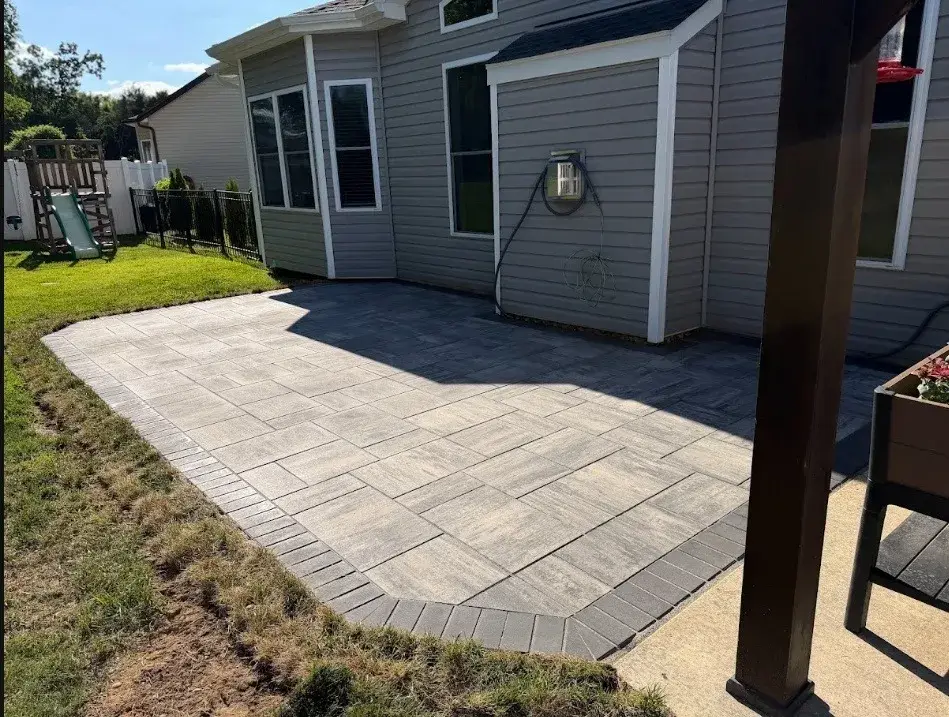
A downspout drain that backs up right after a cleaning usually isn’t clogged. It has nowhere to send the water. One homeowner with a new house told us the gutter drains on the front and back kept overflowing, even after a cleaning in November. The buried lines ran about 8 feet, then came up in the yard with nowhere for the water to go.
A buried downspout line has to end where water can leave your lot. That can be a pop-up emitter on a slope, a dry well, or a spot that daylights downhill. When the outlet surfaces in a flat or low area, water sits in the pipe. Silt settles, the line fills, and your gutter spills over at the next hard rain.
The fix is a longer line that ends where water actually drains. We replace the short run with solid PVC and glued fittings, pitch it so water keeps moving, and finish it at a pop-up emitter or drain box. Then we grade the surface so water runs away from your foundation. How far your line runs and how much fall it needs depends on your slope. Our crew’s 25+ years of combined experience goes into reading that on site, before anything gets dug.
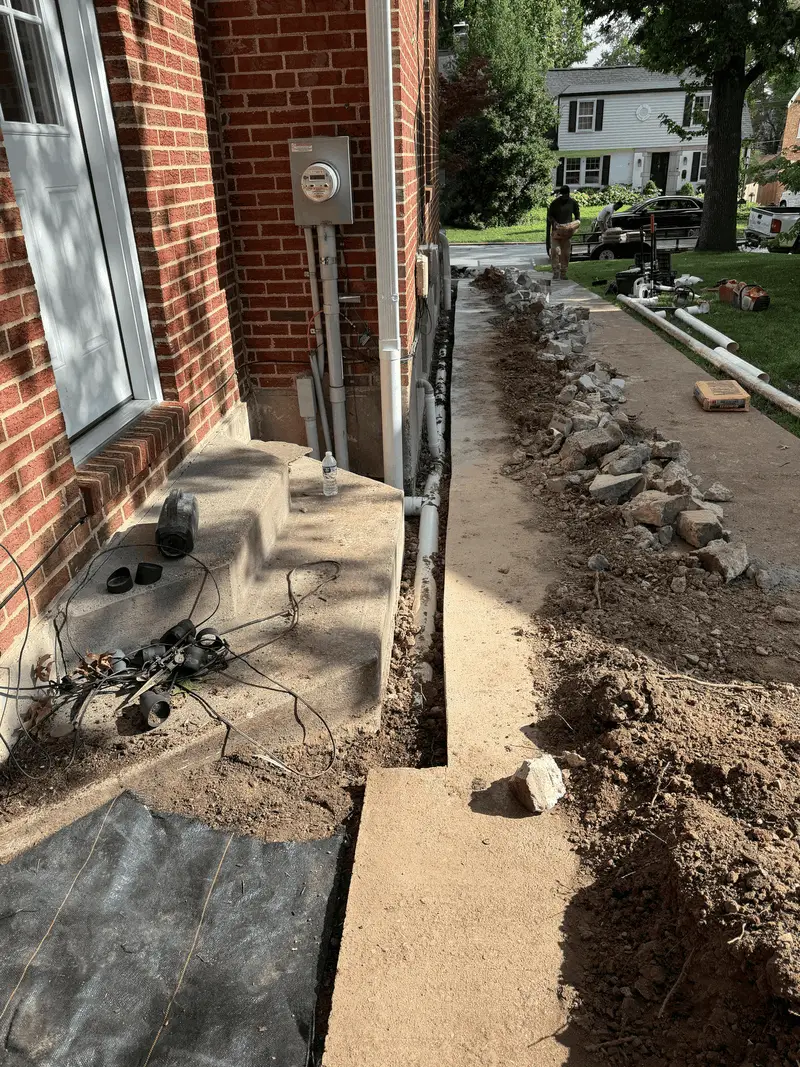
We tied downspouts into buried PVC the same way on a Chesterfield home where roof water was reaching the basement. When water has no outlet in the open yard, it collects at the lowest spot it can find, which is the next problem.
2. Low Spot by the Deck That Turns to Mud After Rain
A low spot that holds water after every rain needs a way out, not more dirt on top. This October, we worked on a backyard where water collected next to the deck after every storm. When nothing carries water away from a low point, it becomes a puddle, then a mud patch, then the spot mosquitoes find in summer. St. Louis clay holds water instead of letting it soak in, so that spot stays wet long after the rest of your lawn dries.
On this job, we set a 24 x 24 inch drain box at the low point and ran 4-inch pipe out to the front yard. Then we regraded the backyard so water moves toward the drain instead of pooling. We finished with Topsoil Plus and new sod, so the yard was green, not bare, when the crew left.
3. Water Pooling on the Patio Where Guests Will Walk
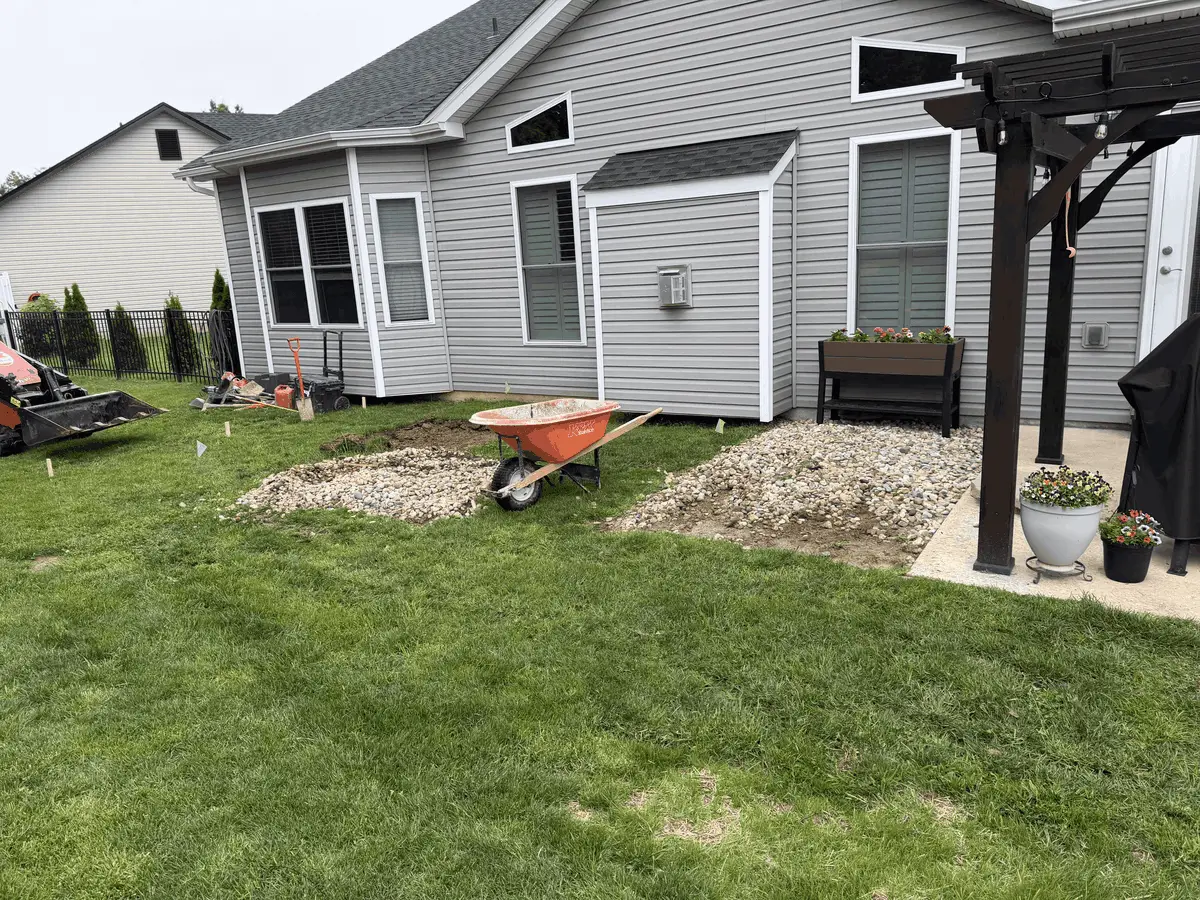
Water that pools on your patio means part of the surface sits lower than the rest, with no drain to catch it. This fall, we fixed a flagstone patio with one corner that held water after every rain. Next to it, the A/C unit sat in bare dirt that washed onto the stone in every storm. Water on stone gets slick, and in December it turns icy right where your guests walk.
We pulled the flagstones where the water sat and set a drain box at the low point. Then we regraded the base so the patio sheds toward the drain and ran PVC out to the yard. Metal edging and decorative gravel around the A/C unit now hold the dirt in place and steer water away from the stone.
If your patio is sinking instead of just holding water, that’s a base problem, and our guide to fixing a tired or sinking patio shows how one low spot gets rebuilt without tearing out the rest. If the patio is dry but too small for the people coming over, the fix is more room.
4. Extend a Paver Patio That’s Too Small for Company
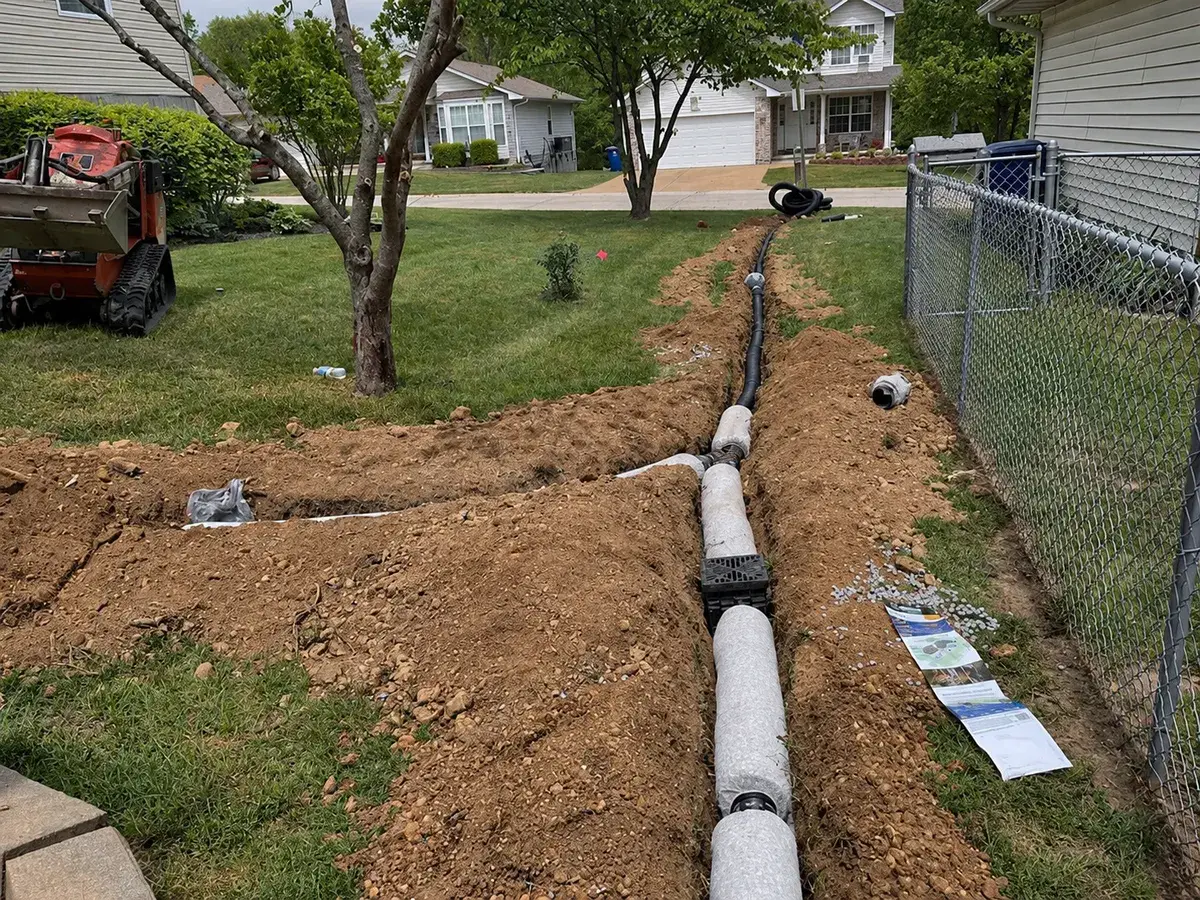
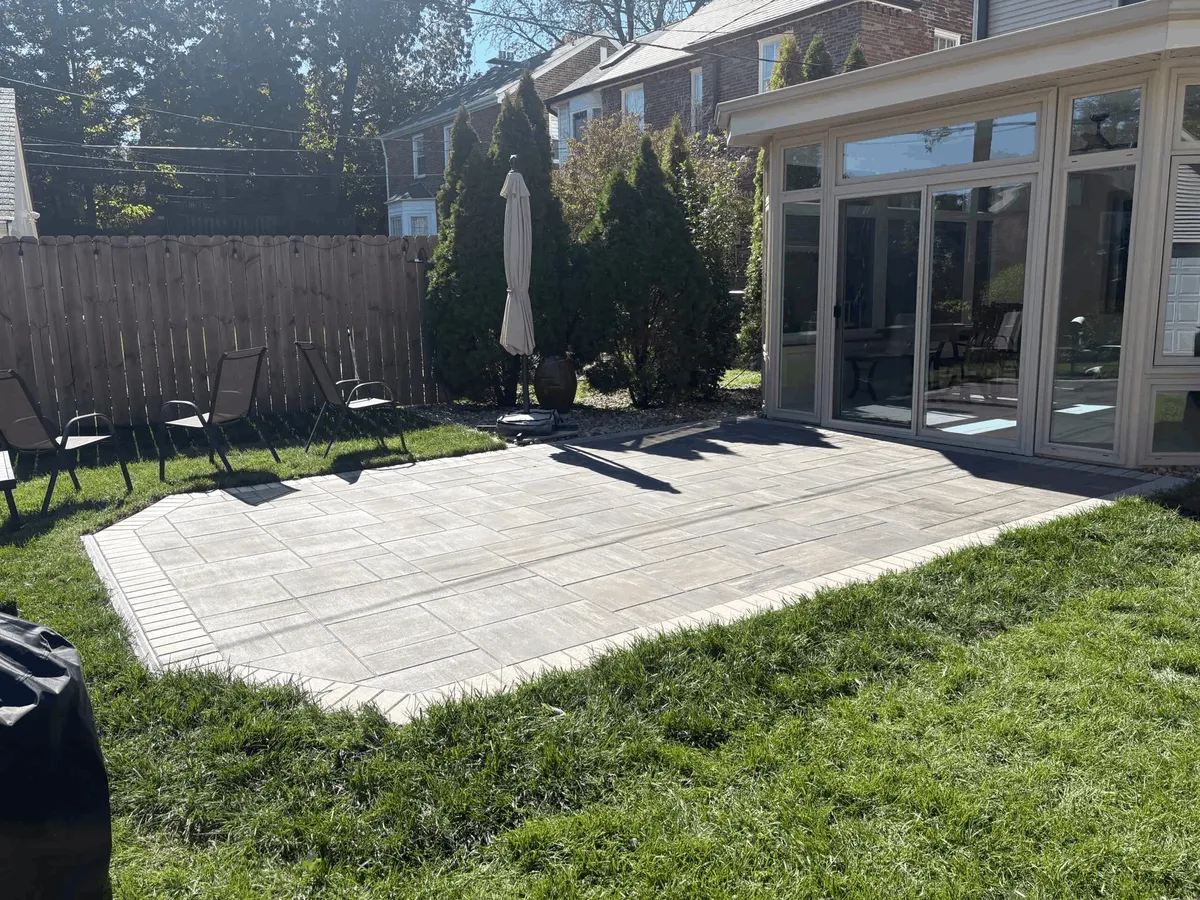
You can add on to the patio you have instead of replacing it. One homeowner asked us for about 125 square feet of pavers added to their existing patio, just more room. Most older patios were built for a table and four chairs. When the holidays bring twelve people, everyone ends up standing in the grass.
An extension needs its own compacted base, matched in height to your old surface, with a solid edge so the two sections don’t separate. How deep that base goes depends on your soil and drainage, which we check before we price it. A 125 square foot extension is roughly 11 x 11 feet, enough for a second seating group or a fire pit with chairs. Adding pavers matched to the patio you already have is usually a short job, and our workmanship warranty covers the extension for 3 years, same as a full new patio.
5. Fall Sod and a Small Seating Spot for a Bare Backyard
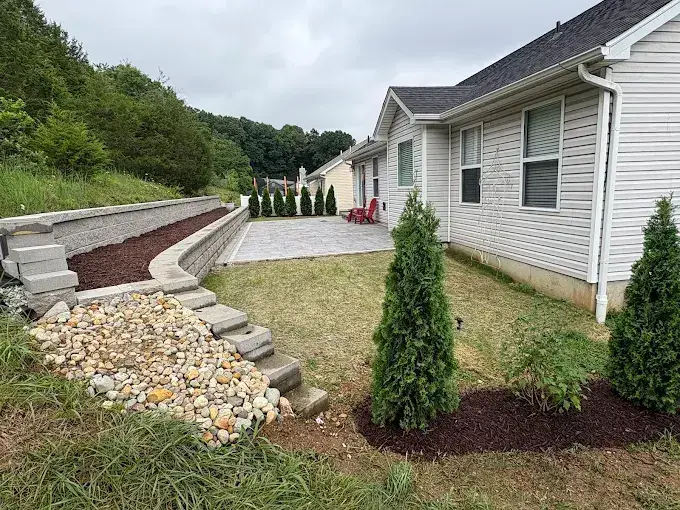
A bare yard looks finished with new sod and one level spot to sit. We heard this from two homeowners last fall. One needed new sod in the backyard and a simple place for garden chairs and an umbrella. The other had a tree taken down and was left with a torn-up front yard that needed restoring.
Bare dirt tracks mud into the house all winter, and without a place to sit, the backyard doesn’t get used. The fix starts with regrading, then Topsoil Plus (topsoil mixed with fertilizer and compost) and new sod. For seating, a small paver pad or a gravel area with edging gives chairs and an umbrella a level, dry spot. A mulched planting bed around it makes it look finished.
Small, focused projects like this are part of the landscape design work we do around St. Louis homes. Whichever of the five is on your list, timing is the next question.
Yard Work Before Winter in St. Louis and How Late You Can Book
Drainage repairs, patio installations, and sod work can often continue through late fall in St. Louis, as long as the ground isn’t frozen and soil conditions allow. According to the University of Missouri Extension, cool-season sod can be installed during most of the year, although sod laid late in the season may not fully root until warmer weather returns. Grass seed is different. The recommended seeding window runs from late August to early October, so November is generally too late for new grass to establish before winter. Spring seeding is possible, but late summer to early fall offers better results.
Your real deadline is the calendar. Thanksgiving is November 26 this year, and fall schedules fill fast. Call in early so there’s room for a site visit, your price and the build before family arrives. Here are the fall timing questions homeowners ask us most.