

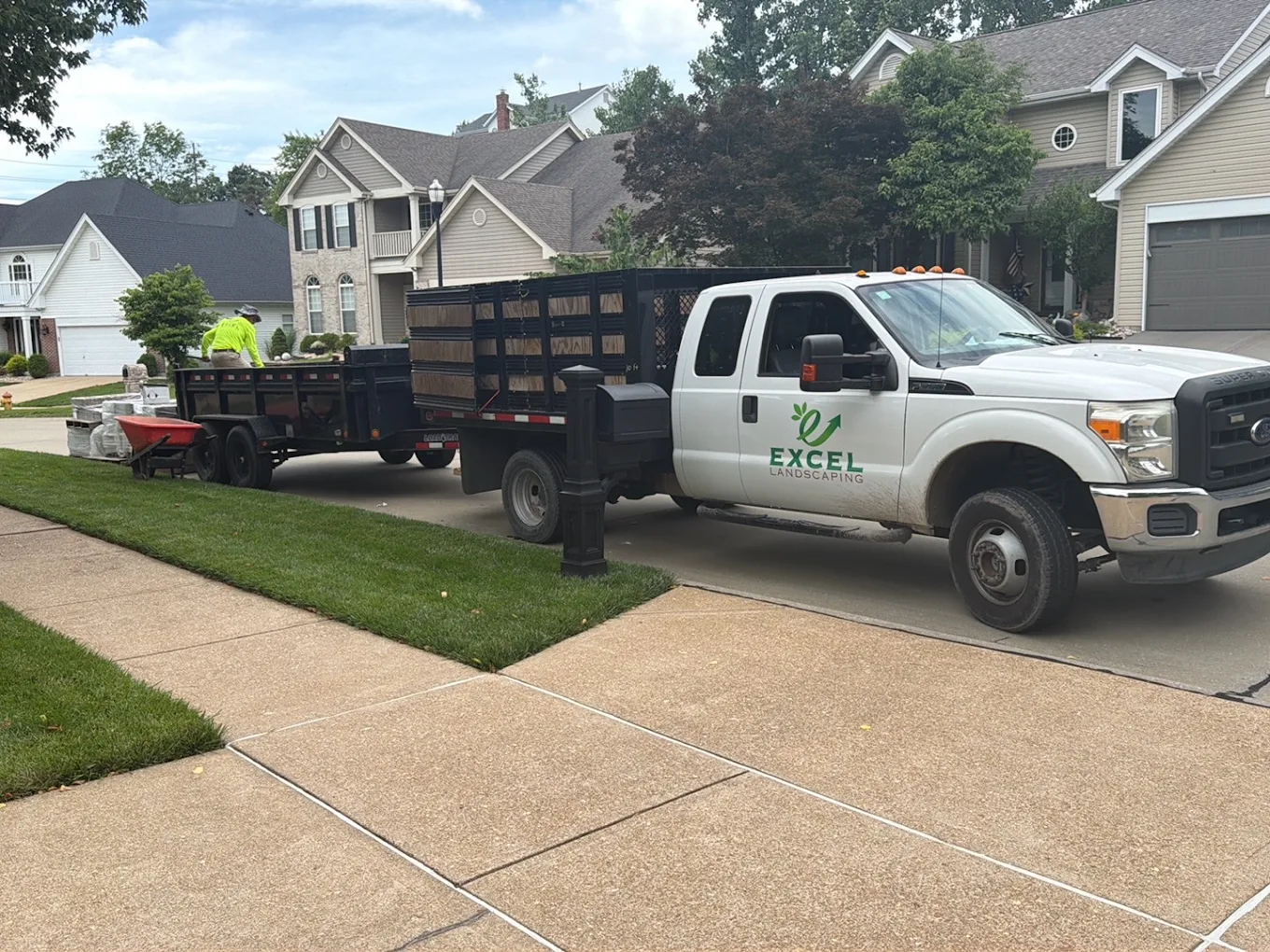
Hiring a landscaping or hardscaping contractor often starts with a fairly simple goal. You may want a paver patio where your family can spend more time outside, a retaining wall to manage a difficult slope, a drainage solution for water collecting around the house, or a complete landscape redesign that makes the property easier to use and maintain.
The finished project may look straightforward. What happens underneath and around it often is not.
Slope, runoff, clay-heavy soil, existing grades, access, drainage, nearby structures, base preparation, and St. Louis freeze-and-thaw cycles can all affect how an outdoor project should be planned and built.
With more than eight years of experience working throughout the St. Louis area and a 5-star reputation built through customer feedback, Excel Landscaping has encountered these conditions across paver patios, retaining walls, drainage projects, landscape installations, and larger outdoor renovations.
The value of that experience is not simply the number of years. It is knowing what to look for before construction begins and understanding how one part of a property can affect another.
What Makes a Reliable Landscaping Company in St. Louis?
Years in business are one measure of experience, but they are not the only one.
Homeowners should also be able to see what that experience produces.
A landscaping contractor should be able to show completed work, explain why a particular solution makes sense, identify site conditions that could affect the project, communicate clearly throughout the job, and point to customers who have experienced that process firsthand.
Our work throughout the St. Louis area includes retaining walls built around difficult grade changes, patios planned with drainage and proper base preparation in mind, drainage systems installed to address persistent runoff problems, and landscapes designed around the way homeowners actually want to use their properties.
Experience should be visible in the work itself.
Trusted by homeowners, and people who regularly work with contractors.
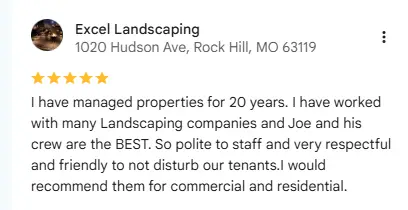
Tanya has managed properties for 20 years and says she has worked with many landscaping companies. In her review, she described Joe and the Excel Landscaping crew as the best she had worked with and recommended the company for both residential and commercial projects.
A strong reputation becomes more meaningful when homeowners explain why they were satisfied.
Across Excel Landscaping’s customer feedback, the same themes appear repeatedly, communication, professionalism, workmanship, responsiveness, organization, respect for the property, and satisfaction with the finished result.
Local Experience Starts With the Property
Two yards in the St. Louis area can have very different conditions even when they are only a few miles apart.
Clay-heavy soil is common throughout the region, but drainage, compaction, topography, previous construction, vegetation, and grading can vary considerably from one property to another. Some yards shed water quickly. Others hold it. Some homes sit above the surrounding grade, while others receive runoff from higher portions of the property.
Sloped lots create another set of questions.
Where is the water going? Is soil washing away? Is the slope difficult to maintain? Is a retaining wall already showing movement? Could changing one area of the yard affect another?
That is why outdoor construction should begin by understanding the property rather than selecting a product first.
Before deciding what should be built, it helps to understand how the existing space is behaving.
Paver Patios Need More Than Good-Looking Pavers
A homeowner planning a paver patio naturally spends time thinking about the finished space.
How large should it be? What paver style looks best with the house? Is there enough room for a dining table or fire pit? Should the patio connect to an existing walkway or another part of the landscape?
Those decisions matter, but the parts of a patio that disappear after construction can matter just as much.
Excavation, subgrade conditions, aggregate base, compaction, edge restraint, drainage, and final grade all contribute to how the patio performs. St. Louis weather adds another consideration because moisture in the ground is repeatedly exposed to seasonal freezing and thawing.
Proper preparation helps reduce the risk of settling, movement, low spots, and other problems that may not become obvious until well after installation.
Drainage requirements are also considered before the patio is built.
If water already collects in the proposed patio area, covering the problem with pavers does not solve it. The project should account for where water comes from, how the finished grade will move it, and where that water can safely go.
That is one reason patio planning and drainage planning often overlap.
Paver patio construction should account for the finished surface as well as the base, drainage, grade, and surrounding landscape.
Good installation also shows in how the job site is handled.
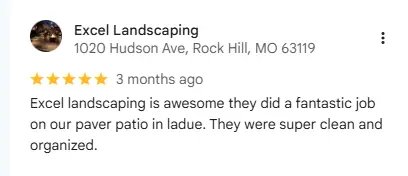
After Excel Landscaping completed a paver patio in Ladue, Colten specifically noted both the finished patio and how clean and organized the crew kept the project.
A homeowner should be able to ask a patio contractor what is happening underneath the pavers, not only what the finished surface will look like.
Retaining Walls Have to Work With the Slope and the Water
Because you only see the finished block, stone, and decorative cap, it is easy to think of a retaining wall as just another visual landscape feature. In reality, however, the true structure is hidden from view, constantly interacting with the heavy pressure of the ground behind it.
This is why the existing slope, soil conditions, water movement, base preparation, wall height, and surrounding grade must all dictate the final design. Carefully evaluating how these elements work together becomes especially critical when you are planning to tear out and replace an older wall.
Retaining walls can also serve a much broader purpose than replacing a failing structure. On sloped properties, a properly planned wall can create a more defined transition between elevations, make part of a yard easier to maintain, create additional usable space, or seamlessly integrate with a new paver patio and other custom hardscaping
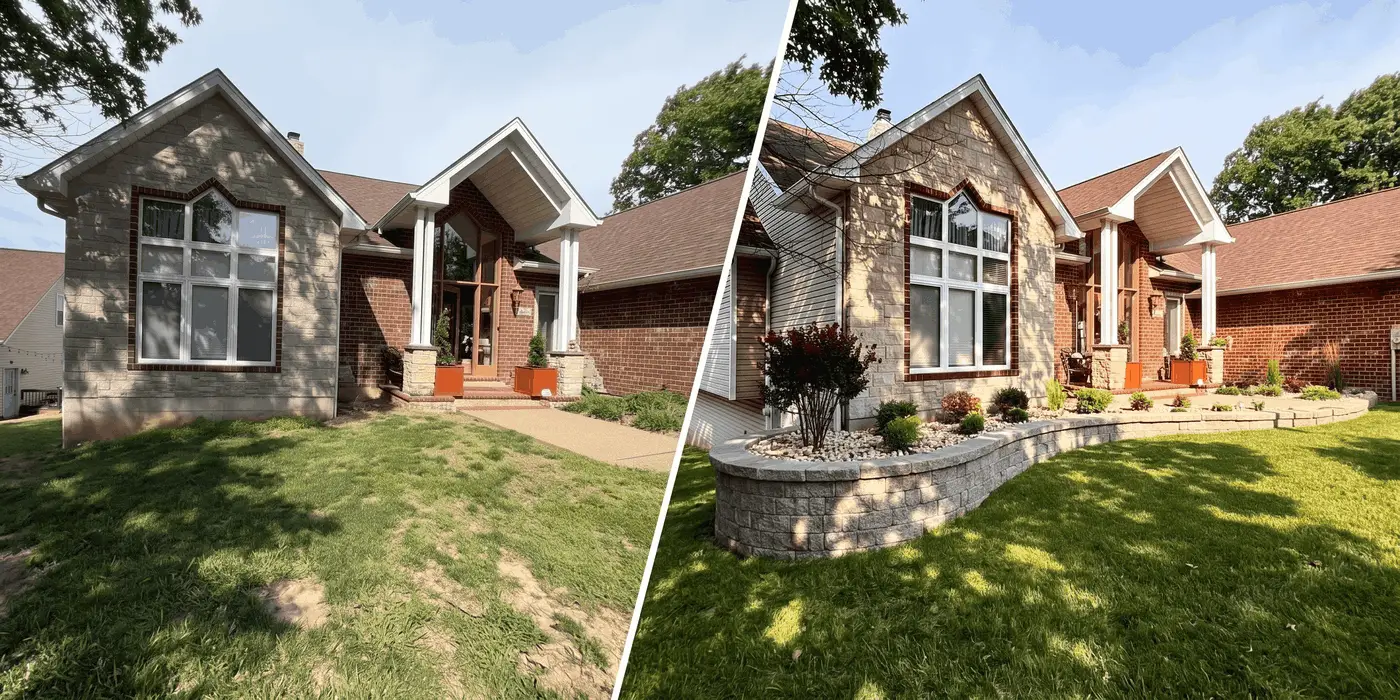
Sometimes the most important part of replacing a wall is identifying what contributed to the previous failure.
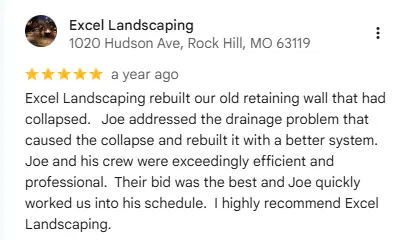
After Excel Landscaping rebuilt a retaining wall that had collapsed, Dan specifically noted that Joe addressed the drainage problem associated with the failure.
That is the kind of distinction homeowners should look for when comparing retaining wall contractors. The goal should not only be to build a new wall. It should be to understand what the wall needs to do on that specific property.
Drainage Problems Should Be Diagnosed Before a Solution Is Chosen
Homeowners often contact us with specific drainage solutions already in mind, mentioning that their yard stays wet, water collects by the patio, or they think they need a French drain. While these observations are helpful, the crucial first step is always stepping back to understand what the water is actually doing.
This is especially important on sloped properties where changes to grading or hardscaping can alter how runoff moves after a heavy rain.
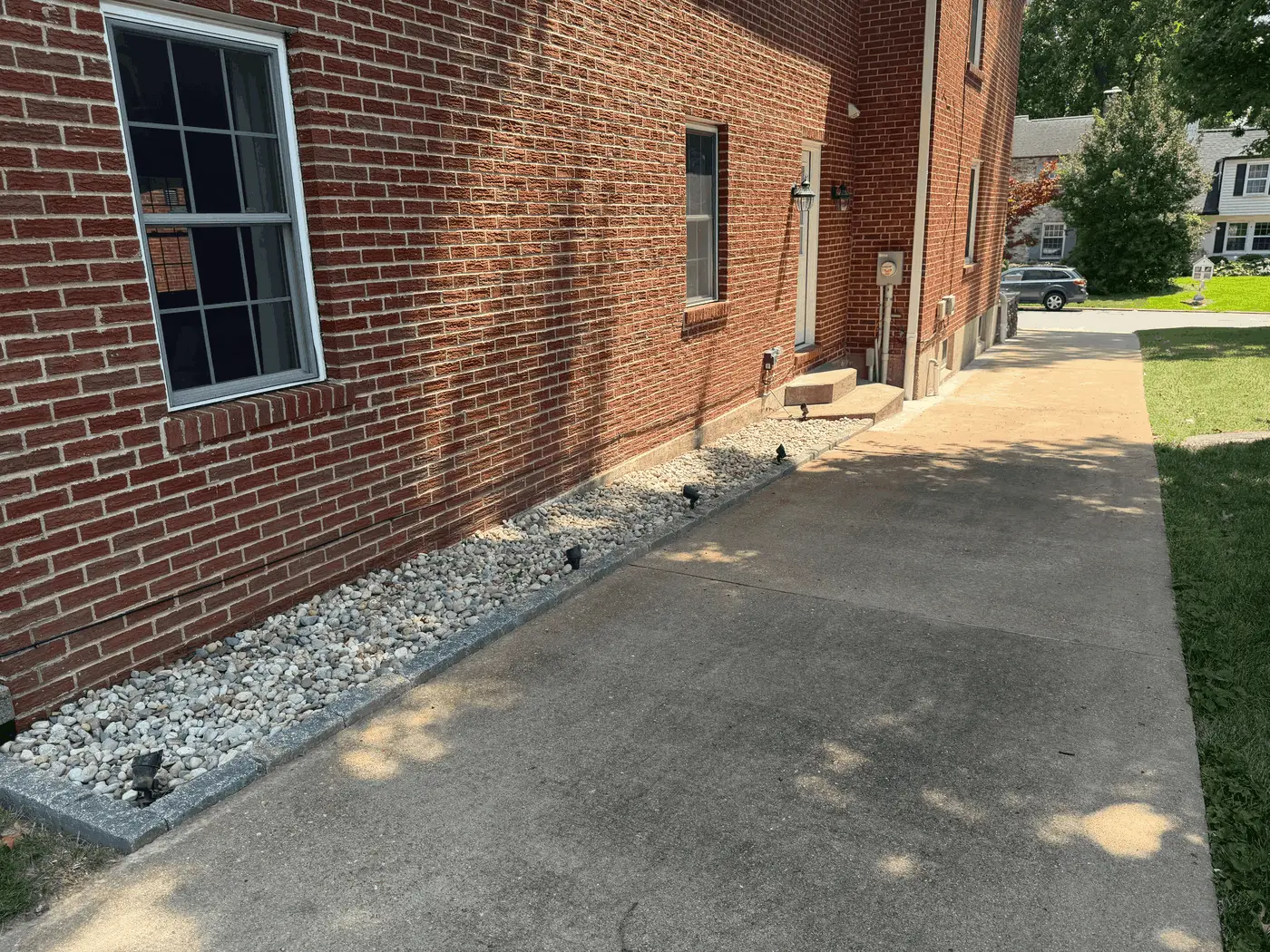
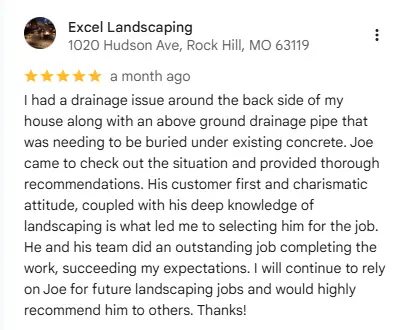
Chad contacted Excel Landscaping about a drainage problem behind his home and highlighted the team’s recommendations, landscaping knowledge, and finished work.
Homeowners do not need to know the name of the drainage system they need before calling a contractor.
Describing what happens during and after a storm is often much more useful.
Landscape Design Should Solve How the Property Works
Not every landscaping design project begins with a major construction issue, sometimes, the yard simply doesn’t function well. You might be dealing with a lawn damaged by previous tree removal, overgrown beds that are hard to maintain, stubborn shaded areas, or a newly built home with a completely bare yard.
Other properties have patios, walls, and walkways that just never feel like one connected space. This is where landscape design becomes much more than just choosing plants. A successful plan must account for sun exposure, soil, grading, drainage, existing trees, sightlines from the house, and natural foot traffic.
More importantly, your specific goals and property conditions must shape the final design. A family that wants more room for outdoor dining has a very different goal from someone trying to reduce yard maintenance. Likewise, a homeowner dealing with a shaded, rocky backyard faces entirely different conditions than someone starting fresh with an open, new-construction lot.
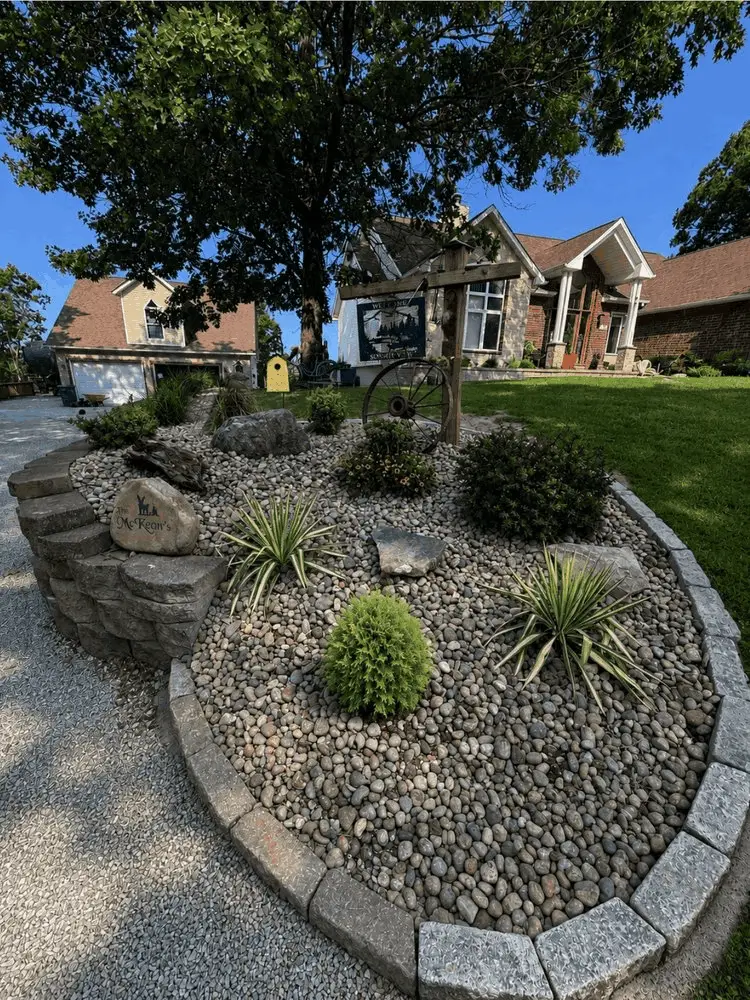
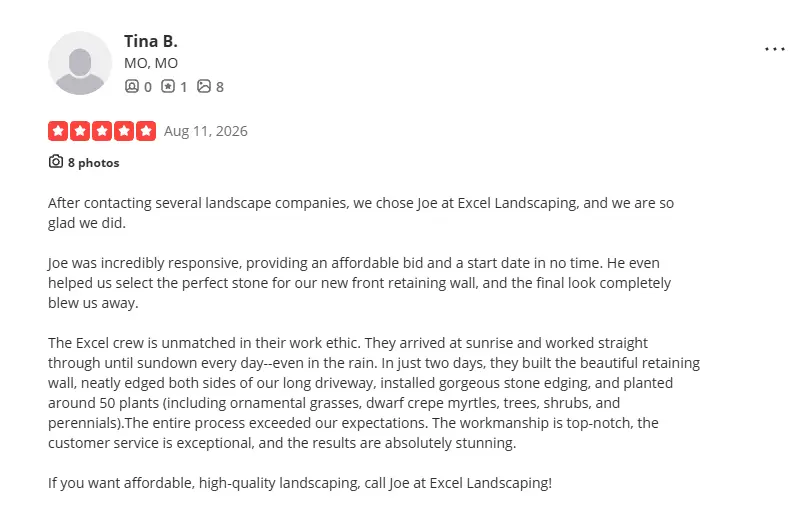
That communication is particularly important on landscape and outdoor-living projects because homeowners often know the result they want before they know exactly how to create it, a good contractor should be able to bridge that gap.
What’s Needed to Get a Landscaping or Hardscaping Quote?
You do not need to diagnose the property before contacting a contractor.
You also do not need a complete design, exact measurements, or a list of materials before asking for help.
The most useful starting information is usually simple:
- What problem are you experiencing, or what would you like to change?
- Where is the property located?
- How would you like to use the finished space?
- Have you noticed anything related to water, slope, settling, erosion, shade, or access?
- Do you have a few photos of the area?
- Are there existing patios, walls, trees, concrete, utilities, fencing, or other features that may affect the project?
Approximate measurements are useful if you have them, but they certainly don’t need to be perfect. You don’t need a complete plan to get started, a simple description of the problem is all it takes to begin the conversation and point our team in the right direction.
A homeowner can simply tell us, “Our backyard is too steep,” “Water collects beside the house,” or “Our retaining wall is leaning.” Whether your patio pavers are sinking, you want a larger patio, or you need new landscaping but don’t know where to start, just sharing your goals is enough.
From there, Excel Landscaping takes the lead. We will thoroughly evaluate your site, talk through your best options, and develop a customized recommendation. Our comprehensive approach accounts for your property’s grade, specific drainage needs, and existing conditions to build the exact finished space you want to create.
How Should You Compare Landscaping Contractors?
Price certainly matters, but comparing proposals solely by the bottom-line number can hide critical differences. Two contractors might quote the exact same patio or retaining wall, yet make entirely different assumptions regarding the excavation, base preparation, drainage, grading, materials, site cleanup, and the surrounding work required.
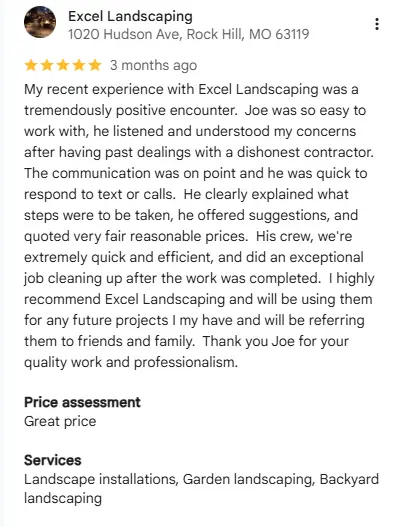
When reviewing a contractor, always look at the bigger picture. Can they clearly explain their recommendations or show similar completed work? Look for reviews that consistently highlight good communication and follow-through. It is also crucial that you fully understand exactly what is and isn’t included in their proposal.
Most importantly, ensure the contractor is recommending a tailored solution for your specific property, rather than just selling the same system on every job. True reliability means considering essential factors like drainage and grade, and delivering consistent quality from the initial estimate through to the finished project.
Reliability also shows up between the estimate and the finished project.
Experience Should Be Something You Can See
While a long company history can be valuable, it isn’t the only way to measure expertise. An older company could still be the wrong fit for your project, while a newer one might lack proven results. A better comparison relies on what you can actually verify, completed work, clear communication, and customer experiences.
For Excel Landscaping, our more than eight years of experience and 5-star reputation matter because there is real work behind those numbers. We have built patios for better outdoor living, constructed retaining walls to manage difficult grades, installed drainage to solve persistent runoff, and transformed yards that homeowners didn’t know how to improve.
Behind every project are customers throughout the St. Louis area who can describe exactly what it is like to work with our team. Ultimately, when you are comparing contractors, that is ultimately what local experience should help answer:
Have they solved problems like mine before, can they explain what my property needs, and can I see evidence of how they work?