

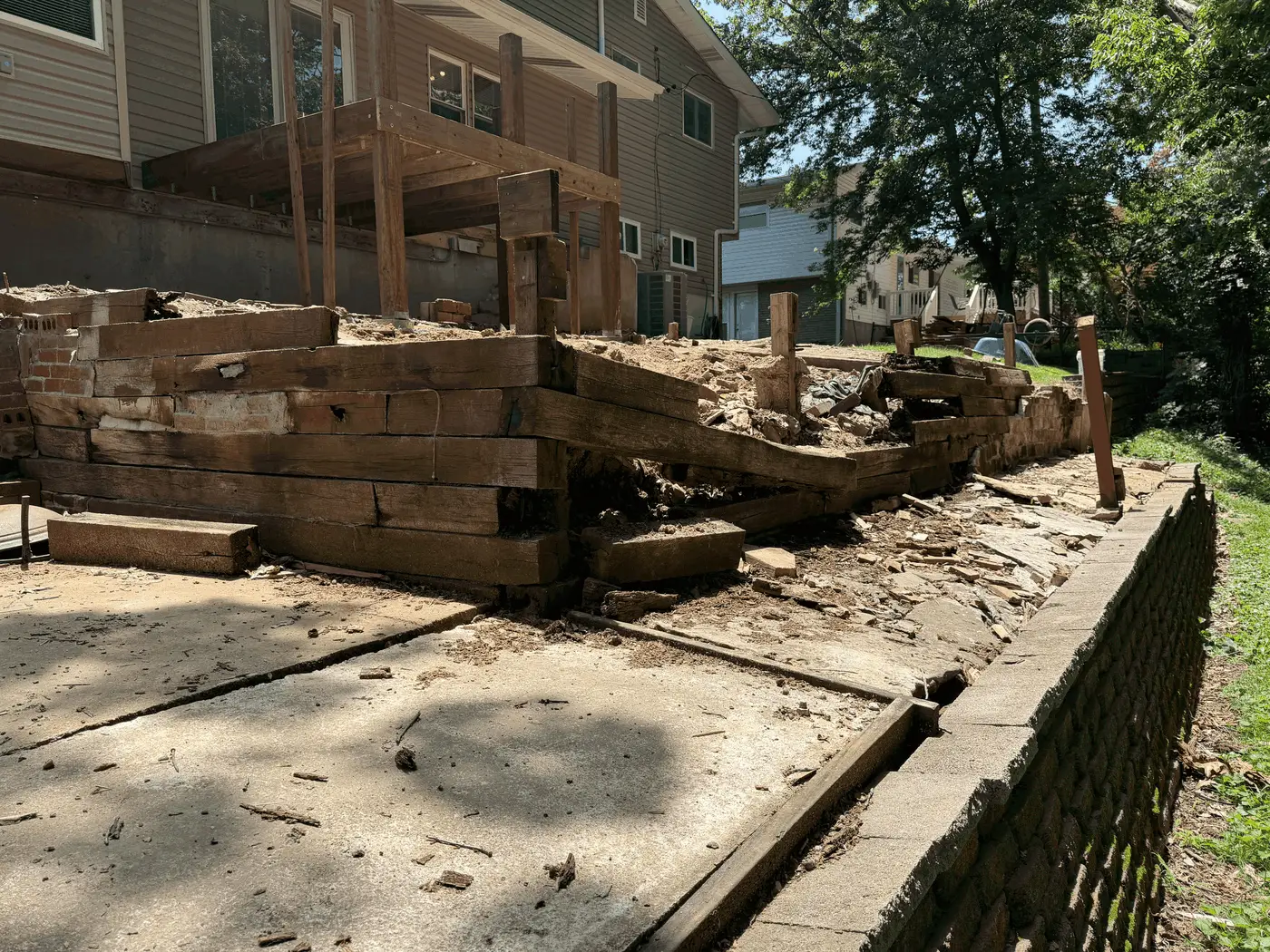
Replacing an Aging Railroad-Tie Retaining Wall in Town & Country
The homeowners wanted a backyard they’d enjoy more. We removed the old railroad-tie retaining wall, built a segmental block wall with caps in the same spot and built a new wood deck off the house.
A Deteriorated Railroad-Tie Wall Where the Yard Changes Level
The homeowners wanted their Town & Country yard to feel cleaner and easier to use. The problem was the old railroad-tie wall where the yard changes level. The ties had broken down, the area looked worn, and there was nowhere comfortable to sit outside.
The ties had deteriorated, and the wall was ready to be replaced. That part of the backyard looked worn because of it.
Why Old Railroad Ties Needed a New Wall, Not New Ties
The railroad-tie wall in this backyard was an aging timber wall holding the grade. Railroad ties are wood. Wood that sits in the ground for years breaks down, and these ties had reached that point.
Timber was the weak point. Pulling out a few bad ties and adding new ones would still leave an old wood wall holding the same ground. The fix was to take out the whole tie wall and build the new one in block, which doesn’t rot.
Pulling the Ties, Building the Wall and Adding the Deck
We removed every railroad tie and built a segmental block retaining wall in the same spot, where the yard drops below the house. Segmental block is made of separate concrete units stacked in rows, each one locking into the row below.
Behind the wall we placed drainage aggregate, the same as on every retaining wall we build. Matching caps finish the top. We build walls like this on sloped yards across St. Louis County.
With the wall done, we built a new wood deck off the house, so the homeowners can step out and sit above the new wall.
The completed project included:
- Removed the rotting railroad-tie wall
- Built a new segmental block wall in the same spot
- Added matching caps on top
- Placed drainage aggregate behind the wall
- Built a new wood deck off the house
Block Holding the Grade, a Deck Above It
Segmental block now holds the grade where the railroad ties used to be. The wall gives a sharp, defined edge where the yard changes level, and the caps give it a finished top. The new deck turns the space above the wall into somewhere to sit outside.
The homeowner wrote that we did a “PHENOMENAL job” replacing the retaining wall, and that the work was timely and reasonably priced.
How to Tell When a Railroad-Tie Wall Needs Replacing
Push a screwdriver into a few of your railroad ties near the ground. If it sinks in easily, the wood is breaking down from the inside, even if the face of the tie still looks solid. Ties that have split, shifted or started to lean tell you the same thing.
Adding new ties to an old wall only buys time. That’s the point to call and talk about railroad-tie wall replacement in block.