
Building a Paver Patio With a Fire Pit and Seating Wall in Kirkwood
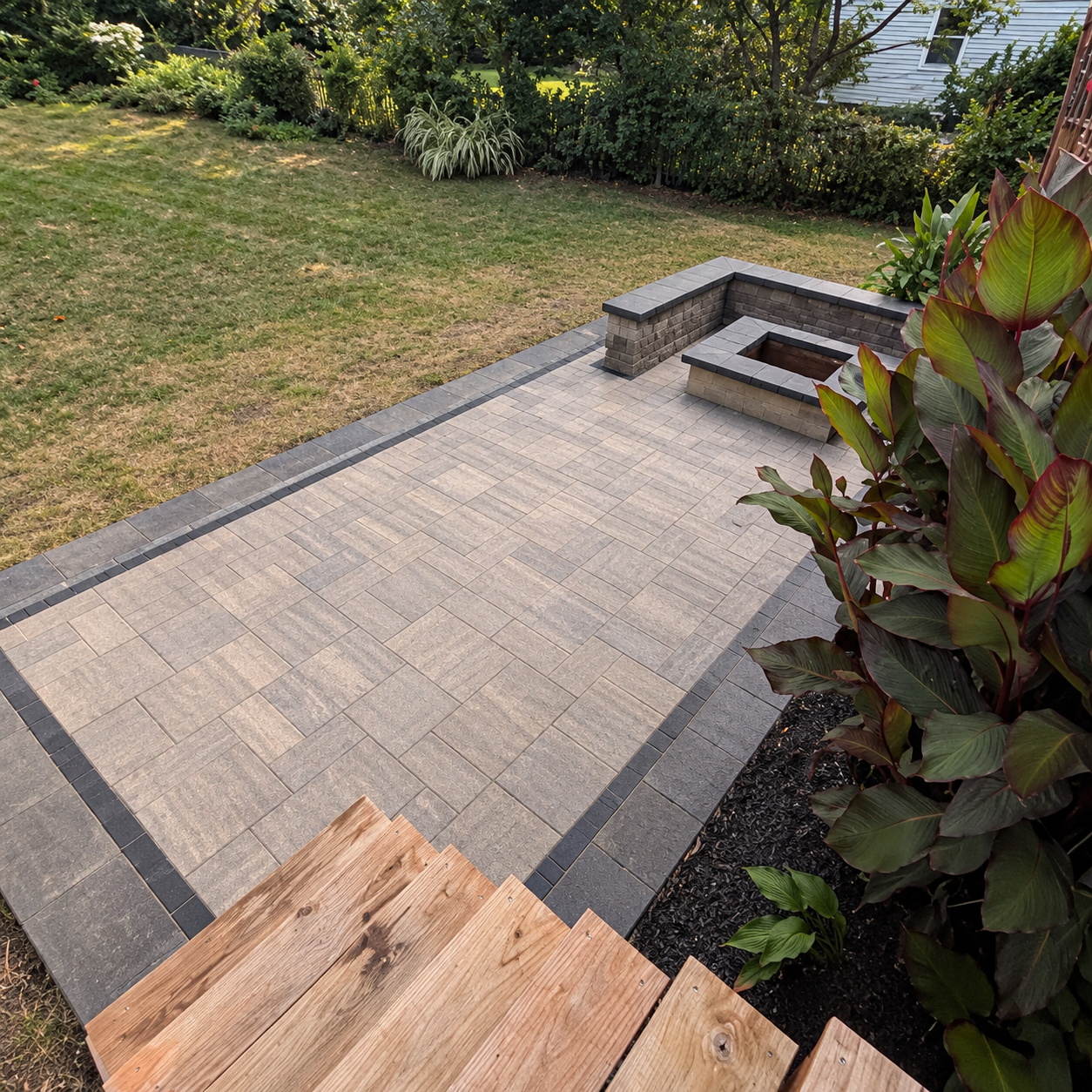
This fire pit patio in Kirkwood replaced an old patio that had become too cracked to use. Over about three days, we tore it out and built a compacted gravel base. Then we laid a large-format paver patio with a dark soldier course border. Finally, a square paver fire pit and a seating wall anchor the far end.
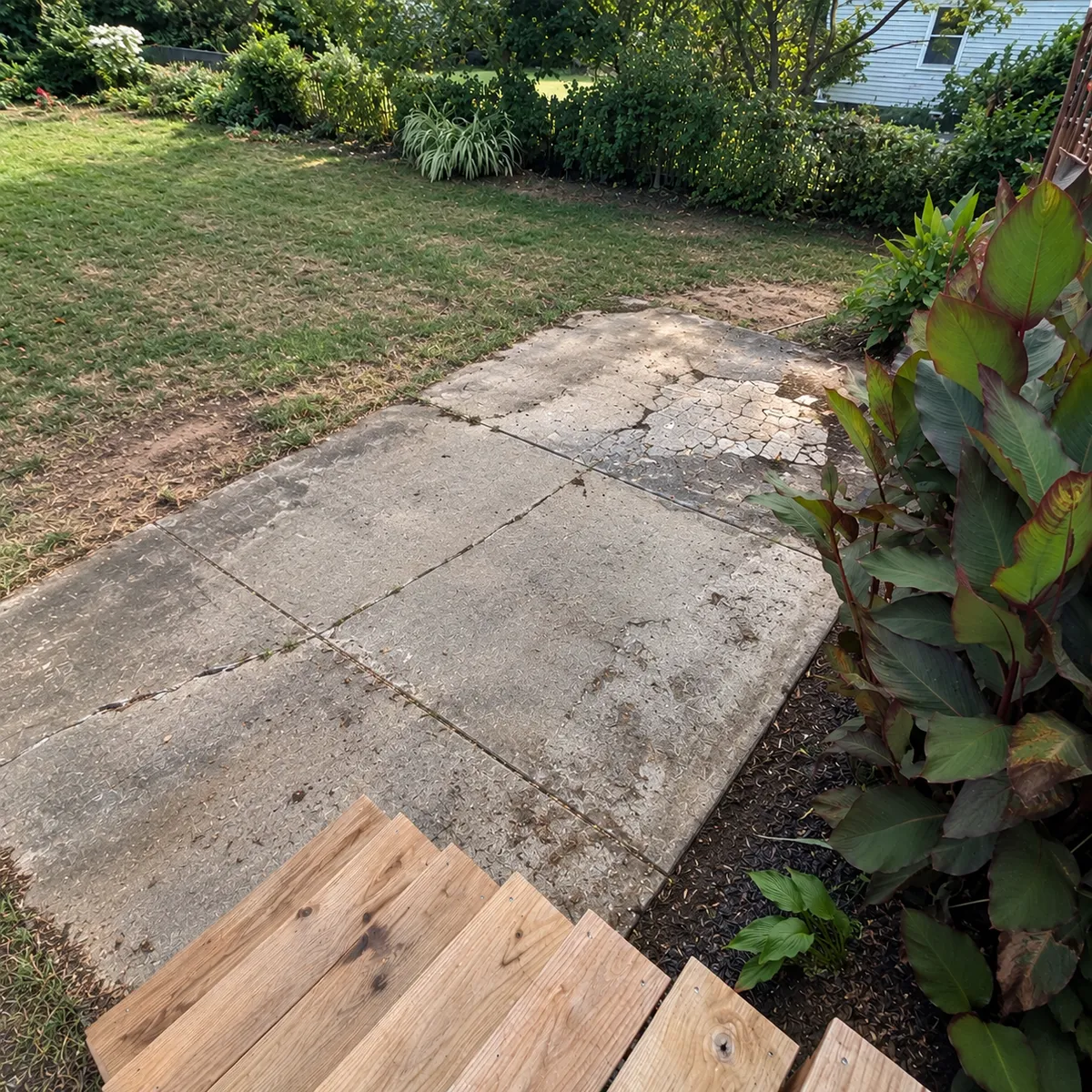
A Cracked, Uneven Patio Off the Deck Stairs
The patio behind this Kirkwood home ran straight off the deck stairs, but it had seen better days. Cracks ran through the concrete, the surface had gone uneven, and one corner had broken up completely. Because of that, nobody wanted to put furniture on it. As a result, the backyard had no real spot to sit outside.
Tearing Out the Old Patio and Building the Base
First, we tore out the old patio and hauled it away. After that, we excavated and put in a compacted gravel base sized for a much larger patio. The base keeps pavers flat through St. Louis freeze-thaw winters, so a cracked, uneven slab doesn’t come back as a cracked, uneven paver patio.
Large-Format Pavers With a Dark Soldier Course Border
The field is large-format pavers in a light gray-tan blend. Around the edge, a soldier course in a contrasting dark color frames the patio and also holds the field in place. In addition, polymeric sand fills the joints. Once we wet it down, it hardens, which helps keep weeds and ants out. It’s the same base-first approach we use on all the backyard paver patios we build.
We also tied the patio into the deck stairs, so it flows straight off the back of the house.
A Square Paver Fire Pit With a Seating Wall
At the far end of the patio, we built a square fire pit with dark caps to match the border. Behind it, a seating wall wraps around in an L, with caps wide enough to sit on. As a result, the fire gets a built-in backdrop and extra seats, so the patio needs fewer chairs on a busy night.
A Low Wall Along the House With Lighting Wiring
Along the house side of the patio, we built a low wall and ran wiring through it for lighting. Because we ran the wire while the wall went up, it stays hidden, with no cords across the patio. Finally, we restored the lawn edge around the new patio so the grass meets the border cleanly.
The completed project included:
- Tear-out and haul-away of the old patio
- Excavation and a compacted gravel base sized for a large patio
- A large-format paver patio with a contrasting dark soldier course border and polymeric sand joints
- A square paver fire pit with a seating wall at the far end
- A low wall along the house side, with wiring run for lighting
- The patio tied into the deck stairs
- Lawn edge restoration around the new patio
Room for a Fire, Outdoor Couches and Company
Now the backyard has a real place to spend an evening. There’s room for outdoor couches on the patio, with the fire pit and seating wall at the far end. In addition, a clean, durable surface sits where the cracked, uneven patio used to be. Here in Kirkwood, we also built a permeable paver patio off a sunroom for another family.
Signs Your Old Patio Needs Replacing
If your patio has open cracks, sunken or raised panels, or a corner that’s breaking apart, patching usually doesn’t last. Instead, replacing it with pavers on a proper base gives you a surface that stays flat. It’s also the right time to add a fire pit or seating wall. We work all over Kirkwood and the surrounding neighborhoods.