

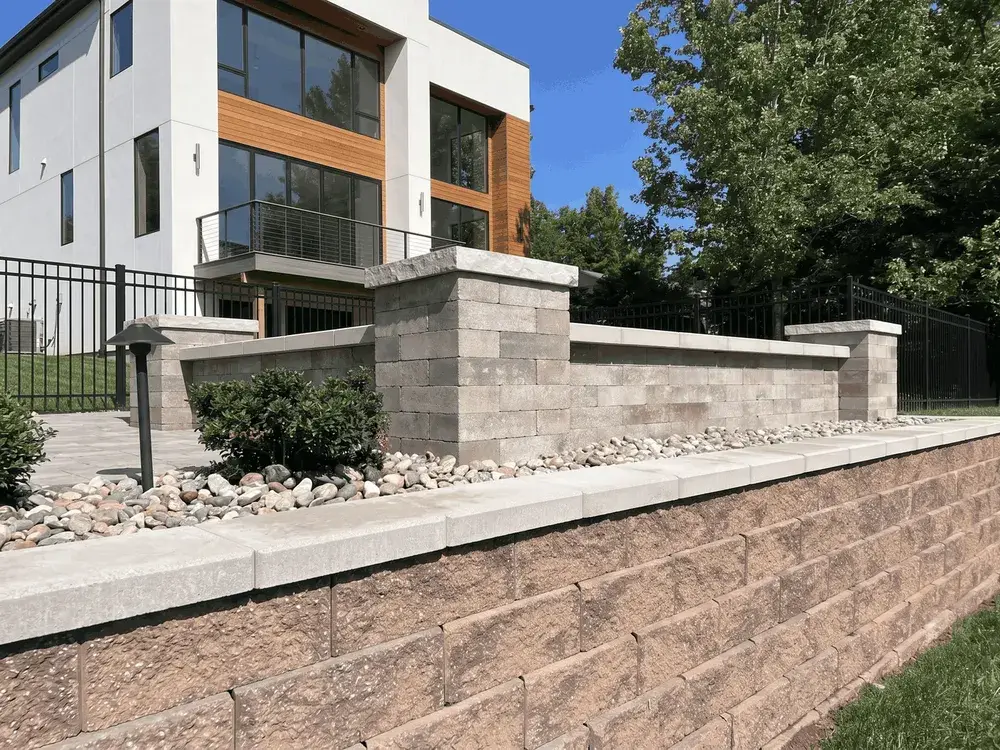
A retaining wall rarely goes from looking perfectly normal to collapsing overnight.
More often, homeowners start noticing smaller changes first.
A railroad tie begins leaning farther into the yard. A section of block starts bowing outward. Gaps appear where the wall once looked straight. Soil begins washing through joints. Timbers that looked weathered a few years ago now feel soft or rotten.
At first, those changes can be easy to dismiss as cosmetic.
But a retaining wall is doing more than defining a landscape bed. It is holding back soil and managing a change in elevation across the property. When the wall begins moving, the problem may continue developing behind the visible surface.
That is why an aging or damaged retaining wall is worth evaluating before the failure becomes more extensive and affects the surrounding yard, drainage, steps, landscaping, or outdoor living areas.
Why Do Retaining Walls Fail?
Retaining walls are constantly resisting pressure from the soil behind them.
The wall itself is only one part of the system.
Its base, drainage, backfill, reinforcement, surrounding grade, and the amount of weight or water behind the wall can all affect how it performs over time.
When one or more of those conditions is wrong, or when an older material reaches the end of its useful condition—the wall may gradually begin to move.
Water Behind the Wall
Water is one of the most important factors to consider when a retaining wall starts failing.
Soil becomes heavier when saturated, and water trapped behind a wall can increase the pressure the structure must resist.
That is why retaining-wall construction typically needs to account for drainage behind the wall rather than simply stacking material against soil.
If runoff repeatedly moves toward the wall or cannot drain properly, homeowners may eventually notice:
- Soil washing through or around the wall
- Wet areas that stay saturated after rain
- Movement concentrated in one portion of the wall
- Erosion around the base
- Sections beginning to lean or bulge outward
The visible wall may be where the symptom appears, but the way water moves through the property can be part of the underlying problem.
A Weak or Shifting Base Can Move the Entire Wall
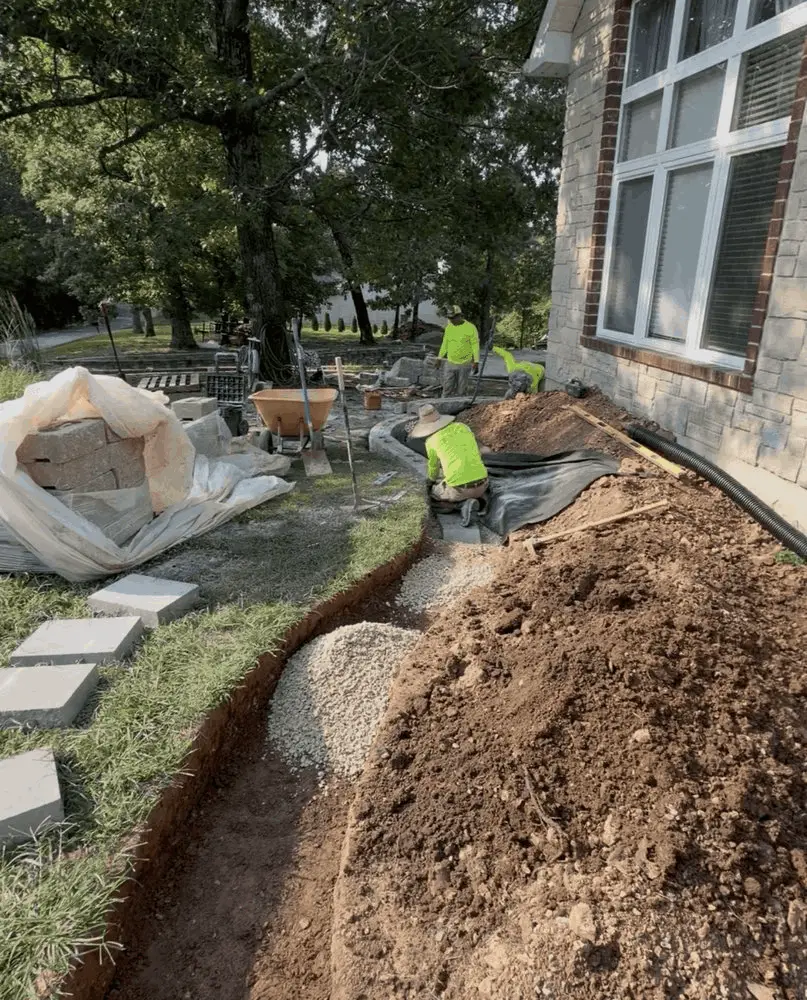
A retaining wall needs a properly prepared foundation.
If the base underneath the wall settles unevenly, individual sections may begin moving at different rates.
Homeowners may notice the top of the wall no longer follows a consistent line. Blocks can separate. Steps integrated into the wall may move. One end may appear lower than the other.
Simply pushing the visible blocks back into position does not correct a base that is continuing to settle.
When significant movement has already occurred, the wall may need to be dismantled so the conditions underneath it can be addressed before rebuilding.
Older Railroad-Tie Walls Eventually Deteriorate
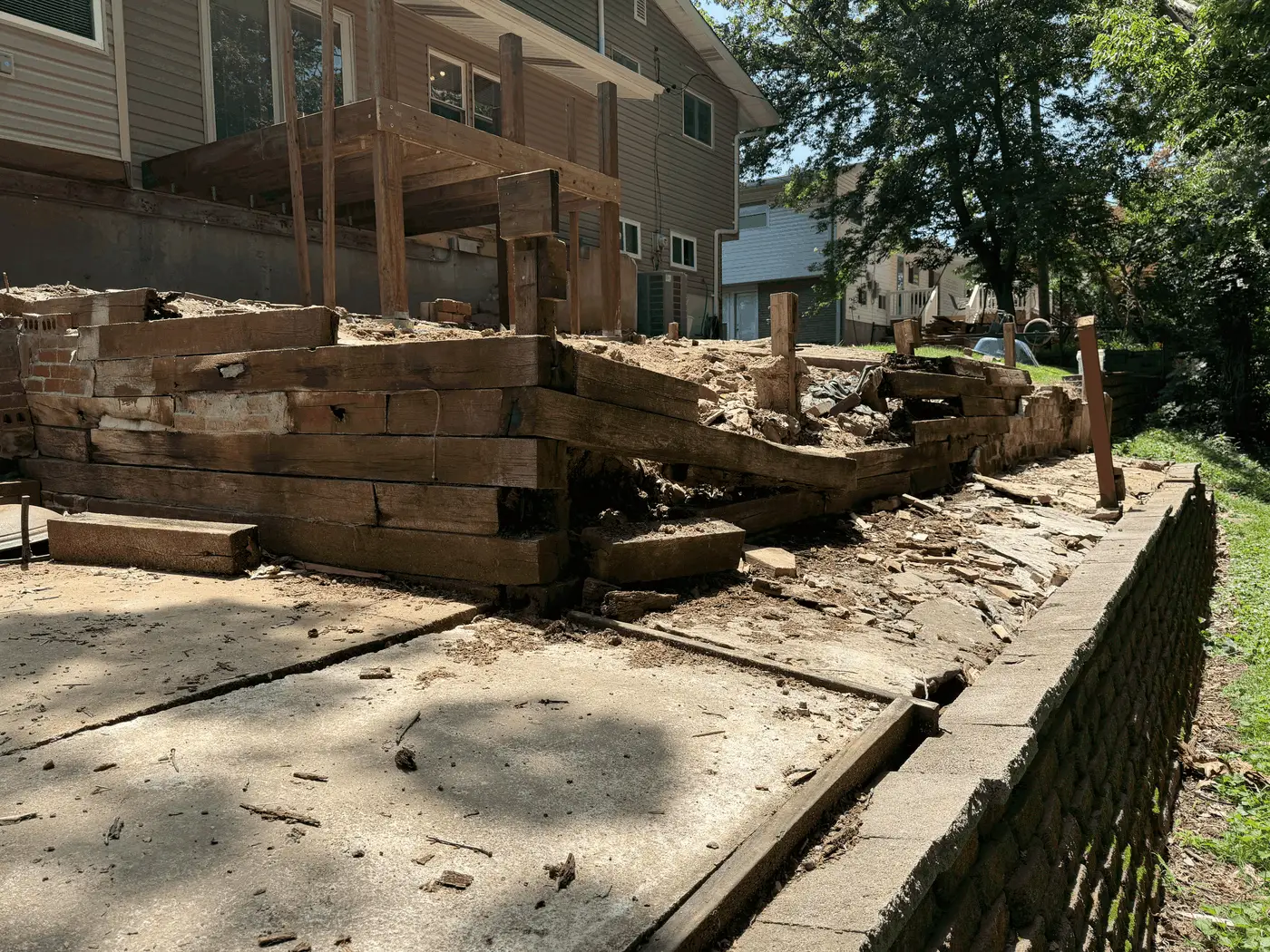
Railroad ties and landscape timbers were commonly used for residential retaining walls.
They can initially provide an economical way to hold back a slope, but timber remains exposed to moisture, soil contact, weather, and biological deterioration.
As the material ages, homeowners may begin seeing:
- Splitting
- Soft or deteriorated wood
- Rot near the soil line
- Timbers pulling away from one another
- Wall sections leaning outward
- Failed spikes or connections
- Soil escaping through openings
The wall may still appear intact from a distance even though individual timbers have lost much of their condition.
Once the material itself is deteriorating throughout the wall, repeatedly replacing one board or bracing one section may only postpone a larger replacement.
Related Project: Replacing an Aging Railroad-Tie Retaining Wall
The Warning Signs of a Failing Retaining Wall
Not every imperfection means a retaining wall is about to collapse.
Small cosmetic changes and major structural movement are not the same thing.
What matters is identifying whether the wall is showing signs that soil pressure, water, deterioration, or movement are beginning to affect how the structure performs.
1. The Wall Is Leaning
A retaining wall should not gradually rotate outward away from the soil it is holding back.
A noticeable lean can indicate that pressure behind the wall is overcoming its ability to remain stable.
If the lean is becoming more pronounced over time, it deserves attention.
2. The Wall Is Bowing or Bulging
Sometimes the ends of a wall remain relatively stable while the middle begins pushing outward.
That creates a bowed or bulging appearance.
This can be especially noticeable when you look along the top of the wall from one end rather than standing directly in front of it.
The wall may no longer form a straight or consistent line.
3. Blocks Are Separating or Cracking
Individual retaining-wall units can occasionally develop minor cosmetic imperfections without indicating widespread failure.
More concerning is progressive separation or movement between sections.
Look for gaps that continue widening, portions of the wall moving independently, cracked units associated with settlement, or cap blocks that no longer align with the wall below.
4. Timber Is Rotting or Splitting
With an older timber retaining wall, the condition of the material itself matters.
A wall made from deteriorating wood may no longer have the same ability to hold the soil behind it, even if the overall shape still looks recognizable.
Soft areas, deep splits, missing material, and deteriorated connections are all worth evaluating.
5. Soil Is Washing Through or Around the Wall
Soil appearing through wall joints or accumulating in front of the wall can point to movement, erosion, or drainage problems behind it.
The issue may become more noticeable after heavy rain.
Pay particular attention if the soil level behind the wall appears to be sinking while material accumulates elsewhere.
6. The Ground Behind the Wall Is Settling
Sometimes one of the clearest warning signs is not on the wall itself.
Look at the area behind it.
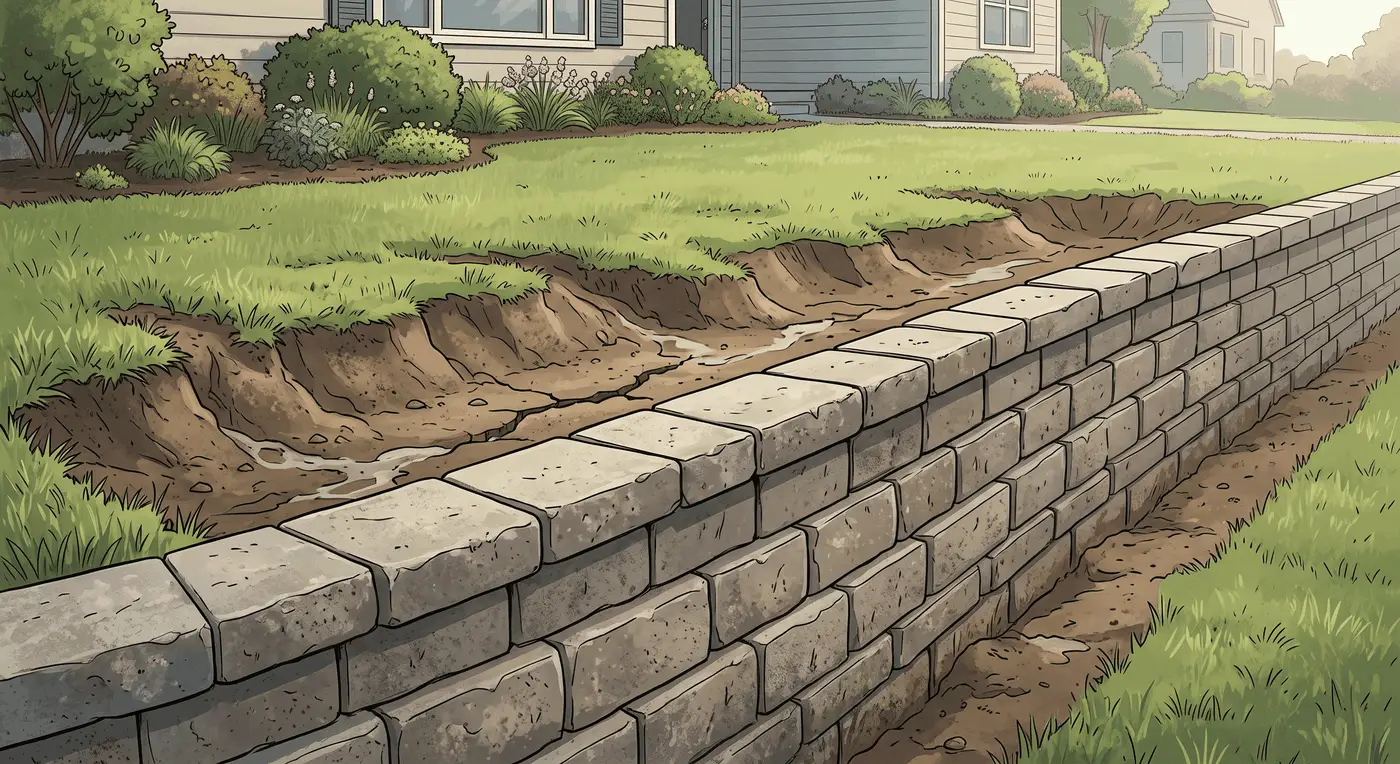
If the lawn or landscape bed is developing depressions, cracks, washouts, or sinking areas near the top of the wall, soil may be shifting or escaping.
Why Waiting Can Make a Retaining Wall Problem More Complicated
Homeowners sometimes hope that a leaning wall will simply remain where it is.
And in some cases, movement can be gradual.
The problem is that the wall and the soil around it form one system. As one part moves, other parts of the property can begin changing with it.
That can make a future replacement more involved than addressing the wall earlier .A retaining wall contractor can evaluate the wall, surrounding grade, and drainage conditions before the problem progresses further.
Soil Can Continue Moving After the Wall Begins to Shift
Once a retaining wall starts rotating, bowing, or separating, the soil behind it may also begin changing position.
Small gaps can allow material to migrate.
Erosion can create voids.
The grade above the wall can gradually settle.
A problem that originally involved replacing a retaining structure may eventually require additional work to restore the surrounding soil and landscape.
That is especially important when something valuable sits immediately above the wall.
Examples might include:
- Lawn
- Planting beds
- Walkways
- Patios
- Steps
- Fences
- Deck areas
The closer those features are to the wall, the more important it becomes to understand what is causing the movement.
Drainage Problems Can Get Worse Along With the Wall
A retaining wall and site drainage often affect one another.
If uncontrolled water contributed to the original failure, rebuilding the visible wall without addressing that water movement can recreate the same conditions.
Likewise, when soil shifts around a failing wall, drainage paths across the yard can change.
Runoff may begin moving through new low areas or carrying soil into parts of the property where it did not previously collect.
That is why a retaining-wall replacement should consider more than the blocks homeowners see from the yard.
Where does it go during a heavy rain?
Does the land above the wall slope toward it?
Is water collecting behind the wall instead of moving away?
Those questions can be as important as choosing the replacement material.
Related Project: Retaining Wall and Drainage Working Together
Safety, Liability, and Permitting for St. Louis Retaining Walls
A failing retaining wall should be taken more seriously when people regularly use the area immediately above or below it.
That could include a walkway running along the top, children’s play space below, stairs integrated into the wall, or a patio located next to it. The concern is not simply whether the wall looks unattractive, it is whether continued movement could affect an area people rely on.
If a wall is showing significant movement, sudden changes, loose materials, or obvious instability, avoid treating it as a cosmetic DIY repair. Have the condition evaluated before adding more weight above the wall or disturbing the surrounding soil.
Permitting requirements also depend on where the property is located, the wall height, what the wall supports, its proximity to property lines, and other site conditions. St. Louis County, for example, requires permits for certain retaining walls, including walls over 3 feet tall and some shorter walls supporting additional loads such as a driveway or pool. Homeowners can review the county’s residential building and permitting information and confirm whether their municipality uses St. Louis County for building-code services.
Properties inside the City of St. Louis follow separate requirements. The City’s Building Division lists retaining walls 18 inches or less among work that generally does not require a residential building permit, while larger or more complicated projects should be confirmed with the Building Division before construction. Homeowners can review the City’s residential building permit requirements or its building permit application information.
Can a Failing Retaining Wall Be Repaired?
Sometimes, but once a wall has started leaning, bowing, or deteriorating across a larger section, homeowners often decide that replacing it makes more sense than continuing to patch individual areas.
Some homeowners also ask about supplying their own retaining-wall materials to save on project costs. That can work in certain situations, but the bigger question is whether the existing wall can actually be repaired safely and whether the replacement material is appropriate for the site.
It ultimately comes down to what is causing the failure, how much of the wall is affected, the condition of the base, drainage behind the wall, and the amount of soil the wall is retaining.
A smaller repair may still make sense when the issue is isolated, but replacement becomes more practical when:
- Movement extends across a large portion of the wall rather than one localized section.
- The wall base has settled, causing sections to lean, separate, or shift.
- Timber is deteriorating throughout the wall instead of in just one replaceable area.
- Drainage behind the wall is contributing to the failure and needs to be corrected as part of the project.
- Previous repairs have already failed or the same movement keeps returning.
At that point, simply bracing, patching, or straightening the visible wall may only hide the symptom. A proper replacement gives you the opportunity to address the base, drainage, grade, and wall system together so the same problem is less likely to return.
Be Careful With the “Quick Fix”
That distinction matters because once a wall is showing widespread movement or deterioration, a quick repair can make the problem look better without actually solving what caused it.
A leaning retaining wall naturally makes homeowners want to push it back, brace it, or repair the section that looks worst.
But retaining-wall failure is rarely just about the position of the visible face.
If a wall is bowing because saturated soil is building pressure behind it, straightening the wall without improving drainage leaves the same pressure in place.
Likewise, if a timber wall is leaning because the buried portion of the wood has deteriorated, adding another brace may temporarily improve how the wall looks, but it does not restore the weakened material.
That is why a meaningful repair should address why the wall moved in the first place, not simply hide the movement.
In some cases, a limited repair can still be the right choice. But when the underlying issue involves drainage, base settlement, deteriorated materials, or broader soil movement, the repair needs to account for those conditions too.
Replacing an Old Retaining Wall: What Are the Options?
If the wall has reached the point where replacement makes more sense than repair, homeowners are not limited to rebuilding exactly what was there before.
Replacement creates an opportunity to reconsider the entire area.
That includes the material, wall layout, drainage, stairs, planting beds, access, and even whether the replacement should follow the exact footprint of the old structure.
Segmental Retaining Wall Blocks
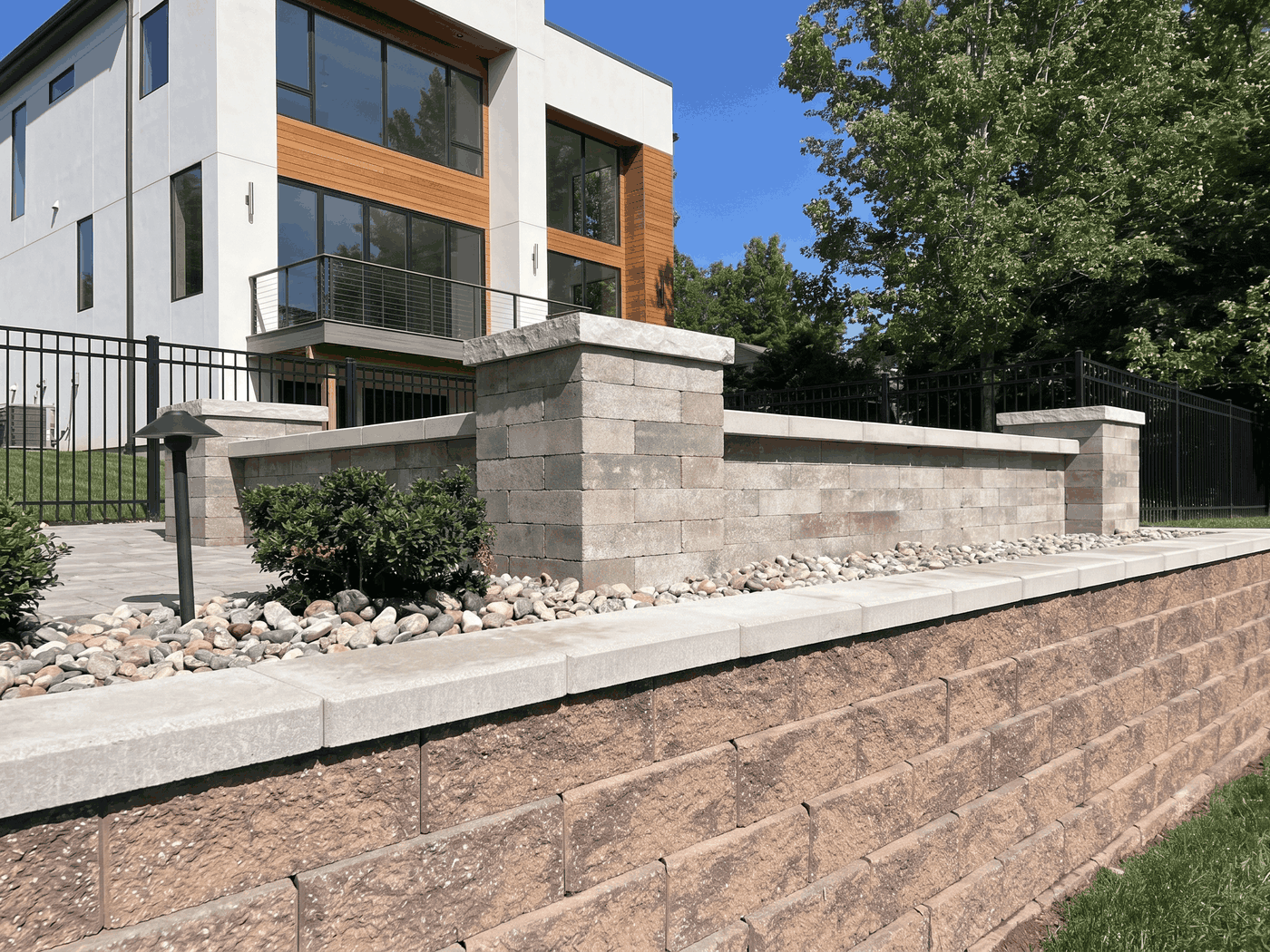
Segmental concrete retaining-wall systems are commonly used for residential landscapes because they can create a clean, finished appearance while being built as part of a properly planned retaining system.
Depending on the site, the installation may incorporate:
- Prepared aggregate base
- Drainage stone
- Drainage pipe
- Geogrid reinforcement where required
- Proper backfill
- Caps
- Integrated steps or transitions
The exact system depends on the wall height, slope, soil, loading conditions, and manufacturer requirements.
The important distinction is that a replacement retaining wall should be treated as a system, not simply as a row of decorative blocks.
Natural Stone Retaining Walls
Natural stone can be appropriate when homeowners want the retaining structure to feel more integrated with the landscape.
The appearance can work especially well around planting areas and properties where a more organic material fits the home and yard.
As with other retaining-wall materials, however, appearance is only one part of the project.
The wall still needs to be suitable for the site conditions and installed to manage the grade it is retaining.
Replacing One Tall Wall With Tiered Walls
In some yards, rebuilding the exact same single wall may not be the only option.
A steep slope can sometimes be organized into several terraces using multiple retaining walls.
Tiering can create planting areas, introduce steps through the slope, and change how the hillside relates to the rest of the yard.
Whether that approach makes sense depends on the available space and site conditions.
A New Retaining Wall Can Sometimes Create More Usable Yard
A retaining wall does not always exist because an old one failed.
Sometimes it becomes part of a larger effort to make a steep property more functional.
A backyard may drop sharply beyond the home, leaving only a narrow strip of usable lawn.
Managing that grade can create a wider, more defined area near the house while still maintaining access to the lower property.
Related Project: Creating More Level Backyard Space
Don’t Ignore What Is Above the Retaining Wall
When planning a replacement, one of the first things to consider is what the wall is supporting.
A lightly landscaped slope presents different conditions from a wall supporting an area with a driveway, patio, deck, fence, pool, or other load nearby.
The same applies to the bottom of the wall.
Is there a walkway immediately below?
Does the wall meet a driveway?
Are stairs integrated into it?
Is there another wall nearby?
These surrounding conditions help determine what kind of replacement makes sense.
It is another reason generic “price per foot” comparisons can be misleading.
Two walls of similar length can involve very different site conditions.
What Determines the Cost of Retaining Wall Replacement?
Homeowners understandably want to know what replacing a failing wall will cost.
But the condition and layout of the property can affect the project as much as the visible size of the wall.
Important factors include:
- Demolition and removal. An existing timber, block, stone, or concrete wall has to be removed and disposed of before rebuilding.
- Access. A wall that equipment can reach easily is different from one located behind a home with limited access.
- Height and length. More retained soil generally means a more involved structure.
- Drainage. Correcting water problems may require drainage stone, pipe, grading, or connections beyond the wall itself.
- Reinforcement. Certain wall systems and site conditions require reinforcement extending behind the wall.
- Excavation and backfill. Rebuilding often requires disturbing more soil than homeowners initially see from the surface.
- Steps and railing. Integrated stairs, railings, transitions, and landings increase the overall scope.
- Engineering or permitting. Depending on wall height and local requirements, additional design or approval may be necessary.
Should You Replace a Failing Retaining Wall Before It Collapses?
In most cases, there is a clear advantage to understanding the problem while the wall is still standing.
It gives homeowners an opportunity to plan the replacement instead of reacting after a larger failure.
It may also make it easier to evaluate:
- Where soil is moving
- How water reaches the wall
- Which parts of the surrounding landscape can remain
- Whether access needs to be preserved
- How a new wall should integrate with steps, patios, decks, or planting areas
Waiting does not guarantee that a wall will suddenly collapse.
But deterioration, drainage problems, and soil movement generally do not improve simply because the wall is left alone.
The earlier the cause is understood, the more intentionally the replacement can be planned.