
How Our Paver Patio Replacement in Ballwin Fixed the Sinking Edges
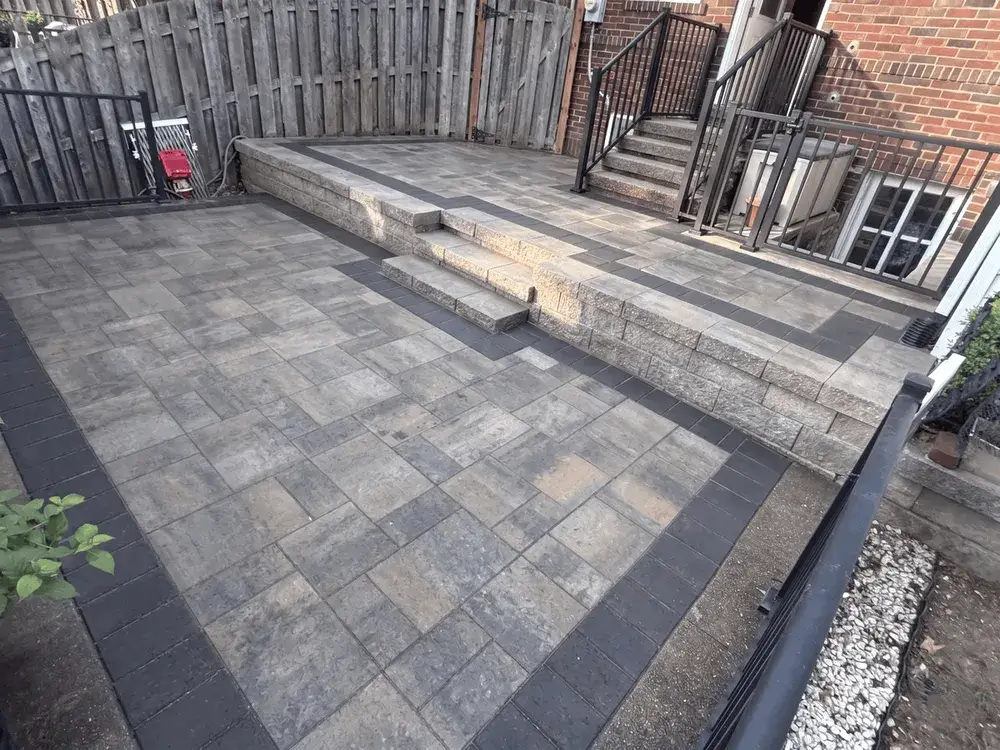
Our Ballwin paver patio replacement took about three working days. The 10-year-old backyard patio had pavers sinking around the perimeter, so we dug out the old pavers and sand base, regraded, and rebuilt it as two tiers of Belgard 3-piece pavers on gravel, with a block retaining wall, new steps and a dark border.
Pavers Sinking Around the Edge of a 10-Year-Old Ballwin Patio
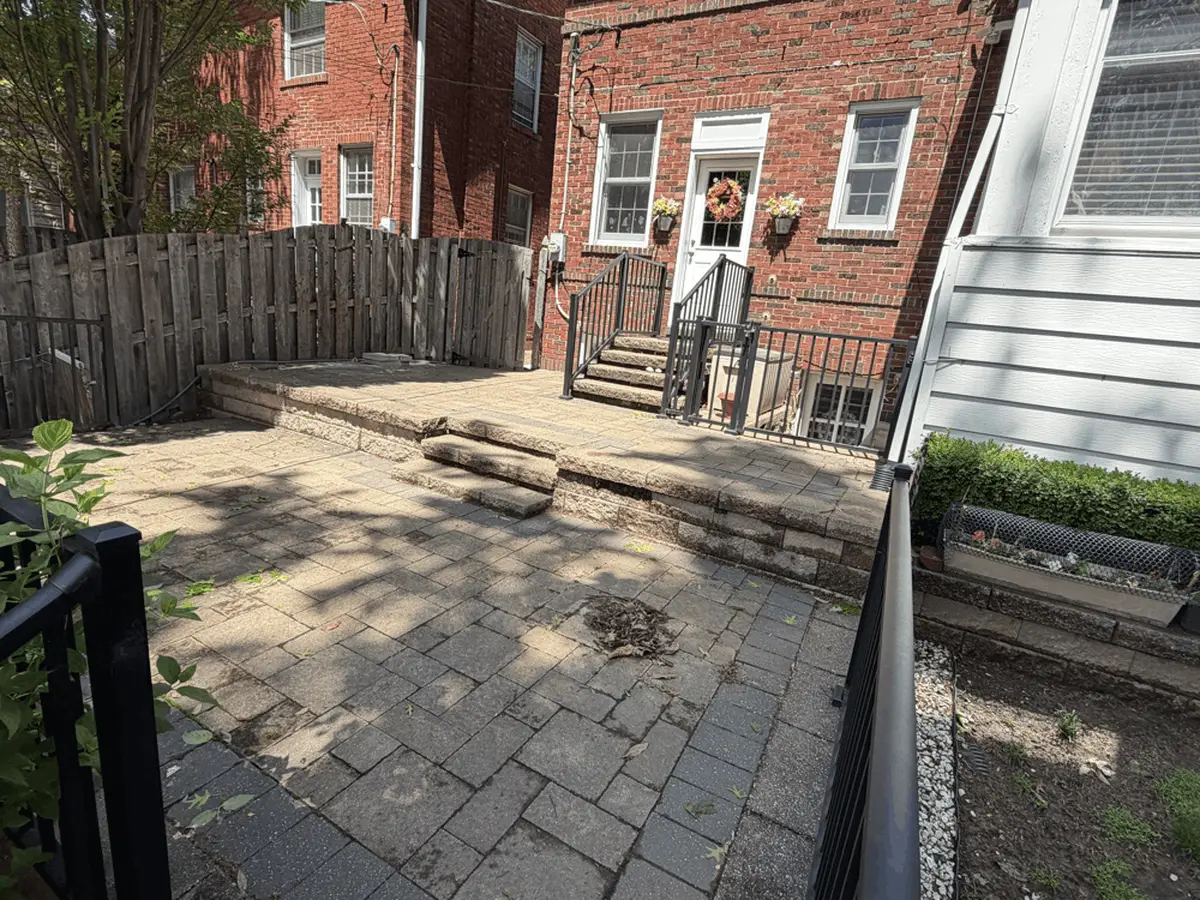
The backyard paver patio at this Ballwin home had been down 10 years, and it showed. Pavers around the perimeter were sinking, and the surface had settled unevenly on both the lower patio and the raised level by the back door, where worn stone steps joined the two. The homeowners chose to replace it.
Why Resetting the Old Pavers Wouldn’t Stop the Settling
When pavers sink, the problem is usually under them, not the pavers themselves. This sinking paver patio sat on a sand base, and parts of it had settled. Lifting the pavers and laying them back on that same sand would have left the same base under a new surface, so the whole patio had to come out.
Some tired patios can be refreshed without a full rebuild, and deciding whether to repair or replace a tired patio starts with the base under it. This one couldn’t be refreshed, because its base had settled. Taking the old patio out let us look at the ground underneath and set the grade again.
A New Gravel Base Under the Belgard 3-Piece Pavers
We dug out the old pavers and the old sand base at this Ballwin home, then regraded the patio area and prepared it for a new base. The new gravel paver base replaced the sand, as the homeowners noted in their review. Every paver patio installation in St. Louis we take on starts with what goes underneath.
We rebuilt it as a two-tier paver patio with a retaining wall between the levels: a lower patio and an upper level by the back door, joined by new block steps. Drainage is built into every paver patio we build and goes behind every retaining wall, so it was part of this job too.
The homeowners picked Belgard 3-piece pavers for both tiers. The pattern mixes three paver sizes, which gives the surface some variation from one end to the other. A dark border inlay frames each level, and the whole multi-level paver patio, wall and steps went in over about three working days.
The completed project included:
- Removal of the 10-year-old paver patio and its sand base
- Regrading of the patio area
- A new gravel base under both tiers
- Belgard 3-piece pavers with a dark border inlay on both tiers
- A block retaining wall between the tiers, with new block steps
- Drainage built into the patio and behind the wall
- Completion in about three working days
Two Even Belgard Patio Tiers the Homeowners Use Again
The Ballwin homeowners now have a rebuilt, multi-level paver patio: an even lower patio and an upper level by the back door, split by the block retaining wall and joined by new steps. The sinking edges are gone, replaced by Belgard 3-piece pavers and a dark border on gravel. In their review they wrote: “They look great.”
The review covered how the job ran, too. Joe scheduled the work at least six weeks out, and the crew showed up as scheduled, finished as planned and left the site cleaner each day than they found it. The homeowners also noted how respectful the crew was of their neighbors while the work went on.
How to Tell If Your Paver Patio Is Sinking From the Base Up
Walk your patio after a hard rain and look along the edges first. Pavers sitting lower than their neighbors, gaps that keep opening, or puddles in the same spots usually mean the base underneath has moved. Resetting a few pavers won’t change that base. We build and rebuild paver patios in Ballwin and nearby towns.