

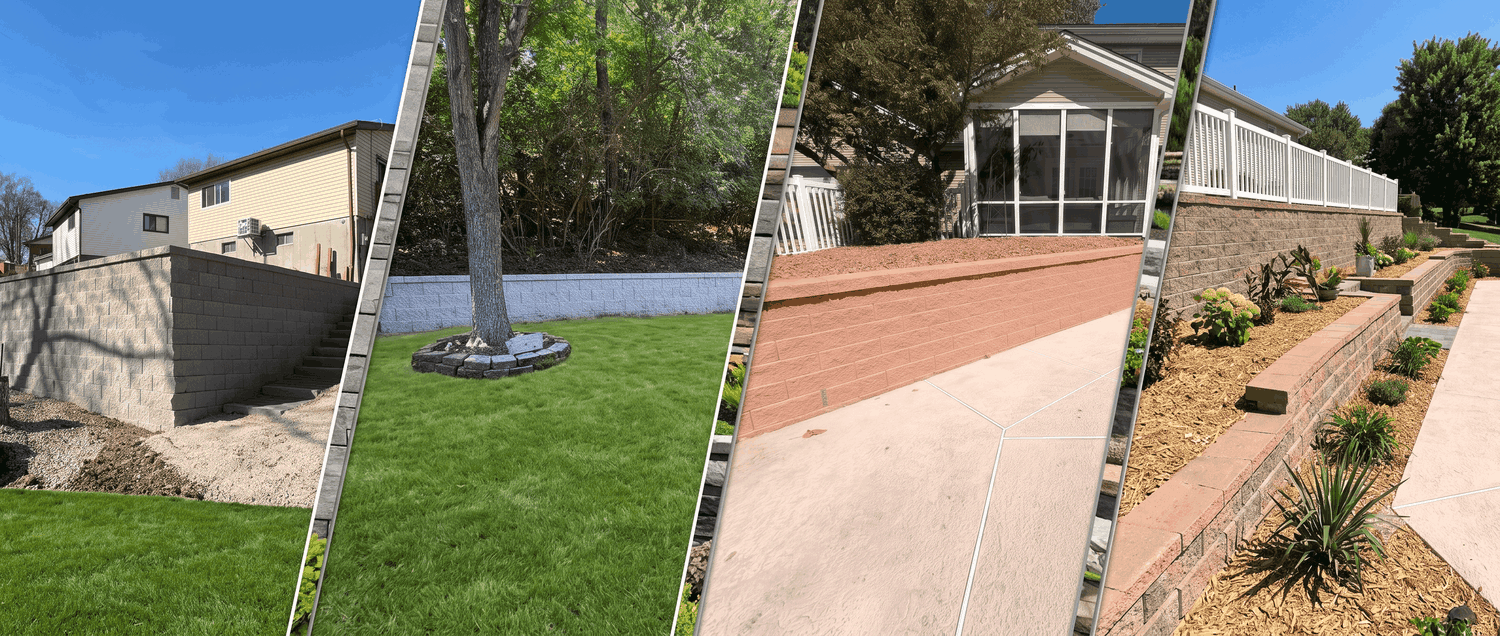
Retaining walls are harder to assign a percentage because their value depends heavily on the property. On a sloped St. Louis yard, a retaining wall may create usable ground, control erosion, or replace a failing structure, each of which affects the property differently.
Key Takeaways
- Paver patios: About 95% estimated cost recovery
- Landscape upgrades: About 100% estimated cost recovery in NAR’s representative project
- Landscape quality: Research found roughly 5.5%–12.7% differences in perceived home value
- Retaining walls: No reliable universal ROI percentage; their impact depends on the property problem being solved
It’s important to distinguish cost recovery from an increase in home value. NAR’s 95% figure doesn’t mean the home becomes 95% more valuable. In its representative example, a $10,500 paver patio was estimated to recover about $10,000 at resale.
Here’s how each of these three improvements can affect a property.
1. Paver Patios: About 95% Cost Recovery
The National Association of REALTORS® evaluated an 18′ × 16′ concrete paver patio installed over a compacted gravel and sand base. The estimated project cost was $10,500, while REALTORS® estimated $10,000 in recovered value at resale, a 95% cost recovery rate.
| NAR Patio Example | Estimate |
|---|---|
| Project cost | $10,500 |
| Estimated value recovered | $10,000 |
| Cost recovery | 95% |
| Homeowner Joy Score | 9.9 / 10 |
The same research found that 85% of surveyed homeowners reported a greater desire to be home, while 85% said they enjoyed their home more after completing the patio.
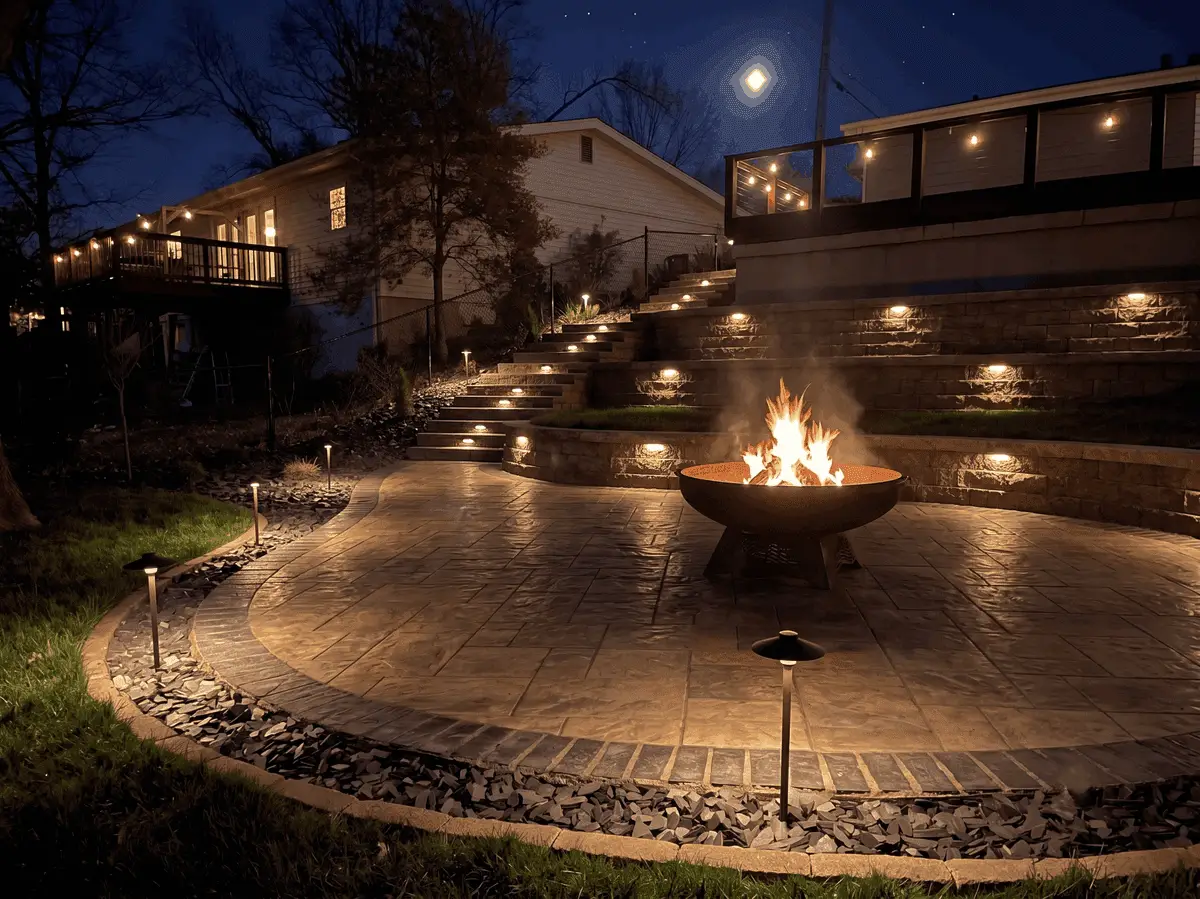
Where a Patio Can Add Value
A backyard can have plenty of square footage without having much usable outdoor living space. A patio gives part of that yard a clear purpose for things such as:
- Outdoor dining
- Grilling
- Lounge furniture
- Entertaining
- Fire-pit seating
- Connecting the house with the yard
You don’t necessarily need a completely new patio, either. If the existing patio is in good condition but feels cramped, an expansion may provide the additional space you need.
The important part is deciding what you want to fit comfortably before deciding how large the patio should be.
Choose a Patio That Fits the Property
Color and paver style matter, but they make more sense after you’ve decided how the patio will be used and how it should relate to the house.
For projects where pavers are appropriate, Excel Landscaping works with manufacturers such as Belgard and Unilock. Their collections provide different sizes, textures, and styles that can be considered alongside the home’s exterior and existing hardscaping.
A patio can make a large part of the backyard more useful. But when a slope, erosion, or significant grade change is limiting that space, correcting the ground itself may be the more important improvement.
2. Retaining Walls: Creating More Usable Ground and Protecting What You Have
The value a retaining wall can add is directly tied to the problem it solves. There isn’t one reliable ROI percentage because replacing a failing wall, controlling erosion, and creating usable ground can each affect a property differently.
A retaining wall can make a meaningful difference when it:
- Stabilizes a slope
- Controls erosion and soil loss
- Creates flatter, usable ground
- Makes room for a patio, lawn, or landscaping
- Replaces an aging or failing wall
- Makes difficult elevation changes easier to use
On a sloped property, for example, a wall may turn ground that was difficult to maintain into space that can actually be used.
But changing the grade also affects where water goes, so drainage needs to be considered at the same time.
Retaining Walls and Drainage Often Go Together
St. Louis-area properties can have clay-heavy soils, slopes, and runoff conditions that affect retaining-wall projects. Water moving down a slope or collecting behind a wall can contribute to erosion and place additional pressure on the structure.
That means the wall shouldn’t be planned independently from the surrounding grade and drainage. Where the water comes from, where it collects, and where it needs to go should all be considered before the wall is built.
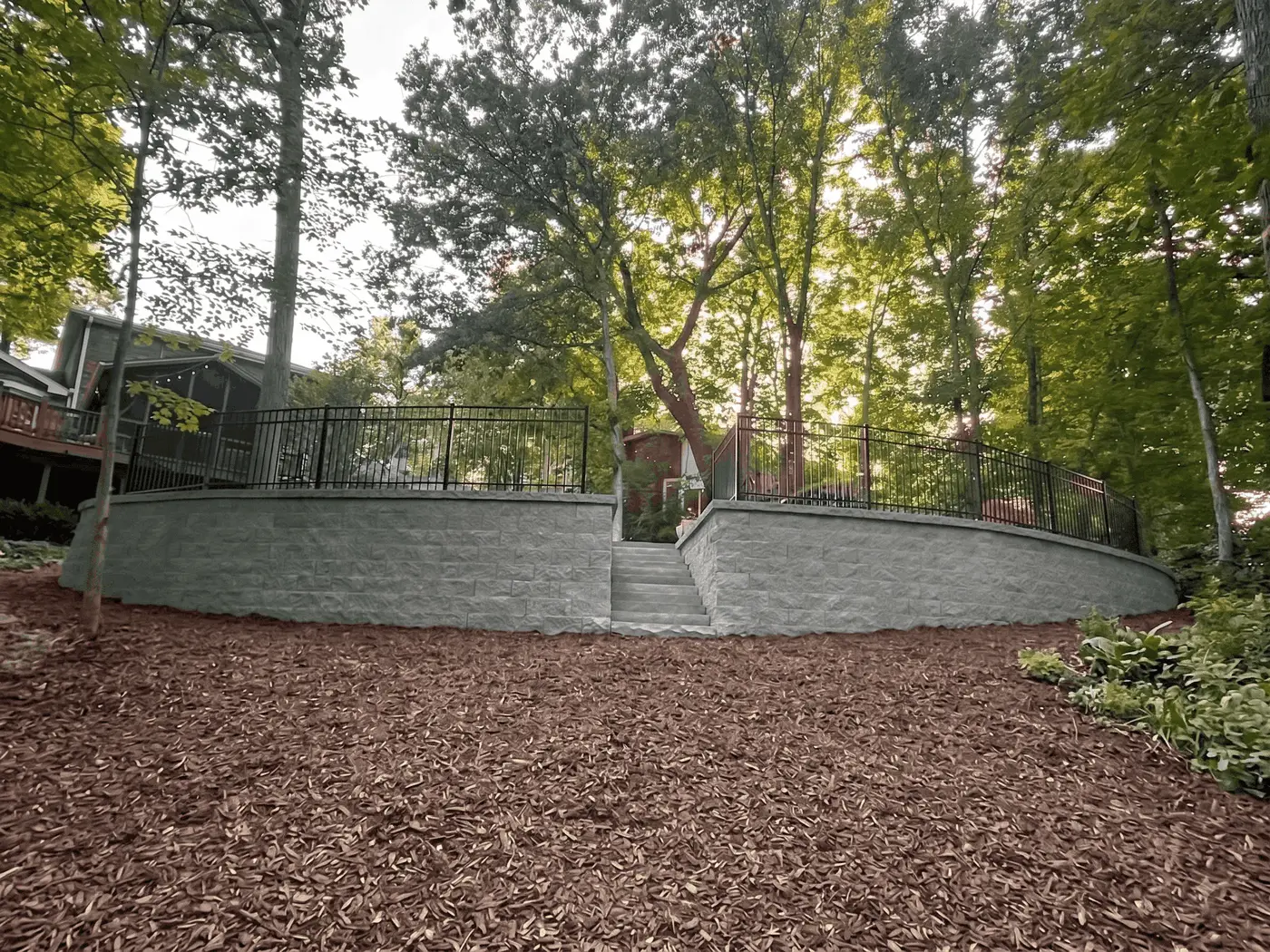
The rest of the yard matters too. If a patio, walkway, lawn, or planting area will sit above or below the wall, its location and elevation should be considered before construction.
Consider the Wall as Part of the Property
Once the slope, drainage, and usable space are accounted for, the wall’s appearance becomes part of the decision, especially when it sits next to a patio, steps, or landscaped area.
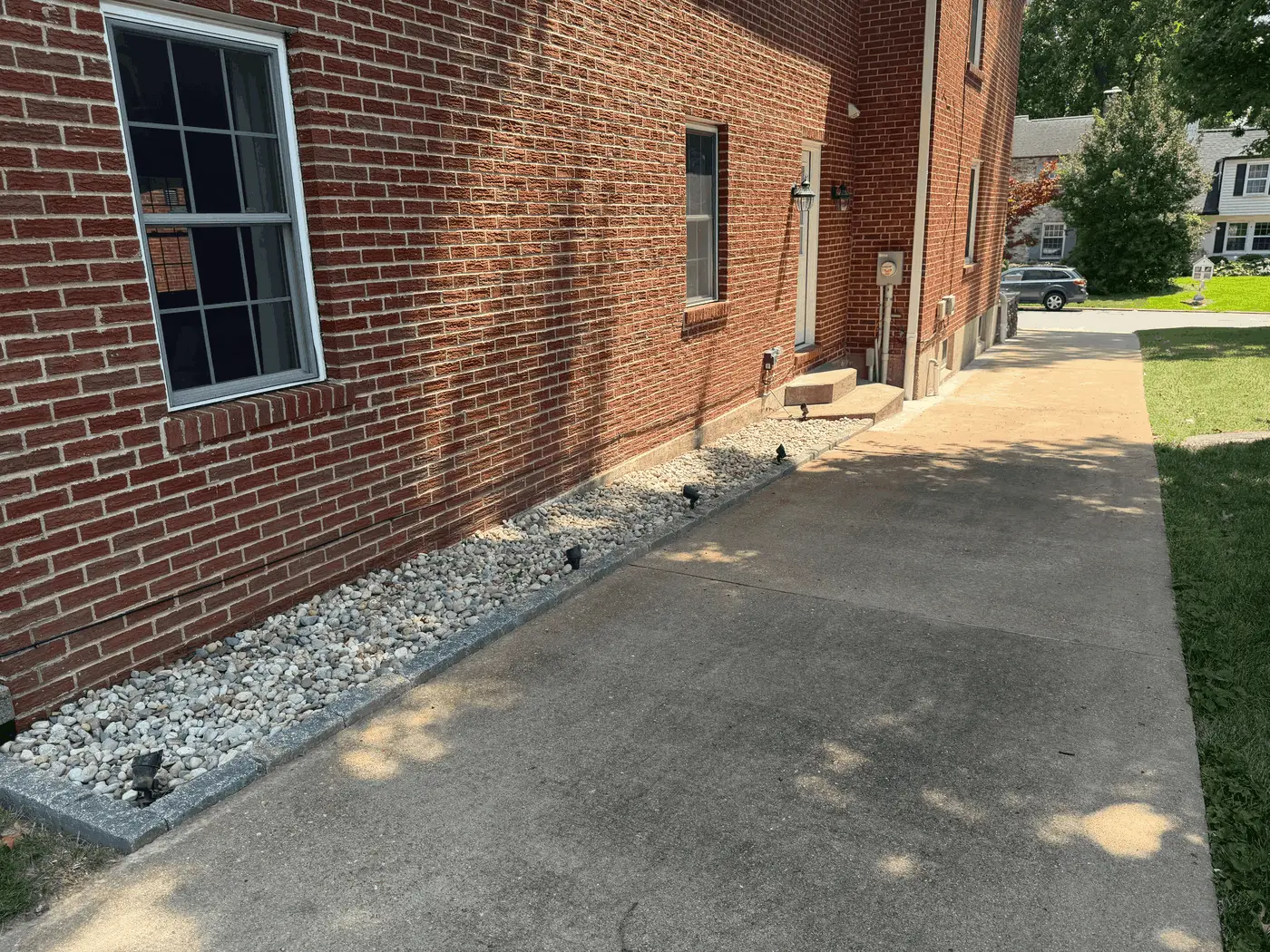
A retaining wall addresses a specific part of the property. When several areas need attention, however, it becomes more useful to consider how those improvements relate to one another.
3. Landscape & Hardscape Design: Research Shows a 5.5%–12.7% Difference in Perceived Value
Virginia Tech reviewed studies in which people evaluated homes with different levels of landscaping. Moving from essentially no landscaping to a well-designed landscape was associated with a 5.5%–11.4% difference in perceived home value, depending on the market. A related Michigan study found a 12.7% difference between the least- and most-valued landscapes.
Separate sales research cited by Virginia Tech found approximately a 4%–5% price premium when moving from average to good landscaping and 6%–7% when moving from good to excellent landscaping.
NAR’s research approached the question differently. Its representative overall landscape upgrade had an estimated cost of $9,000 and an estimated $9,000 in recovered value, a 100% cost recovery estimate.
| Landscape Research | Finding |
|---|---|
| Virginia Tech multi-state research | 5.5%–11.4% perceived-value difference |
| Related Michigan study | 12.7% difference |
| Average → good landscaping | 4%–5% price premium |
| Good → excellent landscaping | 6%–7% price premium |
| NAR landscape upgrade | 100% cost recovery |
One of the more useful findings from the Virginia Tech research was that design sophistication mattered more than simply adding more plants.
Where Landscaping Can Make the Biggest Difference
If property value is part of the reason you’re considering landscaping, look first at the areas that have the greatest effect on the condition and appearance of the property.
That doesn’t necessarily mean adding more plants or rebuilding the entire yard. It could mean replacing overgrown landscaping at the front of the house, improving an empty backyard, finishing the areas around a patio, or addressing a slope that’s difficult to maintain.
Areas worth looking at include:
- Landscaping along the front of the house
- Overgrown or outdated planting beds
- Bare areas around patios and walkways
- Slopes that are difficult to maintain
- Areas where drainage affects the property or landscaping
- Parts of the yard that feel unfinished
If several of these apply, looking at them together can help determine which improvements should come first and which can be completed later.
That distinction becomes important when comparing landscaping with the other two projects.
How These Three Projects Compare
These projects don’t contribute to property value in the same way. Patios have a direct cost-recovery estimate from NAR, landscaping has research connecting landscape quality with home value, and the impact of a retaining wall depends much more on the condition it corrects.
| Project | Research-backed value signal | Where it usually makes the biggest difference |
|---|---|---|
| Paver Patio | ~95% cost recovery | Creating usable outdoor living and entertaining space |
| Retaining Wall | No universal ROI percentage | Slopes, erosion, grade changes, and unusable areas |
| Landscape & Hardscape Design | ~5.5%–12.7% perceived-value difference, NAR estimated 100% cost recovery for a landscape upgrade | Improving landscaping and the property as a whole |
These numbers measure different things. A patio’s 95% cost recovery refers to the portion of the project cost estimated to be recovered at resale. The landscaping percentages measure differences in home value associated with landscape quality.
Which Project Makes the Most Sense for Your Property?
Start with what is currently limiting the property.
If the backyard has enough room but lacks a comfortable place to use it, a paver patio may make sense. If a slope, erosion, or failing wall is taking away usable ground, a retaining wall may need to come first. If several areas need attention, a landscape and hardscape plan can help establish the right order.
These projects can also depend on one another. A patio may require a retaining wall to create enough level ground. Drainage may need to be corrected before either project begins. Landscaping may then finish the areas around both.
So the percentages are useful for understanding potential value, but they shouldn’t determine the project by themselves. The better starting point is the part of the property that needs the most improvement.