

Underground Downspout Drainage to Move Water Away From a St. Louis Home

Water was reaching the home and basement because roof runoff from the downspouts was being released too close to the foundation. The drainage system was rebuilt below grade with a French drain and buried PVC connections that carry the downspout water away from the house, while decorative rock and landscape lighting gave the narrow side yard a cleaner finished appearance once the underground work was complete.
Home » Hardscaping » Drainage Installation » Downspout PVC Drainage Installation

2 Day Build

Approximate completion timeline

Underground Downspout Drainage

Buried PVC drainage for roof runoff

St. Louis, MO

Residential Drainage Project
BEFORE & AFTER RESULTS

Moving Roof Runoff Away From the Foundation

Before:
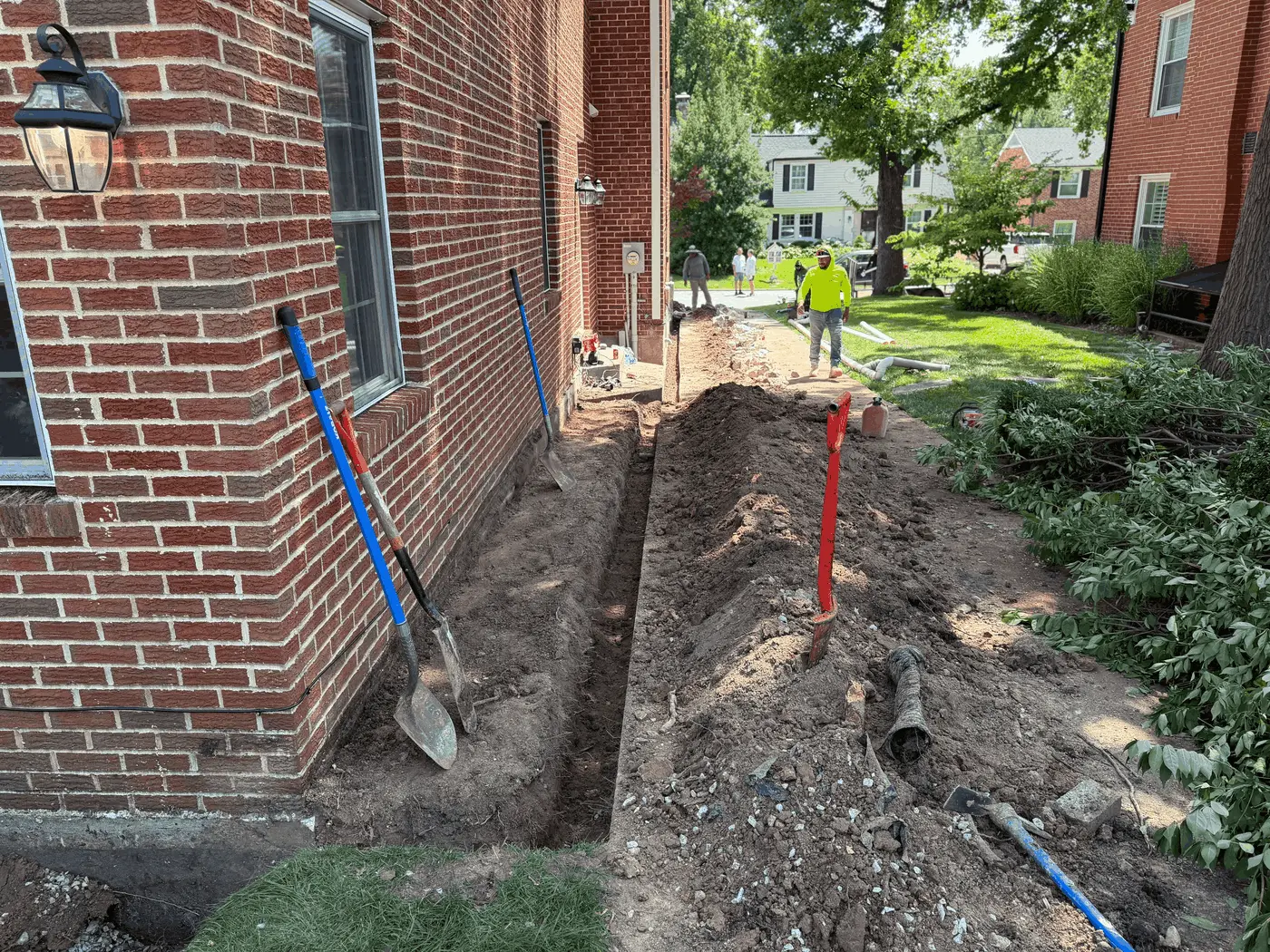
The area beside the home was opened to create access for the new underground drainage route along the foundation.
After:
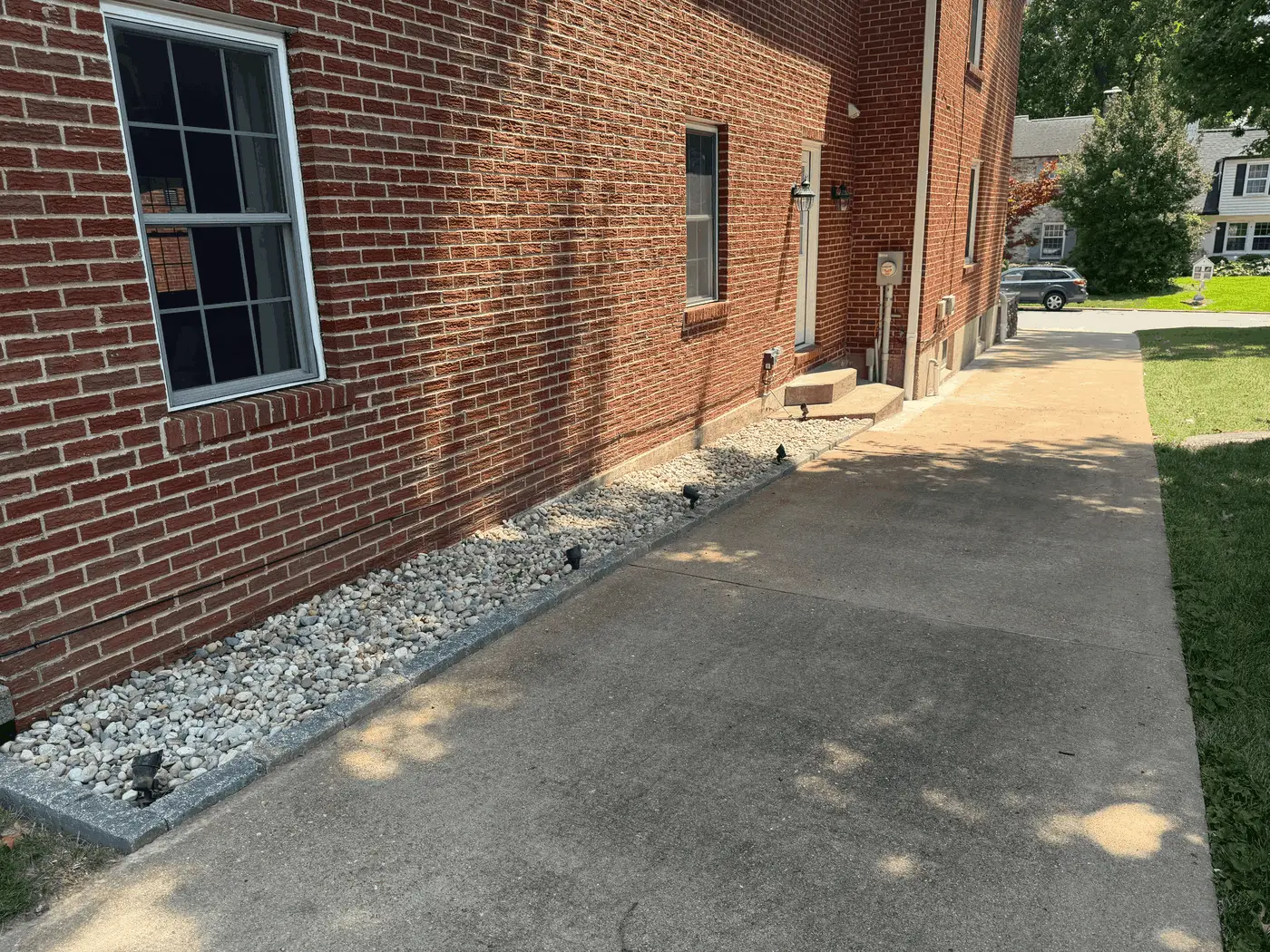
The completed side yard conceals the underground drainage system beneath a finished decorative-rock bed while the connected downspouts direct roof runoff away from the home.

How We Redirected Downspout Water Away From This St. Louis Home

The drainage problem started with roof runoff being released too close to the foundation. Rather than having a defined underground route away from the home, water from the downspouts was entering the narrow area along the side of the house. The homeowners needed a way to move that runoff farther from the foundation while also leaving the area looking finished once the drainage work was complete.
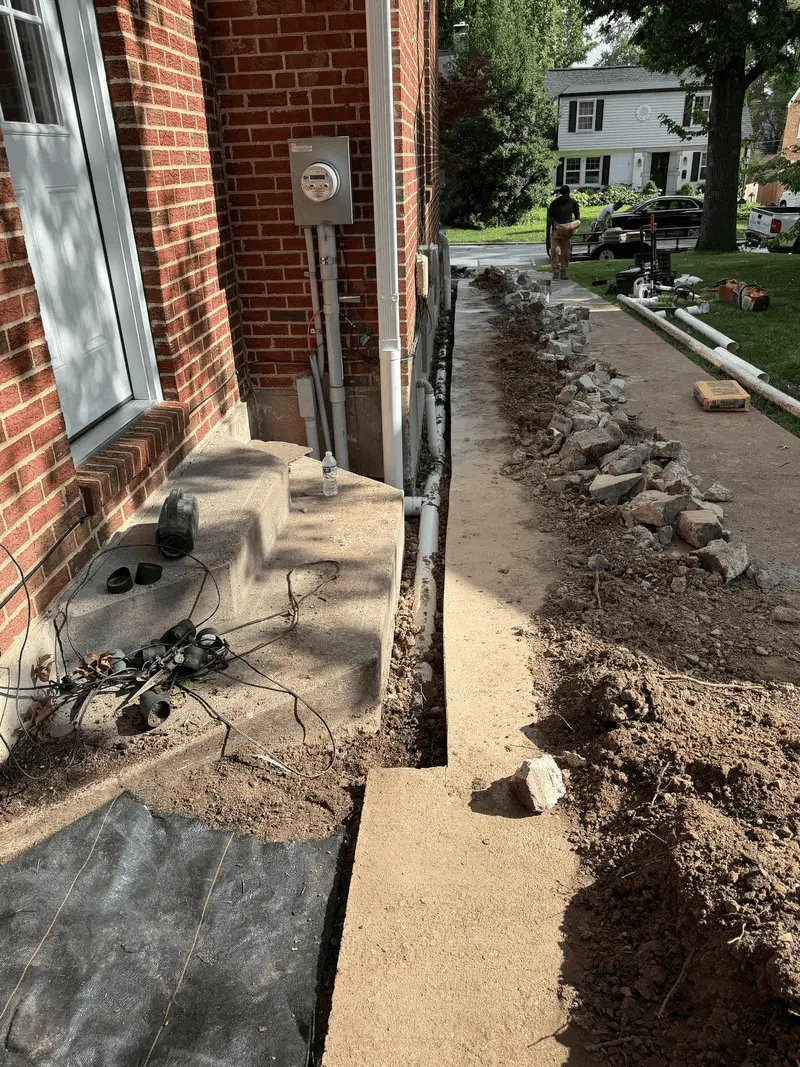
The location of the drainage issue shaped how the project had to be approached. The work area runs between the brick foundation and an existing concrete driveway, so the new drainage route needed to fit within a relatively confined part of the property. Addressing the problem below grade allowed the downspouts to connect directly into underground piping instead of continuing to release water beside the home.

To create that route, the area alongside the foundation was excavated so the underground drainage components could be installed. Schedule 40 PVC pipe was then used to carry the connected downspout water through the property and away from the house. Moving the roof runoff underground created a defined path for the water rather than allowing each downspout to discharge at the foundation.

The completed project included:

  • Excavation along the side of the home for the underground drainage route
  • Downspouts connected into buried drainage piping
  • Schedule 40 PVC pipe used to move roof runoff away from the house
  • Drainage routed below grade alongside the existing foundation and driveway
  • Restoration of the disturbed area after the underground installation
  • Decorative rock installed along the finished foundation area
  • Landscape lighting incorporated into the completed bed
  • Completion in approximately two working days

Because much of a drainage installation is hidden when the work is finished, the excavation photos are an important part of this project story. They show the route that had to be opened beside the house before the PVC drainage system could be installed. Once the underground work was complete, the area could be closed back in without leaving exposed piping or an unfinished strip of soil along the foundation.
The final surface treatment was also part of making the project practical for the homeowner. Decorative rock created a defined bed between the home and driveway, while the small landscape lights helped integrate the restored area with the rest of the property. The drainage system remains below grade, but the finished side yard looks intentional rather than like an area that was recently excavated.
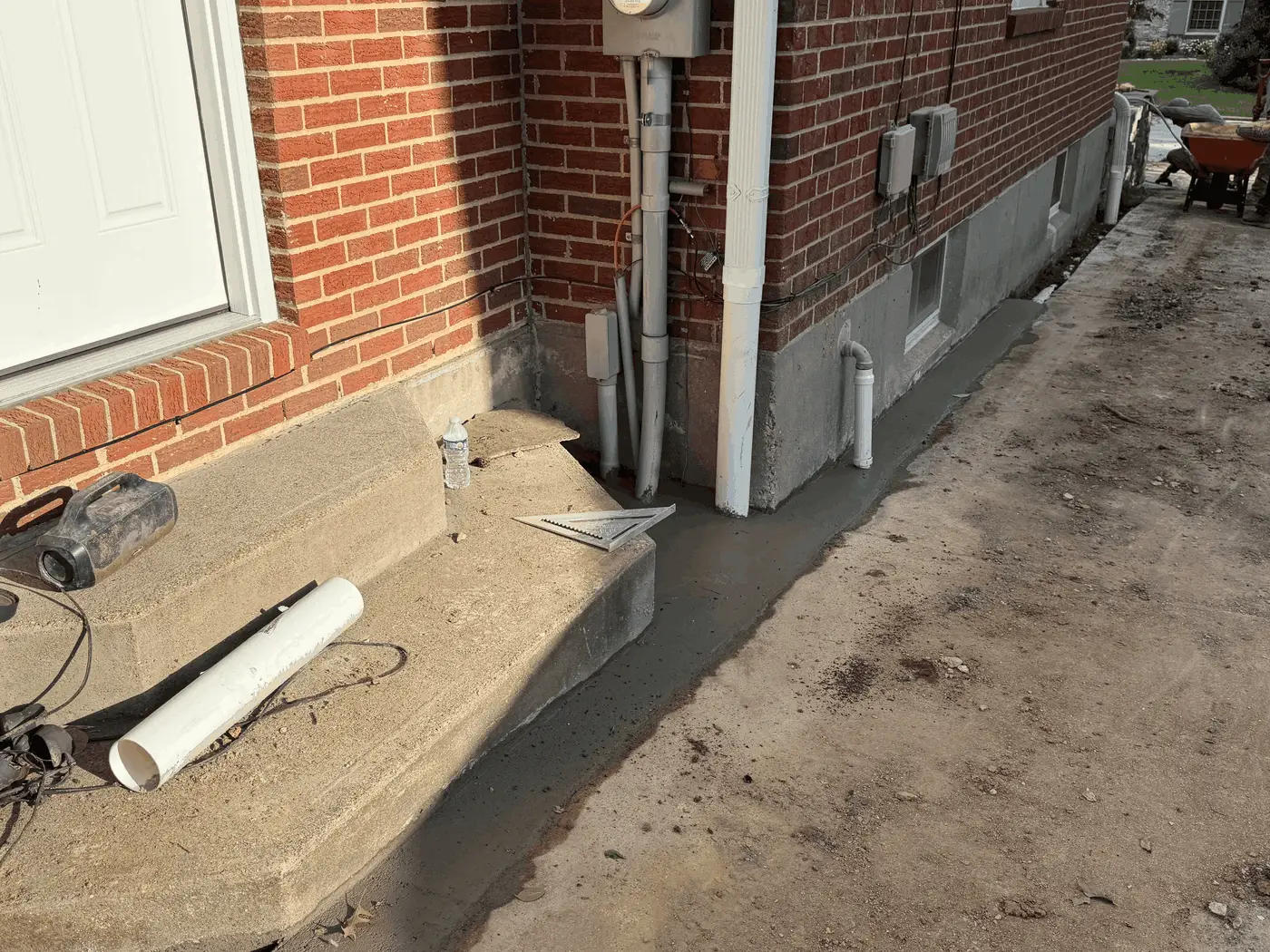
The completed project changed how roof runoff is handled at this St. Louis home. Instead of downspouts releasing water immediately beside the foundation, the connected PVC system now gives that water a planned route away from the house. At the same time, the area disturbed during installation was restored into a cleaner, easier-to-maintain section of the property.

Why this solution worked

The problem was not simply water on the surface—it was where the downspouts were releasing roof runoff. Connecting them to underground PVC gave the water a defined route away from the home instead of allowing it to discharge beside the foundation. Because the drainage was installed below grade, the system could do its job without leaving exposed piping, and the disturbed area could be restored with a clean finished surface.
RELATED SERVICES BEHIND THIS TRANSFORMATION​

Services Behind This Project

Drainage Installation

Underground drainage systems designed to collect or redirect water and move it to a more appropriate discharge area.

Drainage Correction

Buried downspout connections move roof runoff away from the home instead of allowing it to discharge immediately beside the foundation.

More Drainage Projects Across the St. Louis Area

2 Day Build

Chesterfield, MO​

Landscape + Retaining Wall

This St. Louis front-yard renovation extended well beyond a new retaining wall. After working with the homeowners to select the
3 Day Build

St. Louis, MO

Retaining Wall + Drainage

Runoff kept collecting along the low side of this St. Louis backyard, washing away soil and making the area difficult
2 Day Build

St. Louis, MO

Underground Downspout Drainage

Water was reaching the home and basement because roof runoff from the downspouts was being released too close to the
7 Day Build

Oakville, MO

Retaining Wall Installation

A steep wooded slope immediately behind this Oakville home left the homeowners with very little level backyard space and a
2 Day Build

Town & Country, MO

Retaining Wall Replacement

An aging railroad-tie retaining wall had deteriorated in this Town & Country backyard, while the outdoor area also needed a
2 Day Build

Chesterfield, MO

Tiered Retaining Walls

A steep, overgrown hillside occupied a large portion of this Chesterfield backyard but provided little usable value and was difficult

Local Experience Across St. Louis County

Serving St. Louis County and nearby communities, our crews are fully familiar with the area’s specific drainage, access, grading, and clay soil conditions.

THE FIRST STEP IS SIMPLE

Ready to Transform Your Outdoor Space?​

Tell us about your property and we’ll take it from there. Every project starts with a site visit, no commitment required.