Replacing an Outdated Stone Walkway Installation
The homeowners were frustrated with their existing backyard walkway.
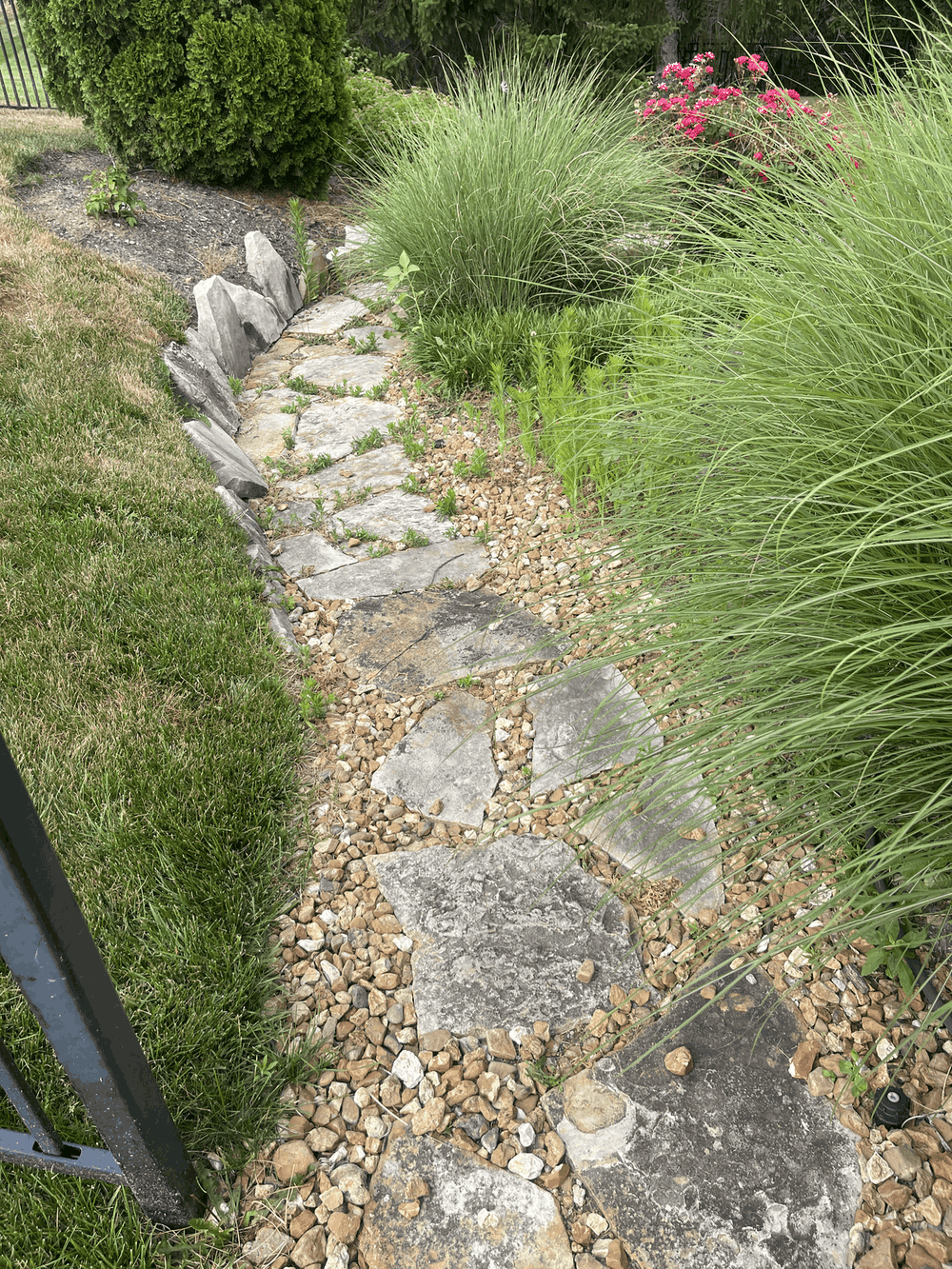
Over time, weeds had begun growing throughout the old stone walkway installation, creating a constant maintenance issue and taking away from the appearance of the surrounding landscape. While the pathway still provided access to the backyard, it no longer complemented the property and required ongoing upkeep to keep it looking presentable.
The homeowners wanted a cleaner, more attractive solution that would eliminate the weed problem while creating a more welcoming transition into the backyard.
As planning began, it became clear that upgrading the walkway alone wouldn’t fully solve the issue. The existing slope alongside the path also needed to be addressed to create a more polished and durable finished result.
Designing a Paver Walkway Around Existing Grade Changes
Many Wildwood properties contain elevation changes that can affect both landscape design and hardscape performance.
Rather than simply replacing the existing path, this project provided an opportunity to improve the overall layout of the space through thoughtful paver walkway design. The slope adjacent to the walkway created an opportunity to introduce a retaining wall that would help define the pathway while improving the appearance of the surrounding landscape beds.
Before construction began, the existing walkway, gravel, and landscape materials were removed to prepare the area for the new hardscape installation.
With the site cleared and the grading plan finalized, construction could move forward.
Installing a Custom Paver Walkway and Stone Block Retaining Wall
Once site preparation was complete, construction began with a focus on durability, aesthetics, and long-term maintenance reduction.
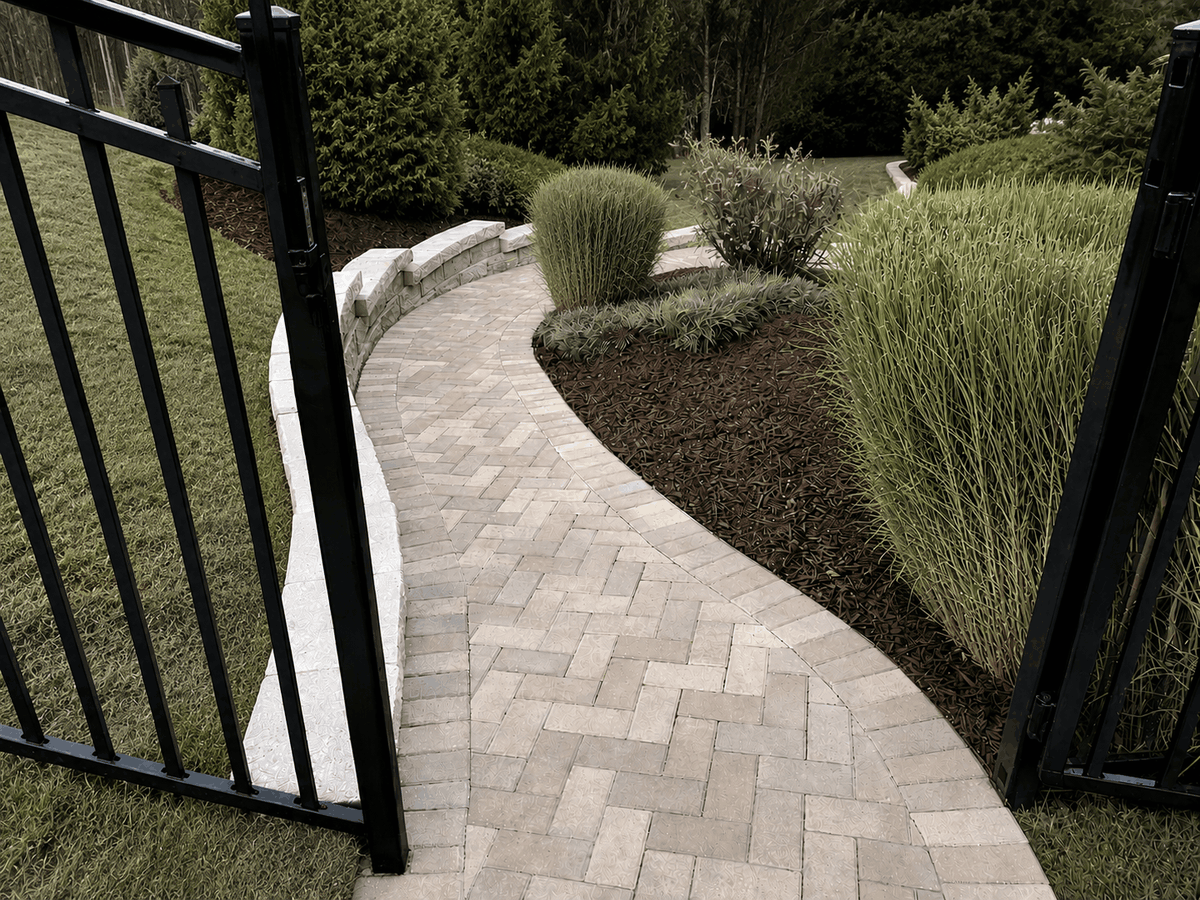
The homeowners selected Holland Stone pavers for the new walkway and Bethany Ledge 6-inch Hampton Stone blocks for the retaining wall. Together, these materials created a timeless appearance that complements the surrounding landscape while providing lasting structural support.
Installation Process
With the old pathway removed and the grading plan finalized, construction could begin. The project focused on creating a durable, low-maintenance walkway while improving the appearance and functionality of the surrounding landscape.
- Removing the existing stone pathway and surrounding materials created a clean foundation for the new hardscape installation.
- Excavating and preparing the walkway area provided the stable base needed to support both the paver walkway and retaining wall system for years to come.
- Installing the residential retaining wall alongside the walkway helped manage the slope, improve visual definition, and create a more organized landscape layout.
- Laying Holland Stone pavers in a flowing pattern created a natural transition from the gate to the backyard while providing a durable and low-maintenance walking surface.
- Adding fresh mulch and completing the finishing details integrated the new hardscape seamlessly into the surrounding landscape and completed the transformation.
Once the new walkway and retaining wall were installed, the transformation was immediately apparent, creating a more polished and welcoming path to the backyard.
How the New Garden Retaining Wall and Walkway Transformed the Space
The finished project completely changed the appearance and usability of the side yard.
What was once an aging stone pathway filled with weeds became a professionally installed paver walkway bordered by a garden retaining wall and refreshed planting beds. The new design creates a cleaner, more organized appearance while eliminating the maintenance issues that came with the previous walkway.
Beyond improving functionality, the project enhances the overall landscape design and provides a more inviting pathway to the backyard.