
Water problems rarely have a one-size-fits-all solution. Excel Landscaping designs and installs custom yard drainage solutions across Greater St. Louis, including French drains, channel drains, dry wells, catch basins, and buried downspout systems engineered around your property’s grading, soil conditions, and drainage needs.
★★★★★
Most drainage projects begin when water starts collecting where it should not. It may be a soggy yard after every storm, water entering the basement, a flooded window well, or runoff moving toward the garage. The right solution starts with finding where the water comes from, how it travels, and where it can be redirected safely.
Explore drainage projects where we’ve solved standing water, stopped water getting in the basement, erosion control, solved drainage issues with custom systems engineered for long-term performance.
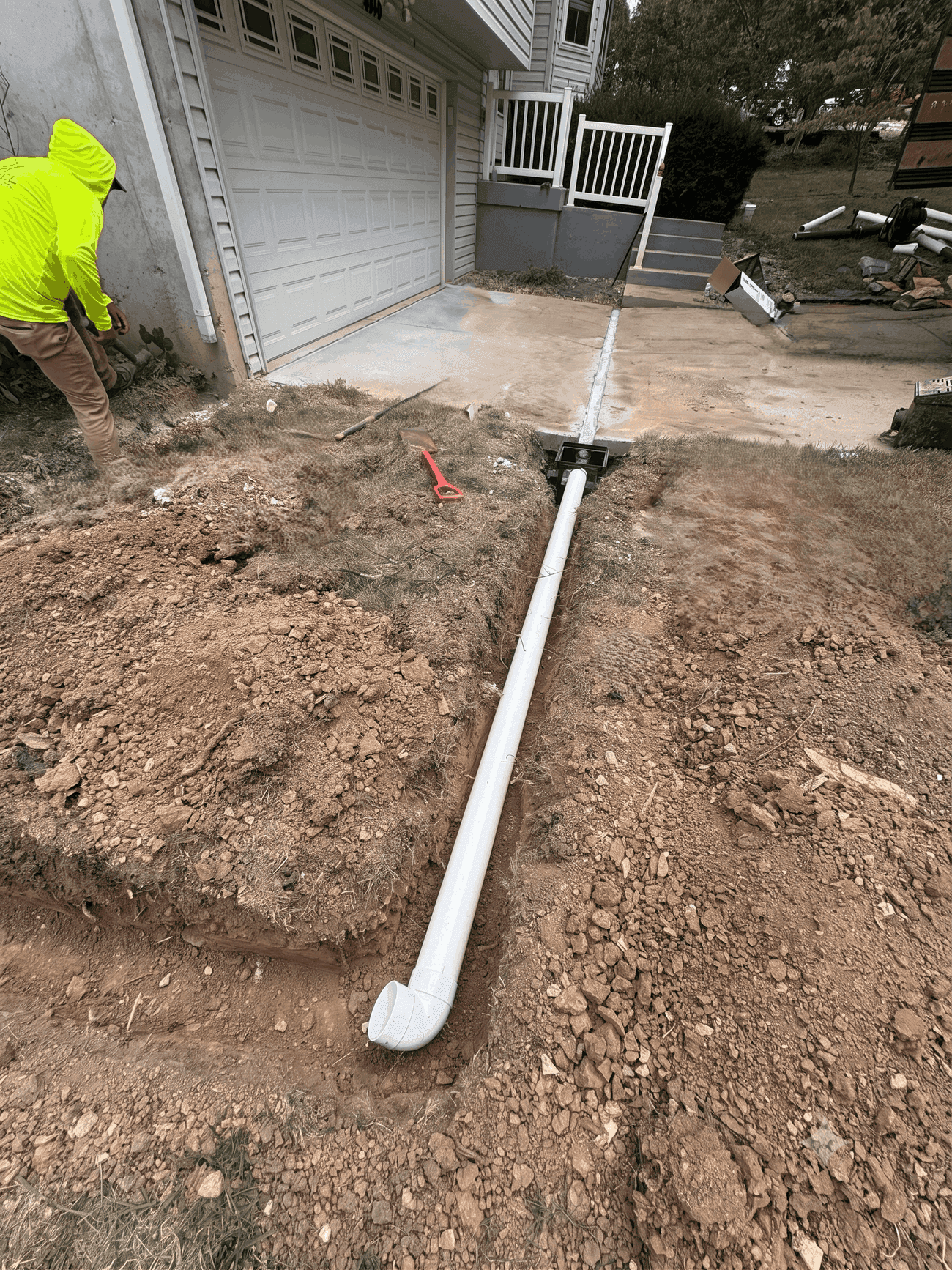
Water always finds the weakest path. If it isn’t redirected properly, it will eventually find its way into your basement, garage, foundation, or outdoor living space. Excel Landscaping engineers every drainage system around how water actually moves across your property, evaluating grading, roof runoff, soil conditions, and discharge locations before installation. The drainage solutions below each solve a different water problem, and many projects combine multiple systems for long-term performance.
Each property requires a different approach based on how water enters, moves across, and leaves the landscape. Below are the most common drainage solutions we use to protect homes, foundations, patios, and outdoor living spaces.
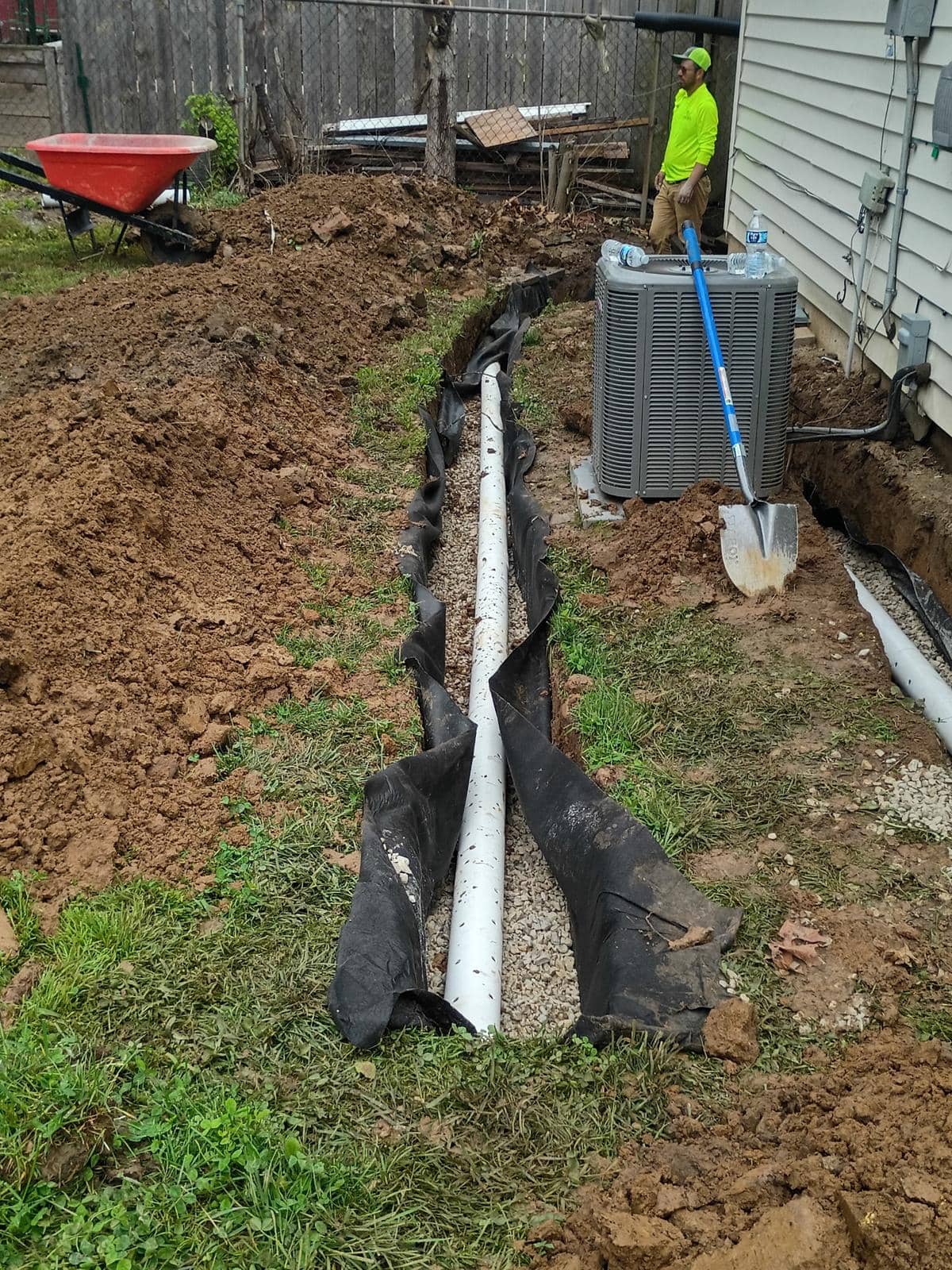
French drains collect groundwater before it reaches foundations, basements, crawl spaces, or saturated areas, helping relieve underground water pressure.
Catch basins collect surface water in low areas and move it into the underground drainage system before it can pool across the lawn.
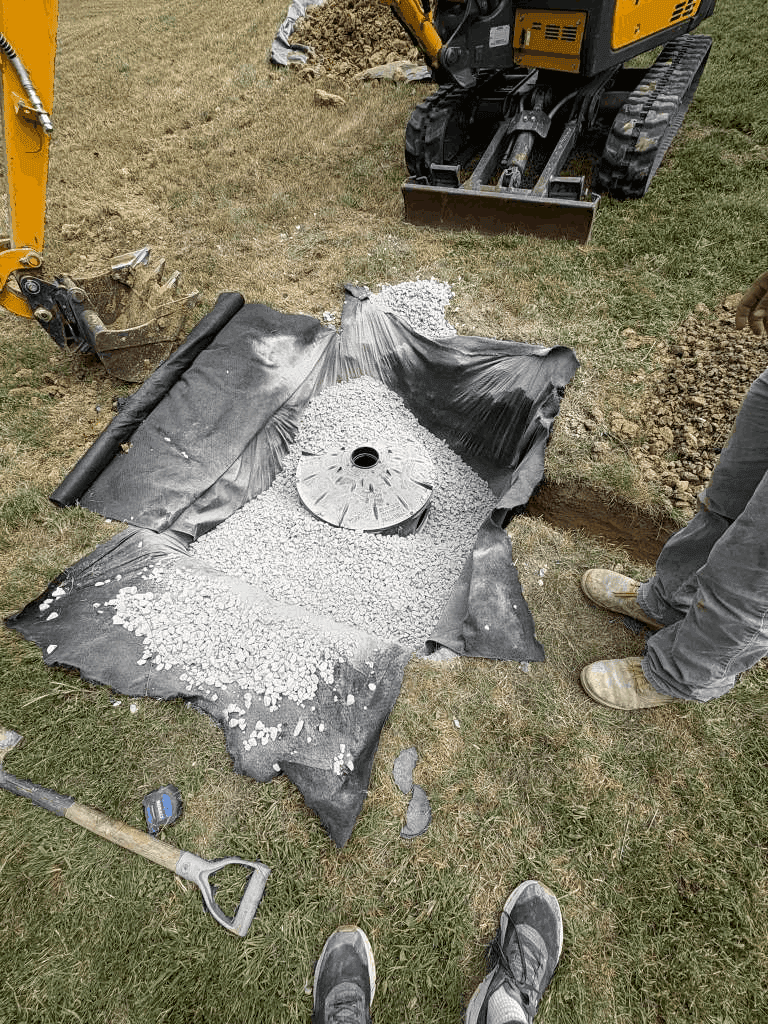
Dry wells receive water from French drains, catch basins, or downspouts and allow it to slowly disperse underground away from structures.
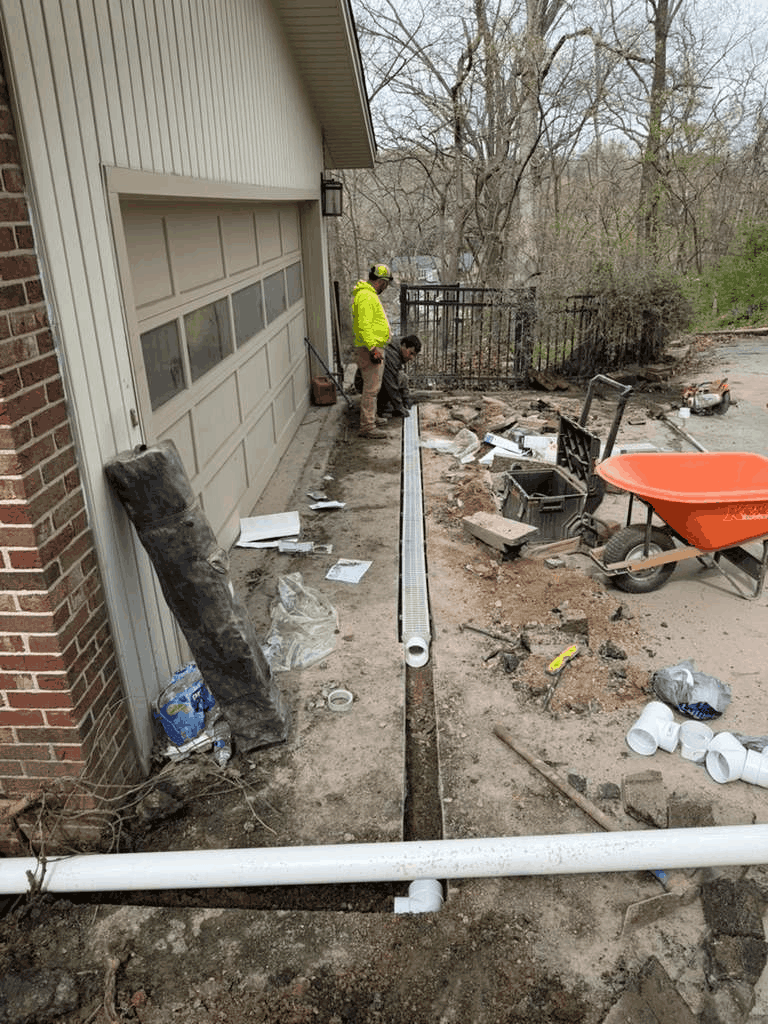
Channel drains intercept surface runoff before it enters garages, patios, driveways, pool decks, or other paved areas.
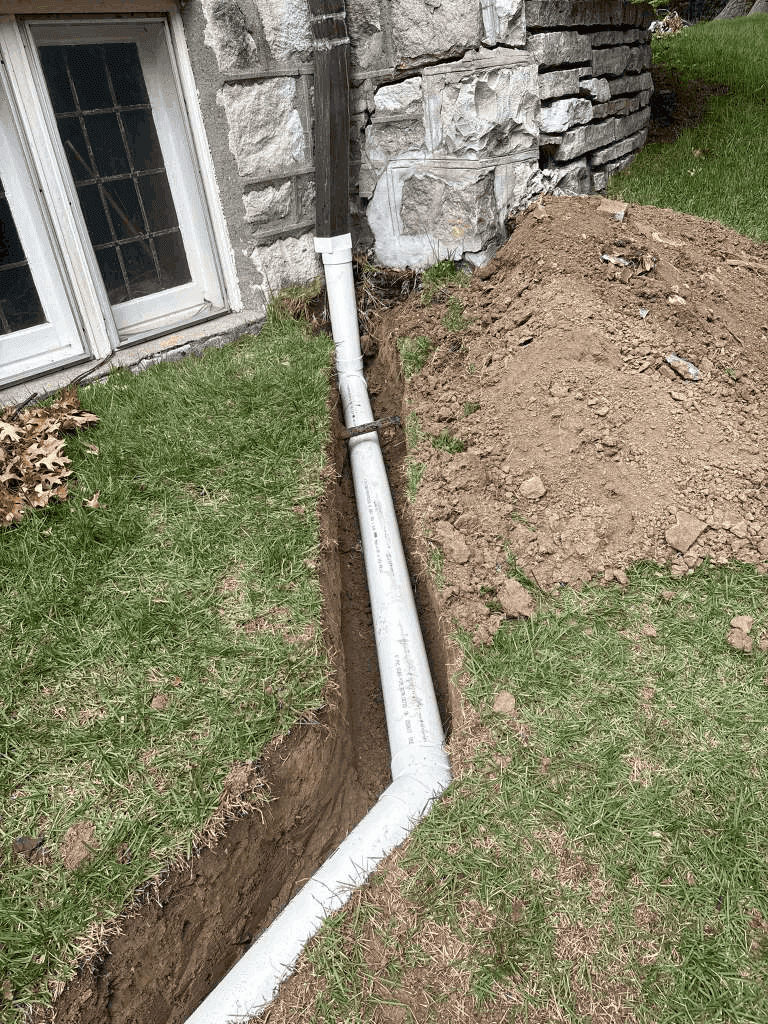
Solid PVC pipe carries roof runoff away from the foundation to a planned discharge location instead of allowing water to collect near the home.
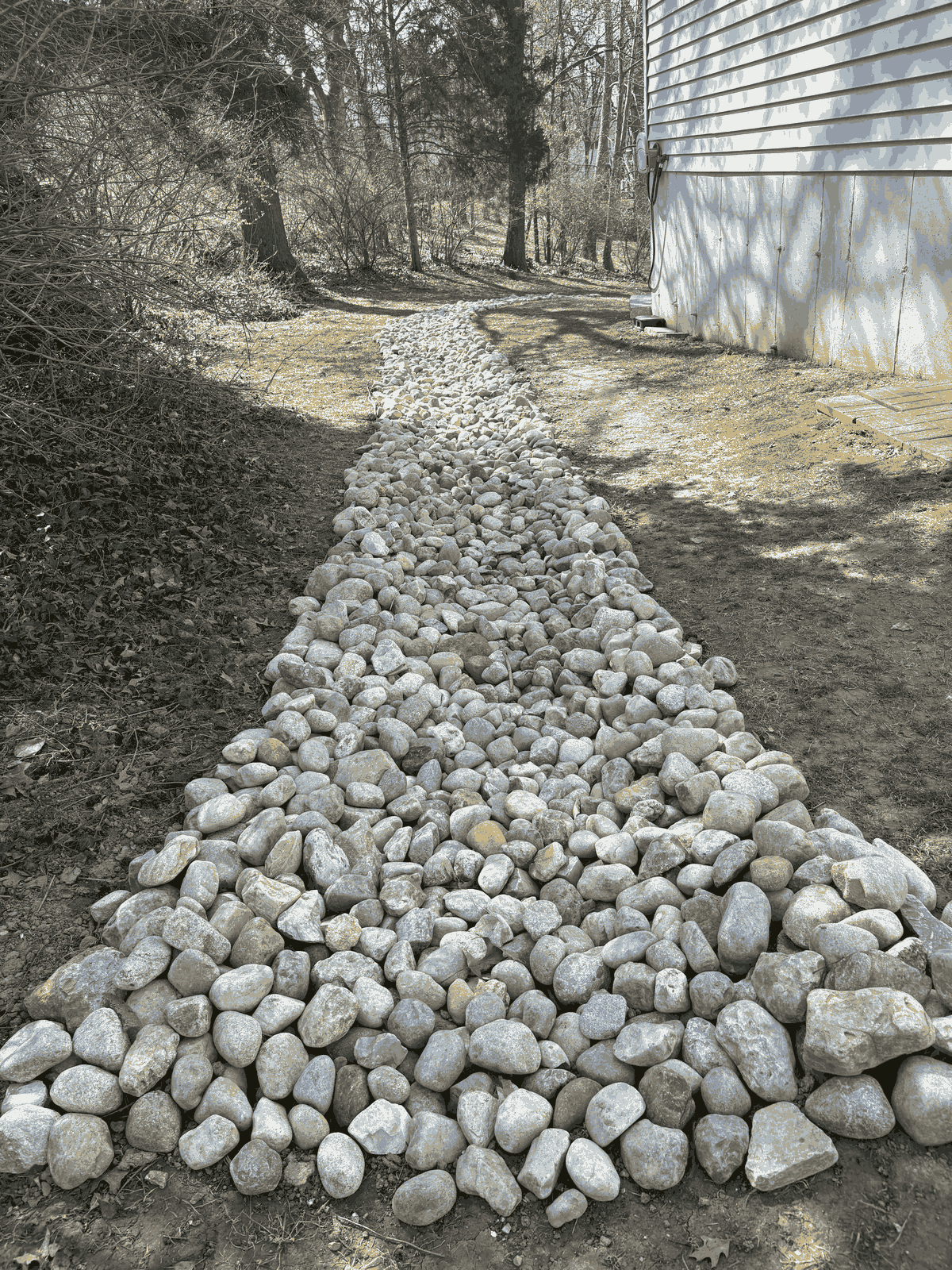
Dry creek beds guide runoff through the landscape, slowing water movement to reduce erosion while creating a natural drainage feature.
Water follows the path of least resistance. These are the most common signs homeowners notice before installing a drainage system.
Water that remains for days after rain usually points to poor grading, compacted soil, or inadequate drainage.
Water entering below grade often points to foundation drainage issues, roof runoff, or excess groundwater near the home.
Runoff flowing toward the garage can damage concrete, stored belongings, and the structure itself.
Window wells that collect water can eventually leak through basement windows and into finished spaces.
Clogged, crushed, or poorly routed downspout lines can release roof water near the foundation.
Moving water can remove soil, expose roots, damage landscaping, and undermine patios or retaining walls.
Every project begins with understanding how water moves across the property, then selecting the right drainage solution based on the home’s layout, grading, soil conditions, and where the water needs to go. The four steps below show how a custom drainage system comes together.
Every drainage project starts by identifying where water comes from, how it moves across the property, and what areas need protection.
The right drainage solution is selected based on the property’s grading, runoff patterns, soil conditions, and the type of water problem.
Depending on the source of the water, your drainage plan may include French drains, catch basins, channel drains, dry wells, buried downspouts, or a combination of systems working together.
The completed system is tested to ensure water flows away from foundations, patios, garages, basements, and landscaped areas as intended.
Drainage often connects to grading, retaining walls, patios, and landscape improvements. These services help protect the finished outdoor space and solve the water issue at the same time.
Retaining walls and drainage often work together to stabilize slopes, relieve water pressure, and protect the wall from long-term soil movement.
Drainage is often installed before planting and landscaping to prevent standing water, erosion, and mulch washout while protecting the finished landscape.
Proper drainage protects the patio base by directing water away from the surface, helping prevent settling, pooling, and premature paver movement.
Some retaining walls are built to correct drainage, erosion, or failing slopes, while others are part of larger outdoor living projects that create more usable space. Whether you’re protecting your property or planning a new patio, pool, or landscape renovation, these are some of the most common reasons homeowners invest in retaining wall installation.
Drain boxes, grates, fittings, and drainage components designed for residential water management.
Used for roof runoff redirection and underground discharge where durability matters.
Clean aggregate and fabric help water move through the system while reducing clogging.
★★★★★
5.0 Rating (+74 Google Reviews)
★★★★★
“The team was professional, on time, and the quality of work was outstanding. If you need landscaping, hardscaping, or drainage installation in Creve Coeur or the St. Louis area, I highly recommend them!”
★★★★★
“Excel Landscaping did a great job addressing a drainage issue at our home. He designed and installed a system that deflected water away from the house. Joe is punctual, responsive, and took the time to explain each step so we fully understood what was being done.”
★★★★★
Our crews are familiar with drainage, access, grading, and clay soil conditions across nearby communities.
Free property assessment. No travel fees. No surprises.
Serving St. Louis County and nearby communities
The best solution depends on where the water is collecting and what is causing it. Standing water, basement leaks, window well flooding, and garage runoff can all require different systems, which is why Excel Landscaping begins with an on-site drainage evaluation before recommending French drains, catch basins, dry wells, channel drains, downspout redirection, or another solution.
Drainage costs vary depending on the size of the property, the type of system, excavation requirements, pipe length, materials, and where the water will discharge. Based on our experience installing drainage systems throughout St. Louis, many residential drainage projects start around $4,000 to 8x,000, with larger or more complex systems increasing from there.
A French drain may be the right solution when groundwater, saturated soil, or persistent low-area pooling is the issue. It is not the right fix for every property, so Excel Landscaping evaluates the grading, soil conditions, and water source before recommending a French drain installation.
In many cases, yes. Basement water is often caused by poor exterior drainage, roof runoff near the foundation, grading issues, or saturated soil. Correcting those problems outside the home can significantly reduce the water reaching the basement area.
A yard that stays wet after rain often has a drainage system that was never designed for the property’s grading, soil, or runoff patterns. Excel Landscaping evaluates how water moves across your property and engineers a custom drainage solution that corrects existing problems and helps prevent them from returning.
Not necessarily. Water around the foundation doesn’t always mean you need foundation repair. Many issues are caused by poor grading, roof runoff, clogged drainage, or improper discharge. Excel Landscaping evaluates the entire property and engineers a drainage solution when water management is the root cause, helping homeowners avoid more costly repairs whenever possible. Many of our Hardscaping Services Across the St. Louis Area also incorporate drainage improvements to protect foundations, patios, retaining walls, and outdoor living spaces as one complete system.
Tell us about your property and we’ll take it from there. Every project starts with a site visit, no commitment required.